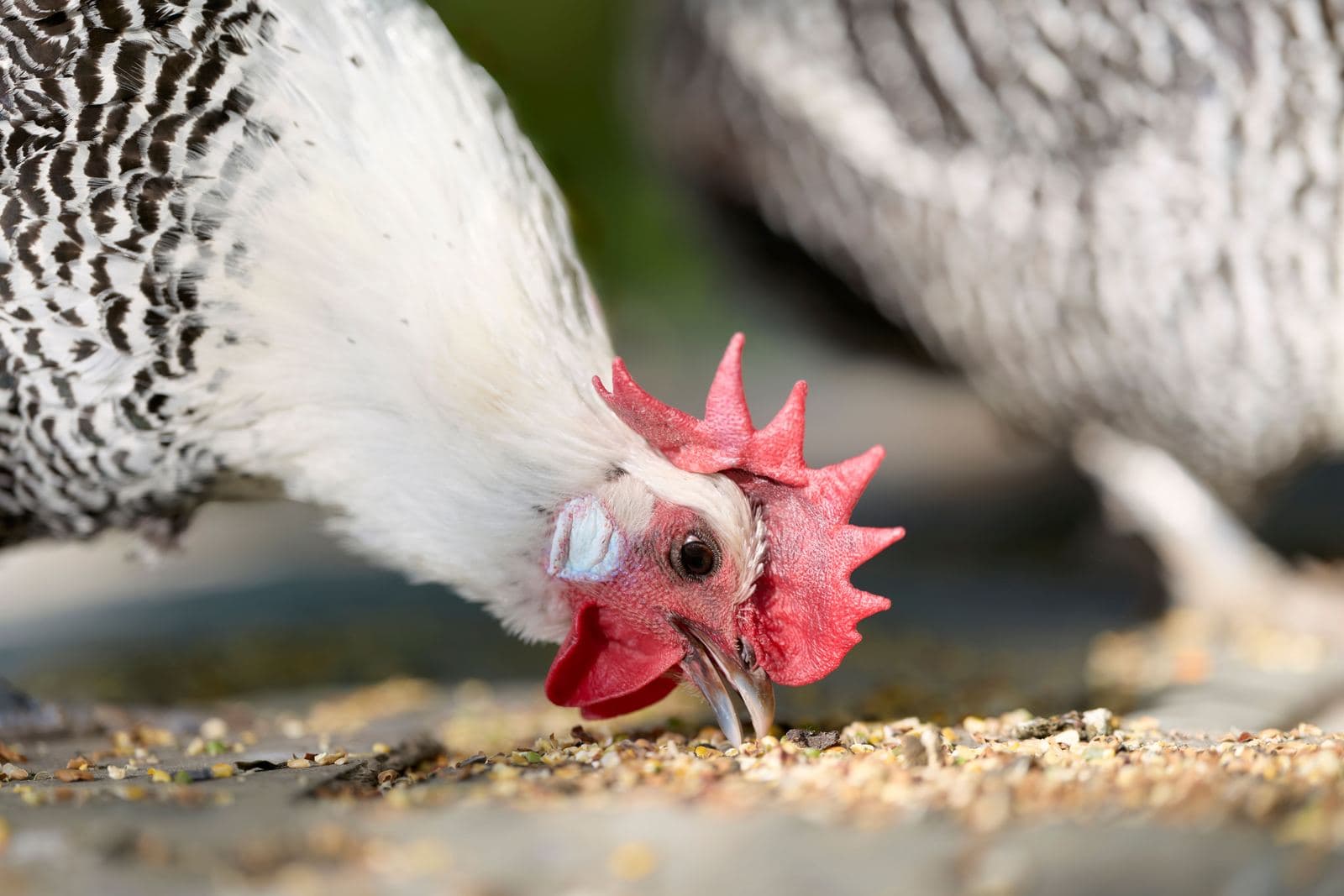
Feeding a flock: waste, rodents and water that freezes
Three problems, and they are the same three for everybody. Feed on the ground, rats in the run, and a solid block of ice at seven in the morning.
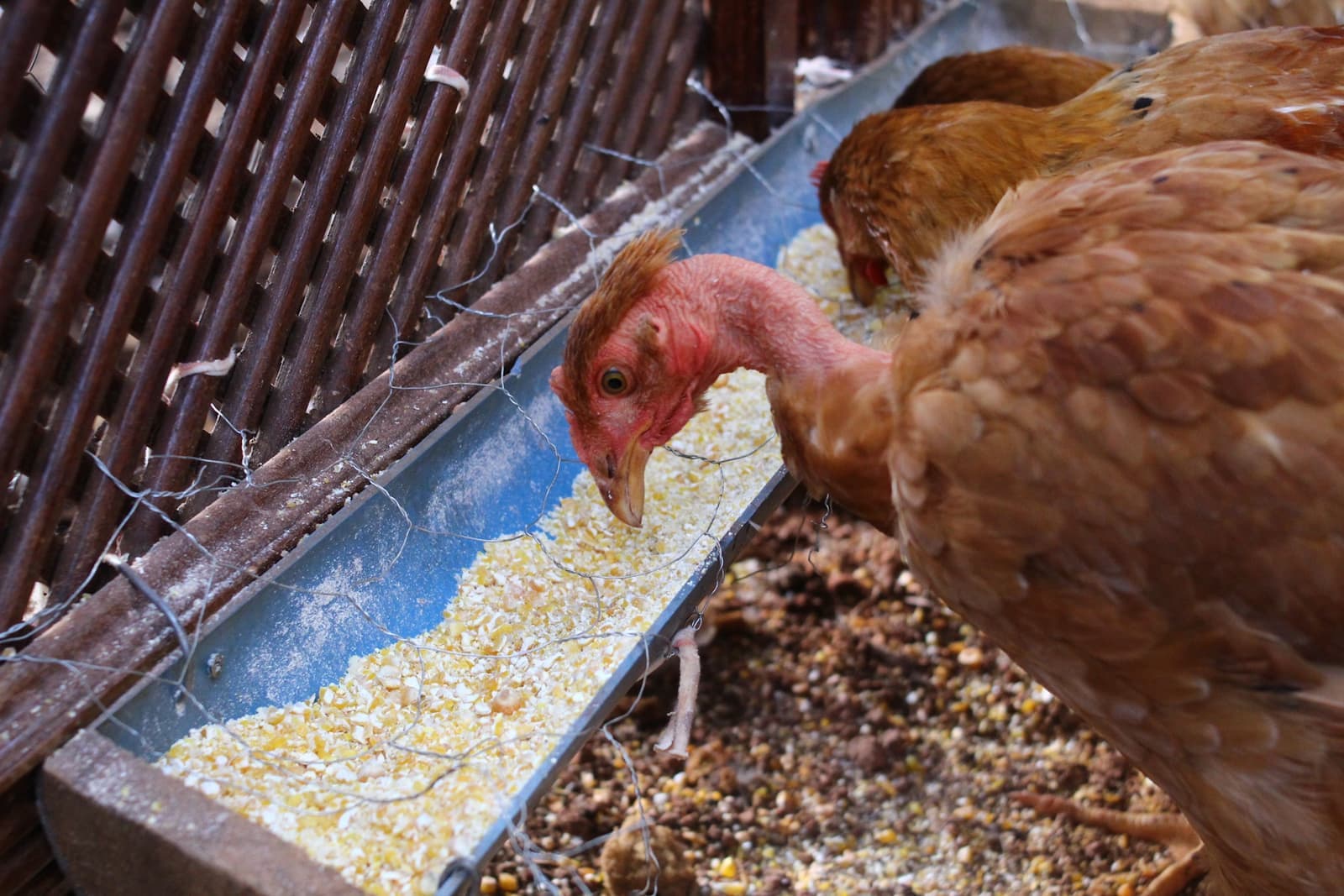
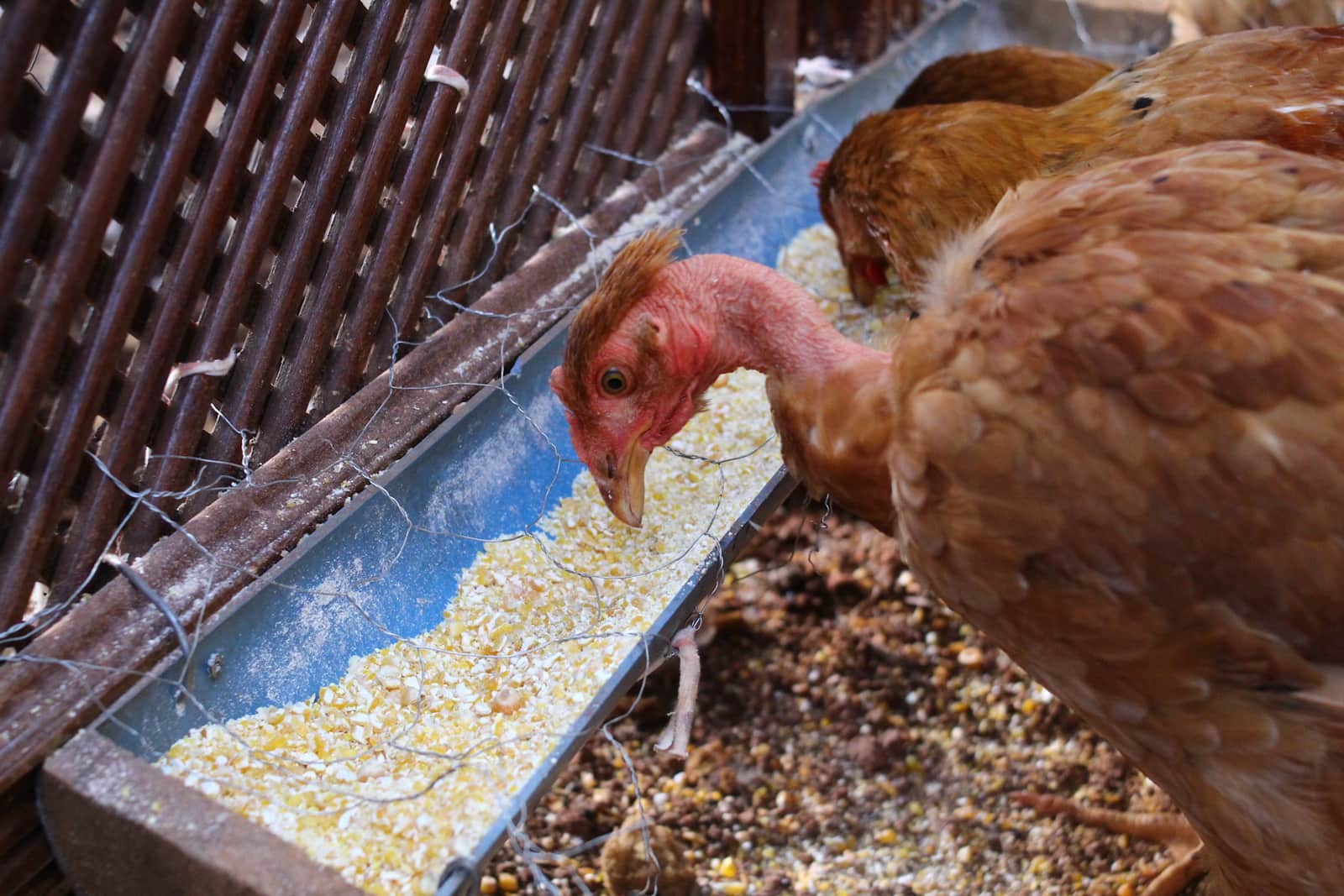
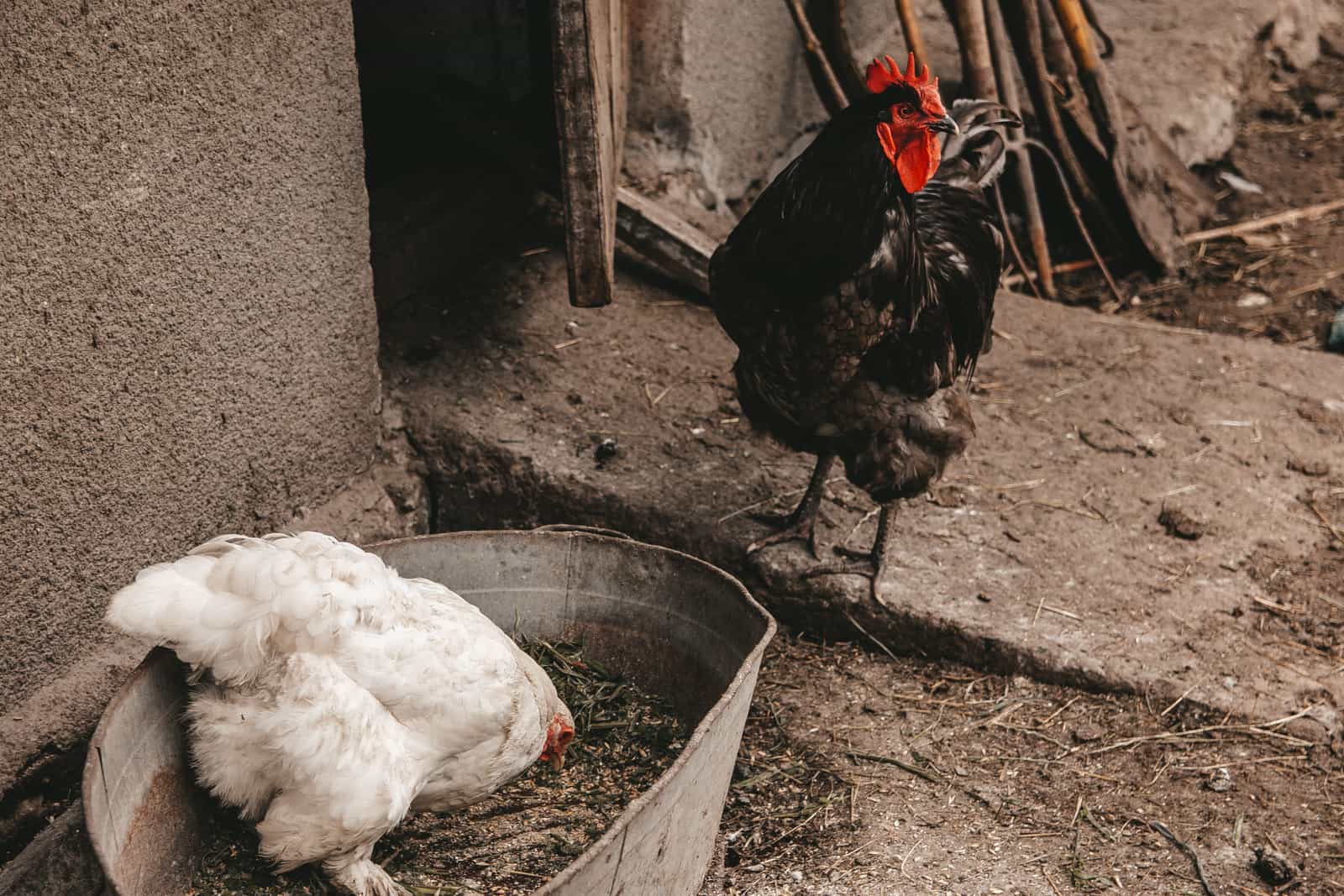
Feeding is the stage where the gear stops being about survival and starts being about your time. Birds will eat out of a bowl. The reason nobody uses a bowl for long is that an open dish of feed in a run is a bird feeder for sparrows, a buffet for rats, and half of it ends up scratched into the dirt within an hour.
The three problems, in the order they arrive
Waste comes first. Chickens feed by scratching and billing, and an open trough is designed to lose feed to that behavior. The fix is a port or a treadle: feed that is only accessible when a bird is deliberately reaching for it.
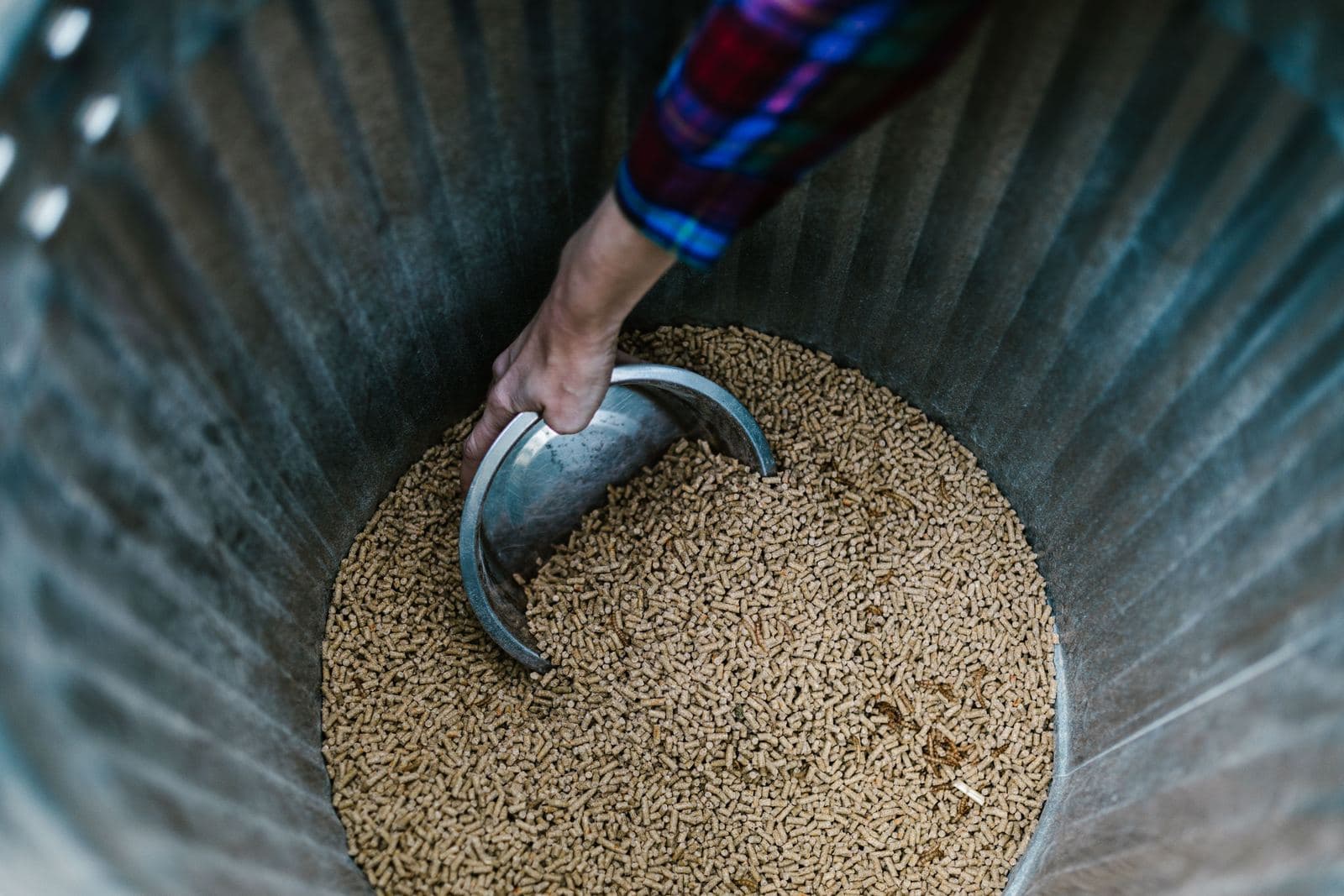
Rodents come second, usually in month two or three, and always because of feed left out overnight. This is worth being blunt about: you do not have a rat problem, you have a feed-storage problem that rats have noticed. A treadle feeder that shuts when the bird steps off, plus feed stored in a sealed container rather than the paper sack it came in, removes the reason they came. The rodent page works through it.
Frozen water comes third, in the first cold snap, and it is the one that actually threatens the birds. A hen that cannot drink stops laying within a day and is in trouble within two. Everything else on this page is about convenience; this one is not.
Sizing a feeder and a waterer with published numbers
Two figures do most of the work here, and both are published by the makers rather than guessed by us.
Published capacity figures for the feeders and waterers on this site.
Product
Published capacity
Rated for
Grandpa's Feeders Standard
20 lb
6 chickens for 10 days; 3-4 eating at once
Grandpa's Feeders Large
40 lb
12 chickens for 10 days
Harris Farms watering nipples
4 nipples
3 chickens per nipple
Farm Innovators HB-60P
2 gal, 60 W
Up to 15 chickens (3 nipples)
Premier 1 heated waterer
3 gal, 100 W
Up to 35 birds; unfrozen to -20 F
Gamma2 Vittles Vault Outback
40 lb
A whole feed sack, sealed
The birds-per-nipple figure matters more than it looks. Three chickens per nipple is Harris Farms’ own rating, and it is what tells you a four-nipple bucket covers a twelve-bird flock — which is more than most backyard keepers have. It also tells you that a single-nipple setup is wrong for anything but a couple of birds, because the bottom of the pecking order simply does not get a turn.
Winter water is an electricity decision
There is no product that keeps water liquid without energy. Insulated buckets, black rubber tubs in the sun and ping-pong balls on the surface all buy you a few degrees and a few hours; none of them work through a hard freeze. What is actually on offer is a choice about how much power you are willing to spend, and the makers publish the numbers.
Notice that the most expensive unit to run has the worst published cold rating: the 125 W base is rated to 10 F, while the 60 W drinker publishes no rating at all and the 100 W Premier unit publishes -20 F. Watts are not the same as cold performance, and the pattern is a reminder to read what is published rather than assume more power means more capability. Stopping water freezing covers the non-electric options honestly, including the ones that do not work.
Grit and oyster shell are not the same thing
This is the most common mix-up in the category and it is worth clearing up on a hub page. Grit is insoluble crushed granite. It sits in the gizzard and grinds food, and any bird eating anything other than a complete crumble — scratch, treats, grass, kitchen scraps — needs access to it. Oyster shell is 33 to 38 percent calcium and dissolves. It is for laying hens forming eggshells, and feeding it to growing birds is actively bad for them. Both are offered free-choice in separate dishes, never mixed into feed. The full explanation is here.
When the coop is not all chickens
That free-choice principle stops being good practice and becomes the mechanism the moment a duck, a drake or a cockerel joins the flock, because a layer ration at 2.5 to 4.5 percent calcium is formulated for a bird that is laying and none of them is. Chickens and ducks together works through what a mixed flock actually needs: an all-flock crumble at around half the calcium, oyster shell in a separate dish for the layers, and a drinker a duck can physically use — because a duck has to submerge its bill, which makes the nipple system this hub recommends unusable by one.
One species is a flat no rather than a feed adjustment. Turkeys should not be housed or ranged with chickens, because chickens carry the cecal worm behind blackhead disease without being harmed by it and there is no effective treatment in turkeys.
Heads up: some links on this page are affiliate links. If you buy through one we may earn a commission at no extra cost to you. It never changes a ranking, and we take no payment for placement. The full version.
Grandpa's treadle feeder reviewed on published figures: the 6-hens-for-10-days claim checked against extension feed intake, and the 500 g vs 900 g treadle weight that decides the size.
Layer feeds compared on published protein, calcium, methionine and fiber against the extension figures for a hen in production - plus when a layer ration is the wrong choice.
Top pick · Purina Layena 16% Layer Crumbles, 25 lb
The published 10% ceiling, the dilution arithmetic that shows where a ration actually breaks, and the treats worth buying - with the grit their makers say to provide alongside.
Top pick · Manna Pro Harvest Delight Poultry Treat, 2.25 lb
+What is the best chicken feeder to keep rats out?
A treadle feeder, which only opens when a bird of sufficient weight stands on the plate and closes when it steps off. Grandpa's Feeders publishes a cantilevered lid that prevents access by sparrows, rats and mice, and a two-week, two-stage training period using included bolts. Combine it with feed stored in a sealed container rather than its sack.
+How do I stop chicken water freezing?
With energy. Insulated containers, dark rubber tubs and floating objects buy hours, not days, and none survive a hard freeze. The reliable options are a thermostatically controlled heated waterer or a heated base under the drinker you already own. Published ratings range from 10 F on a 125 W base to minus 20 F on a 100 W waterer.
+What is the difference between grit and oyster shell?
Grit is insoluble crushed granite that stays in the gizzard and grinds food; every bird eating anything other than complete crumble needs it. Oyster shell is a soluble calcium supplement at 33 to 38 percent calcium, for laying hens forming eggshells. Offer both free-choice in separate dishes and never mix either into feed.
+How much feed does a chicken eat?
Published feeder ratings are the most reliable public figure: Grandpa's Feeders states 20 lb feeds six chickens for ten days, and 40 lb feeds twelve chickens for ten days. Both work out at roughly a third of a pound per bird per day, which is a useful planning number for buying and storing feed.