Laying hens need 3 to 4 square feet of coop floor and 10 square feet of run each, 6 to 10 inches of roost bar, and one nest box per four to five birds. Those figures come from poultry.extension.org and University of Maryland Extension, and they are what any coop capacity claim should be checked against.
The four figures
Published space allowances, with their sources.
Measure
Figure
Published by
Coop floor, laying hens
3 to 4 sq ft per hen indoors
poultry.extension.org
Outdoor space
10 sq ft per hen
poultry.extension.org
Coop floor, alternative
At least 3 sq ft with run access; 8 to 10 sq ft with none
Oregon State University Extension EC 1644
Coop floor, minimum
2.5 to 3.5 sq ft inside, plus 4 to 5 outside
Cornell Cooperative Extension
Perch space
6 to 10 in per bird
University of Maryland Extension
Perch height
No higher than 4 ft above the floor
University of Maryland Extension
Nest boxes
One nest per 4 to 5 birds
University of Maryland Extension
Nest height
18 to 20 in off the floor, on the ground for pullets at first
University of Maryland Extension
Note that Oregon State’s figure introduces the variable that everything else turns on: whether the birds have outdoor access. At least 3 square feet with a run; 8 to 10 without. That single distinction is the reason coop capacity claims and extension figures appear to disagree — they are answering different questions.
By flock size
Requirements by flock size at the published figures.
Birds
Coop at 3 sq ft
Coop at 4 sq ft
Run at 10 sq ft
Roost at 8 in
Nest boxes
3
9 sq ft
12 sq ft
30 sq ft
24 in
1
4
12 sq ft
16 sq ft
40 sq ft
32 in
1
5
15 sq ft
20 sq ft
50 sq ft
40 in
1
6
18 sq ft
24 sq ft
60 sq ft
48 in
2
8
24 sq ft
32 sq ft
80 sq ft
64 in
2
10
30 sq ft
40 sq ft
100 sq ft
80 in
2
12
36 sq ft
48 sq ft
120 sq ft
96 in
3
Checking a coop, step by step
This takes about a minute and it is the most valuable minute in the whole purchase.
Find the published INTERIOR dimensions. Not the external footprint, which on a raised coop includes run space underneath. If the maker publishes only external dimensions, you cannot do this check — record that as a mark against them.
Multiply length by width in inches, divide by 144. That gives square feet.
Divide by the stated bird count.
Compare with 3 square feet. Above it, the claim survives confinement. Below it, the claim depends on an always-open run — which makes the run the load-bearing half of the setup, and runs get the same division done to them at 10 sq ft a bird.
Check the roost separately. Bird count times 8 inches. A coop can pass on floor and fail on perch, and roost is the constraint that fails first once you are at eight birds or ten, because bar length grows with one dimension of a coop and floor area grows with two.
What overcrowding actually looks like
Not dramatic collapse. It looks like feather picking, a hen at the bottom of the order with a bare back, bullying at the feeder, more mites because birds are in closer contact, more ammonia because there is more manure in the same volume, and eventually egg eating. People generally blame the breed. It is almost always the space.
Heads up: some links on this page are affiliate links. If you buy through one we may earn a commission at no extra cost to you. It never changes a ranking, and we take no payment for placement. The full version.
The picks
Coops and fittings that survive the arithmetic
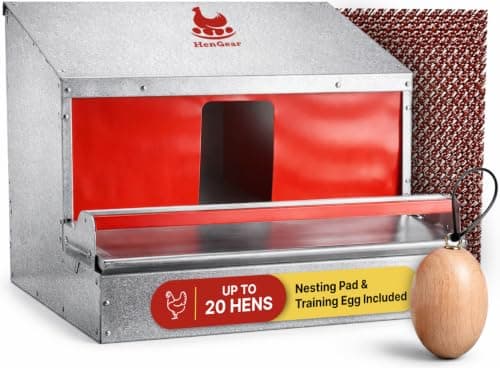
The two coops in this comparison that publish enough to be checked, plus a nest box sized for a backyard flock.
Omlet
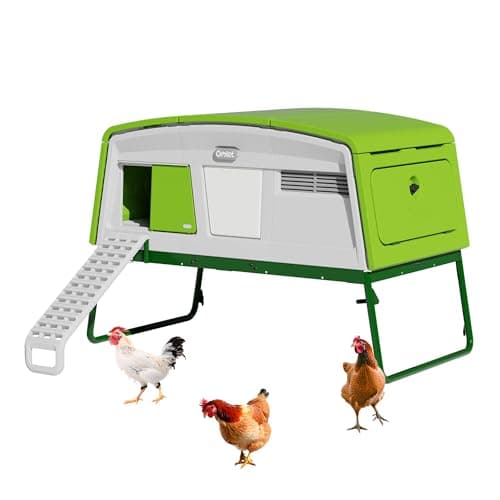
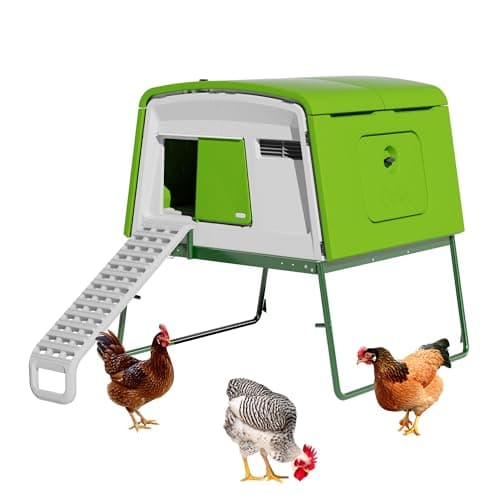
Eglu Pro
13.3 sq ft interior
Best for: The only one here with adjustable ventilation
The large plastic coop, and the only model in Omlet's own comparison table that lists adjustable ventilation — which is the spec that matters most in a coop you cannot see inside on a January night.
A plastic coop that hoses out, with published interior dimensions you can actually check — and once you check them, a six-hen claim that only works because the run is permanently attached.
3 to 4 square feet of indoor floor space per laying hen, published by poultry.extension.org, plus 10 square feet of outdoor space. Oregon State University Extension publishes at least 3 square feet where a run is available and 8 to 10 square feet where the birds have no outdoor access at all.
+How much roost space does a chicken need?
6 to 10 inches of perch per bird, published by University of Maryland Extension, with perches no higher than four feet above the floor. At the 8-inch midpoint, six birds need about four feet of roost bar. This is a separate check from floor area and a coop can pass one and fail the other.
+How do I check a chicken coop's capacity claim?
Find the published interior dimensions, multiply length by width in inches and divide by 144 for square feet, then divide by the stated bird count. Compare with 3 square feet per hen. Above it, the claim holds under confinement; below it, the claim depends on the attached run being open every day.
+What happens if a chicken coop is too small?
Feather picking, bullying at the feeder, a bird at the bottom of the order with a bare back, more mites from closer contact, more ammonia from more manure in the same volume, and eventually egg eating. These are usually blamed on breed or temperament and are almost always about space.
Where the numbers came from
Sources
Every figure cited on this page came from one of these documents. If one of them has changed since we read it, the number here is out of date and we would like to know.
Mobile coops and tractors on published dimensions, the combined indoor-plus-run allowance they are sold against, and the wheel kit that converts the coop you already own.
6 to 10 inches of perch per bird is the published figure. How to convert a bird-count claim into inches, why flat beats round, and how high to mount it.
The Eglu Cube reviewed on Omlet's own published interior dimensions: 1.30 sq ft per hen at the stated six, what that means in practice, and when the Go or Pro is the right buy.
A shed converts into a better coop than most flat-pack coops, on published space figures. Ventilation, roost space and nest counts are the five numbers that decide it.