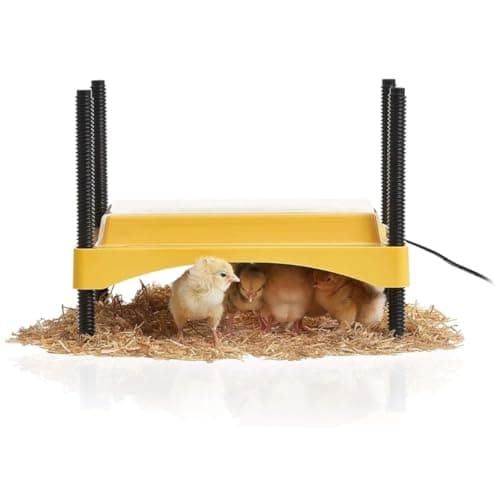
Supply 95 F at chick level under the heat source for the first week, then decrease by 5 F per week until you reach normal daily temperature of 62 to 65 F. Chicks typically no longer need supplemental heat somewhere between six and eight weeks. Those figures are published by Penn State Extension.
The schedule
Brooding temperature and space by age. All figures published by Penn State Extension.
Age
Temp at chick level
Floor space per bird
Feeder space
Waterer space
Week 1
95 F
1/4 sq ft
1 in
1/2 in
Week 2
90 F
1/2 sq ft
1.5 in
1/2 in
Week 3
85 F
1/2 sq ft
1.5 in
1/2 in
Week 4
80 F
3/4 sq ft
2 in
1/2 in
Week 5
75 F
3/4 sq ft
2 in
1/2 in
Week 6
70 F
1 sq ft
2 in
3/4 in
Week 7
65 F
1 sq ft
2 in
3/4 in
Week 8+
Room temperature
1 sq ft
2 in
3/4 in
How to take the measurement
Two mistakes account for nearly every wrong reading. The first is measuring at the wrong height: the figure is at chick level, which is a couple of inches off the litter, not at the top of the brooder where warm air collects. The second is measuring in the wrong place: directly under a heat plate you are measuring the plate, and at the far corner you are measuring the room.
The reading you want is at chick height, at the edge of the warm zone — where a chick standing half in and half out of the heat would be. And there should always be somewhere cooler for them to go. A brooder that is uniformly 95 F gives the chicks no way to regulate themselves.
Reading the birds instead
Penn State gives the behavioral signal in one line: cold chicks huddle under the heat source, and chicks that are too warm will be as far from the heat as possible. In practice:
What the chicks are telling you.
What you see
What it means
What to do
Piled under the heat, silent or cheeping loudly
Too cold
Lower the plate or raise the temperature; check for a draft
Pressed against the far walls, panting, wings held out
Too hot
Raise the plate; make sure a cool zone exists
All bunched to one side away from a wall
A draft from that direction
Find and block the draft; this is not a heat problem
Spread out, some under and some out, moving and eating
Correct
Nothing
The draft case is the one people misread most often. A brooder can be at exactly the right temperature and still have every chick crowded into one corner, because a cold draft crossing the box is a different problem from a cold box. Raising the temperature does not fix it.
How long do chicks need heat?
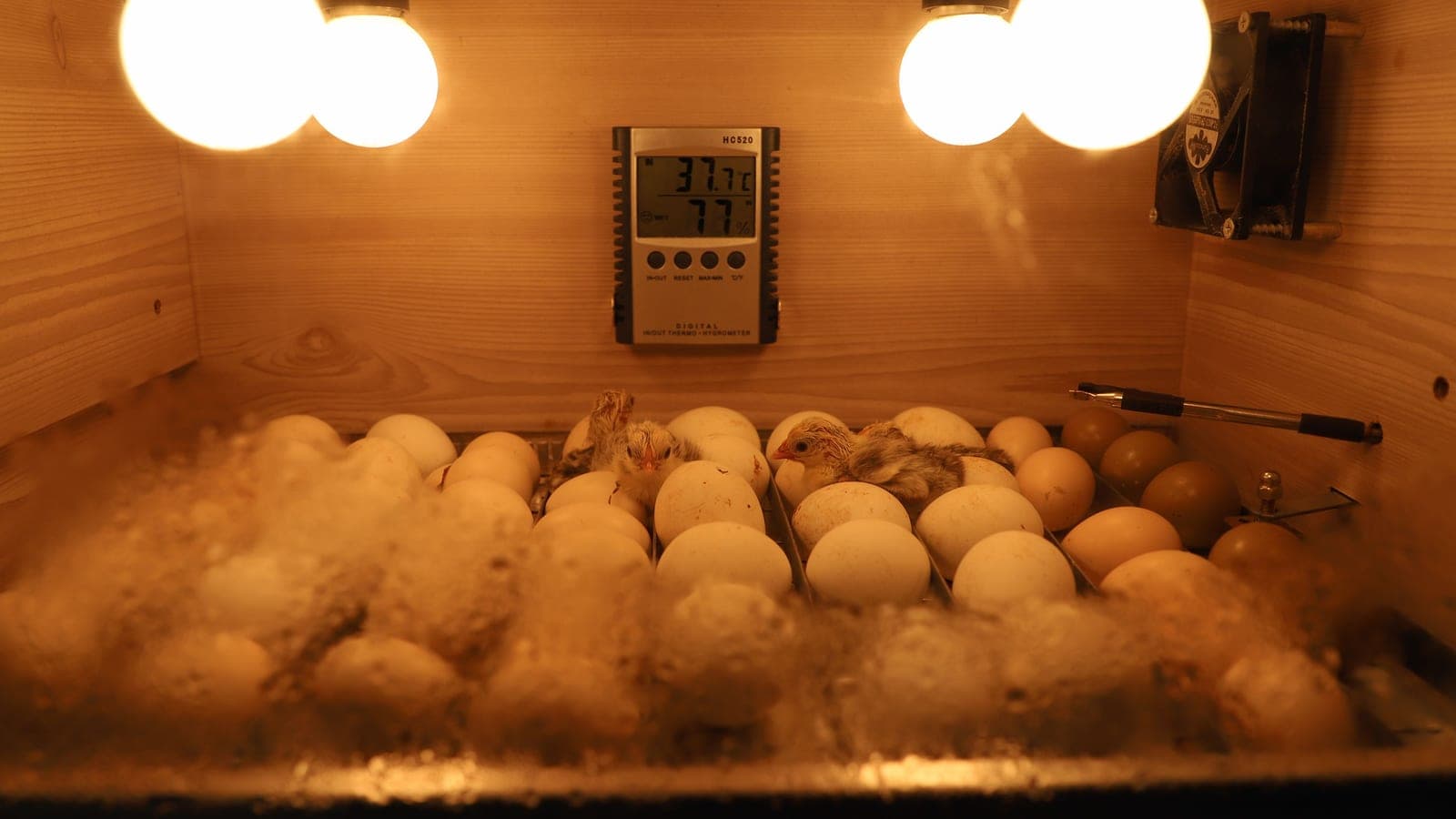
If you hatched the chicks rather than buying them, this schedule starts the moment they come out of the incubator — day 21 on the hatching timeline is day one of the table above, and the brooder needs to be at 95 F before that happens rather than after.
Following the schedule, they reach room temperature at around six to eight weeks. In practice most chicks come off heat earlier than the table implies, because they wean themselves — they simply stop going under the plate. When they have ignored it for several days and your room is above about 65 F, it can come out.
The one thing not to do is remove heat on a schedule while the birds are still using it. Feathering varies by breed and by individual, and a chick that is still going under the plate at week six is telling you something the calendar is not.
Heads up: some links on this page are affiliate links. If you buy through one we may earn a commission at no extra cost to you. It never changes a ranking, and we take no payment for placement. The full version.
The picks
What to hit these numbers with
A heat source you can raise weekly, and something to check it with that publishes how wrong it might be.
Brinsea
EcoGlow Safety 600
12 W
Best for: A first brood of a dozen or fewer
Twelve watts and a metal warming plate, which is the lowest published draw of any brooder plate we found and the reason it costs about two dollars to run a whole six-week brood.
The only unit here that publishes an accuracy tolerance — plus or minus 1.8 F — and it reads humidity too, which is the number that actually predicts winter frostbite in a coop.
#ad We have no verified Amazon listing for this one, so no number is shown. How this is funded.
Score7.0no photo yet
Incubator Warehouse
Brooder Thermometer, 50 F to 120 F
50 F to 120 F
Best for: Reading the temperature where it matters
A dedicated brooder thermometer whose range starts at 50 F and stops at 120 F, which is exactly the band you care about and nothing else — and it hangs at chick level rather than sitting on a shelf.
#ad We have no verified Amazon listing for this one, so no number is shown. How this is funded.
FAQ
Questions people actually ask
+What temperature should a brooder be in week one?
95 F at chick level under the heat source, per Penn State Extension. Measure a couple of inches above the litter at the edge of the warm zone rather than at the top of the brooder or directly against the heat source, and always leave a cooler area so the chicks can move away from the heat.
+How long do chicks need a heat plate?
Following the published schedule of 95 F falling 5 F per week to 62 to 65 F, that is roughly six to eight weeks. Most chicks wean themselves earlier by simply not using the plate. When they have ignored it for several days and the room is above about 65 F, it can come out.
+Why are my chicks all huddled in one corner?
If they are huddled directly under the heat, they are cold. If they are bunched against one side away from a wall, that is usually a draft crossing the brooder rather than a temperature problem — and raising the heat will not fix it. Find the air movement and block it.
+How do I know if the brooder is too hot?
Chicks that are too warm move as far from the heat as they can get, often pressed against the far walls, panting with their wings held slightly away from the body. Raise the heat source and make sure there is a genuinely cooler zone for them to use.
Where the numbers came from
Sources
Every figure cited on this page came from one of these documents. If one of them has changed since we read it, the number here is out of date and we would like to know.