The best brooder heat plates, compared on what the makers publish
Every plate here does the same job. What separates them is wattage, how far the legs adjust, and whether the maker publishes enough for you to check the capacity claim.
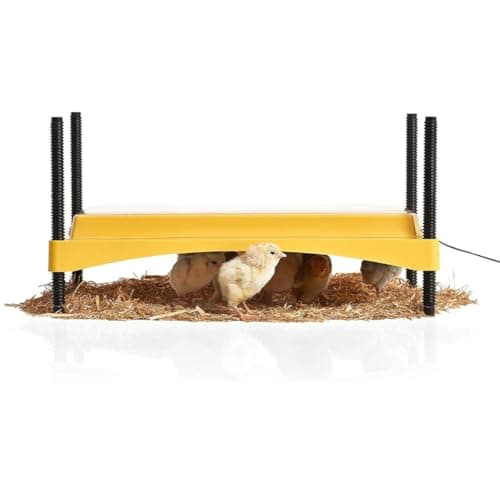
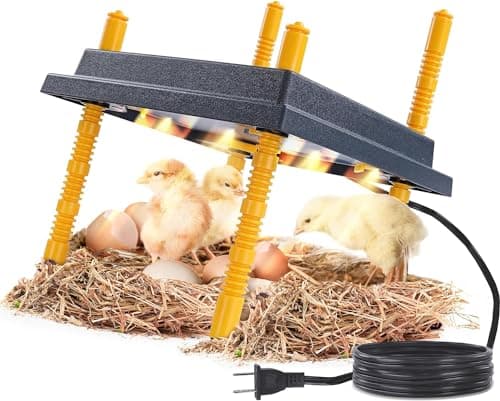
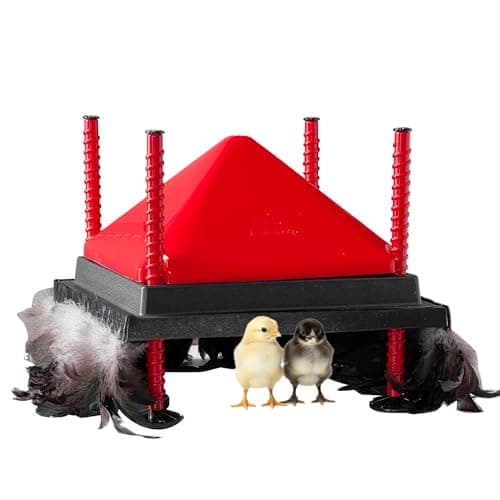
A brooder plate warms the chicks under it rather than heating a room, the way a hen does. They draw 12 to 42 watts against a heat lamp’s 250, they have no bulb to shatter, and the whole six-week brood costs between two and eight dollars of electricity.
There are really only two questions to answer when buying one. How many chicks does it need to cover in week five, not week one — because published capacities are almost always day-old figures and the plate you bought for twenty chicks covers ten feathered ones. And how high do the legs go, because that adjustment is the one you make every single week.
The numbers the makers publish
Published specifications, side by side. Every figure is the maker's own.
Plate
Watts
Plate size
Stated capacity
Height adjustment
Brinsea EcoGlow Safety 600
12 W
8 x 12 in
20 day-olds / 10-12 older
4 adjustable legs
Brinsea EcoGlow Safety 1200
18 W
12 x 17 in
35 day-olds / 20-25 older
Adjustable, tiltable
Premier 1, 12 in
22 W
12 x 12 in
20 chicks
1.5 to 6 in
RentACoop, 12 in
22 W
12 x 12 in
20 chicks
25 settings, 1 to 9 in
Premier 1, 16 in
42 W
16 x 16 in
30 chicks
1.5 to 6 in
RentACoop, 10 in
15 W
10 x 10 in
15 chicks
25 settings, 1 to 7 in
Two things jump out of that table. The first is that Brinsea is the only maker here that publishes a second, lower capacity for older chicks — the 600 says 20 day-olds or 10 to 12 older birds. Everybody else publishes one number, and it is the optimistic one. Treat every single-figure capacity as a day-one number and halve it for planning.
The second is that Premier 1 and RentACoop both publish 22 W for a 12-inch plate while Brinsea publishes 12 W for an 8-by-12. Brinsea also publishes a metal warming plate and 12-volt operation from a supplied transformer, where the others are ABS plastic on mains voltage. Those are real engineering differences, not marketing.
What each one costs to run
Height adjustment is the spec people underrate
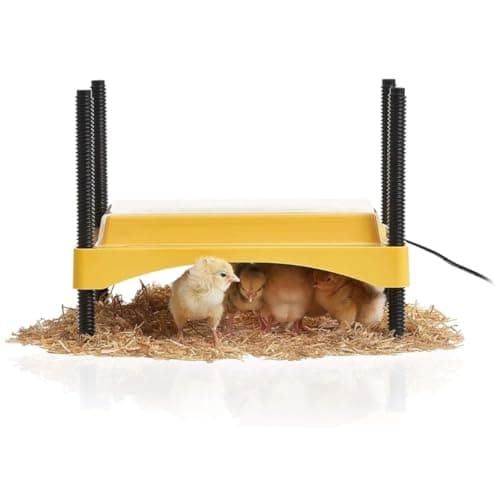
A plate is set so the chicks just touch it with their backs. As they grow, it goes up. If the range runs out before they stop needing heat, the plate is useless for the last two weeks and you are back to improvising.
RentACoop publishes 25 settings from 1 to 9 inches on the 12-inch plate, which is the tallest and finest-grained range here. Premier publishes 1.5 to 6 inches. Brinsea publishes four adjustable legs and the useful detail that one end can be set lower than the other, which lets you build a warm end and a cooler end under a single plate — a genuinely good idea that neither of the others documents.
What nobody publishes, and should
Not one plate in this comparison publishes a surface temperature. That is the figure a buyer most wants and none of them give it, so any claim you read about how warm these run is somebody’s guess. Brinsea at least publishes a minimum room temperature (50 F, below which the 600 is not rated to work), which is the closest anyone comes to telling you the operating envelope. Premier and RentACoop publish neither.
Heads up: some links on this page are affiliate links. If you buy through one we may earn a commission at no extra cost to you. It never changes a ranking, and we take no payment for placement. The full version.
The short answer
The short list
Ranked on the published rubric. Every row jumps to that product's full write-up below; the button goes straight to Amazon.
#
Pick
Best for
Key spec
Score
Price
1
Our pick
Brinsea
EcoGlow Safety 600
Twelve watts and a metal warming plate, which is the lowest published draw of any brooder plate we found and the reason it costs about two dollars to run a whole six-week brood.
The 600's bigger sibling at 18 watts and 12 by 17 inches, which is the size that still works when the chicks are four weeks old and the small plate has stopped fitting them.
Twenty-two watts and a leg range published from 1.5 to 6 inches, which is the spec that decides whether a plate still works in week five or gets shoved in a cupboard.
Twenty-two watts like the Premier plate, but with 25 published height settings from 1 to 9 inches instead of a handful — the plate you want if your chicks grow faster than your patience.
Fifteen watts and a published 15-chick capacity in a 10 inch square, which is about as small as a plate can get and still be a plate rather than a gadget.
#adPrices as of October 18, 2026. Scores are our own published rubric, not customer ratings.
#1 · A first brood of a dozen or fewer
Brinsea EcoGlow Safety 600
Twelve watts and a metal warming plate, which is the lowest published draw of any brooder plate we found and the reason it costs about two dollars to run a whole six-week brood.
Who it is for. Somebody starting with four to eight chicks in a spare room, a basement or an attached garage, who wants the running cost as close to zero as it can be.
Published specifications
Power
12 watts
Voltage
Safe 12 volt operation from a mains transformer, supplied
Dimensions
9 in H x 8 in W x 12 in D (229 x 203 x 305 mm)
Capacity
Up to 20 newly hatched chicks, or 10 to 12 older chicks
Height adjustment
4 adjustable legs; one end may be set lower than the other
Plate material
Metal warming plate
Minimum room temperature
Room temperature should not drop below 50 F (10 C)
The lowest published wattage in this comparison: 12 W against 22 W for the mid-size plates and 250 W for a typical heat lamp
A metal plate rather than molded plastic, which the maker states is there to even out hot and cold spots
A three-year warranty, which is longer than anything else here publishes
12 volt operation from a supplied transformer, so the mains voltage never reaches the brooder
What it costs you
The 20-chick figure is for newly hatched birds only; the maker's own published downgrade to 10 to 12 older chicks is the number that decides whether it lasts your whole brood
The published 50 F minimum room temperature rules out an unheated garage in much of the country in March
8 x 12 inches is a small plate — chicks at four weeks will be spilling out from under it
Skip it if. Your brooder lives in an unheated outbuilding. Brinsea publishes a 50 F floor on room temperature, and a plate warms the birds under it rather than the air around them.
The 600's bigger sibling at 18 watts and 12 by 17 inches, which is the size that still works when the chicks are four weeks old and the small plate has stopped fitting them.
Who it is for. Anybody starting with eight or more chicks, or anybody who would rather buy one plate now than two over two seasons.
Published specifications
Power
18 watts
Voltage
Safe 12 volt operation from a mains transformer, supplied
Dimensions
9 in H x 12 in W x 17 in D (229 x 305 x 432 mm)
Capacity
Up to 35 newly hatched chicks, or 20 to 25 older chicks
Height adjustment
Easy height adjustment; one end may be set lower than the other
Plate material
Metal warming plate with a flared skirt design
Minimum room temperature
Room temperature should not drop below 50 F (10 C)
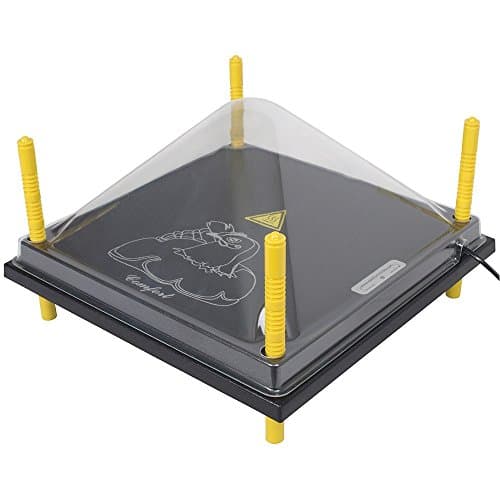
Premier 1 Supplies Chick Brooder Heating Plate, 12 in x 12 in
Twenty-two watts and a leg range published from 1.5 to 6 inches, which is the spec that decides whether a plate still works in week five or gets shoved in a cupboard.
Who it is for. Somebody who wants one plate to cover the whole brood and values a published, checkable spec table over the last few watts.
Published specifications
Power
22 watts/hr
Dimensions
12 in x 12 in
Capacity
Up to 20 chicks
Leg height adjustment
1.5 in to 6 in, via the yellow legs (legs are 9.5 in long)
Cover height
5 in
Material
ABS plastic
Cord
70 in
Source: Premier 1 Supplies, Heating Plates and Covers product page (premier1supplies.com), figures retrieved 2026-09-01
Rubric — 8.3 / 10
Capacity honesty8/10 · weight 26%
Documentation9/10 · weight 24%
Build and weather7/10 · weight 20%
Running cost9/10 · weight 15%
Daily use9/10 · weight 15%
What it gets right
The published 1.5 to 6 inch adjustment range is the widest here, and height is the one adjustment you actually make every week
Premier publishes a full size and wattage table across four plate sizes, so you can pick against your own chick count rather than guess
22 W puts a six-week brood at roughly four dollars of electricity
The optional cover is a published accessory with its own stated height, not an afterthought
What it costs you
ABS plastic rather than a metal plate, which is a real difference from the Brinsea units
The 70 inch cord is under six feet — shorter than the Brinsea 10 ft lead and the RentACoop 6 ft
Premier does not publish a minimum room temperature, so you are left to judge that yourself
Skip it if. You want the lowest possible running cost and are brooding fewer than a dozen chicks — the 12 W Brinsea 600 does the same job for half the draw.
RentACoop 12 in x 12 in Chick Brooder Heating Plate
Twenty-two watts like the Premier plate, but with 25 published height settings from 1 to 9 inches instead of a handful — the plate you want if your chicks grow faster than your patience.
Who it is for. A first-time brooder who wants to adjust height a little at a time and would rather the anti-roost cone came in the box.
Published specifications
Power
Uses only 22 watts per hour
Dimensions
12 in x 12 in
Capacity
Warms up to 20 chicks
Height adjustment
25 height settings from 1 to 9 in
Cord
Attached 6 ft cord
Plug
Type A, 110 V
Included
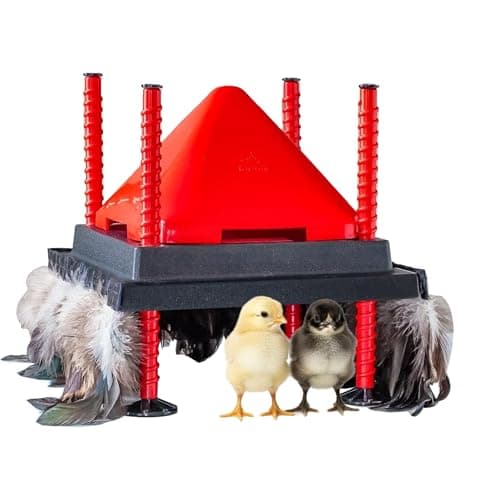
Hard anti-roost cone and removable comfort feathers
RentACoop 10 in x 10 in Chick Brooder Heating Plate
Fifteen watts and a published 15-chick capacity in a 10 inch square, which is about as small as a plate can get and still be a plate rather than a gadget.
Who it is for. Somebody with four to six chicks in a tote in a heated room who does not want to buy plate area they will never use.
Fewer than the box says by week five. Brinsea is the only maker here that publishes both figures for the same plate: the EcoGlow Safety 600 states up to 20 newly hatched chicks, or 10 to 12 older ones. Treat any single published capacity as a day-old number and plan on about half of it.
+How high should a brooder heat plate be set?
So the chicks just touch it with their backs while standing. Raise it as they grow — this is a weekly adjustment, not a one-time setting. Plates publish ranges from 1.5 to 6 inches (Premier 1) up to 1 to 9 inches across 25 settings (RentACoop), and the taller range is what keeps a plate useful into week five.
+Do brooder plates get hot to touch?
They run far cooler than a heat lamp because they warm by contact rather than by heating air, but no maker in this comparison publishes an actual surface temperature. That is a real gap in the category's documentation, and it means any specific warmth figure you read elsewhere is not coming from the manufacturer.
+Can a brooder plate be used in an unheated garage?
Brinsea publishes a minimum room temperature of 50 F for the EcoGlow Safety 600, below which it is not rated to work — a plate warms the birds under it, not the air around them. Premier 1 and RentACoop publish no minimum at all, which means you have nothing to check against.
Where the numbers came from
Sources
Every figure cited on this page came from one of these documents. If one of them has changed since we read it, the number here is out of date and we would like to know.