Size the brooder for week five, not week one — Penn State Extension publishes 1 square foot per bird at that age against a quarter of a square foot in week one. Bed it two to three inches deep, put the heat at one end only so there is a cool end, raise the feeder and drinker, and run it warm for several hours before the chicks arrive.
The container matters least
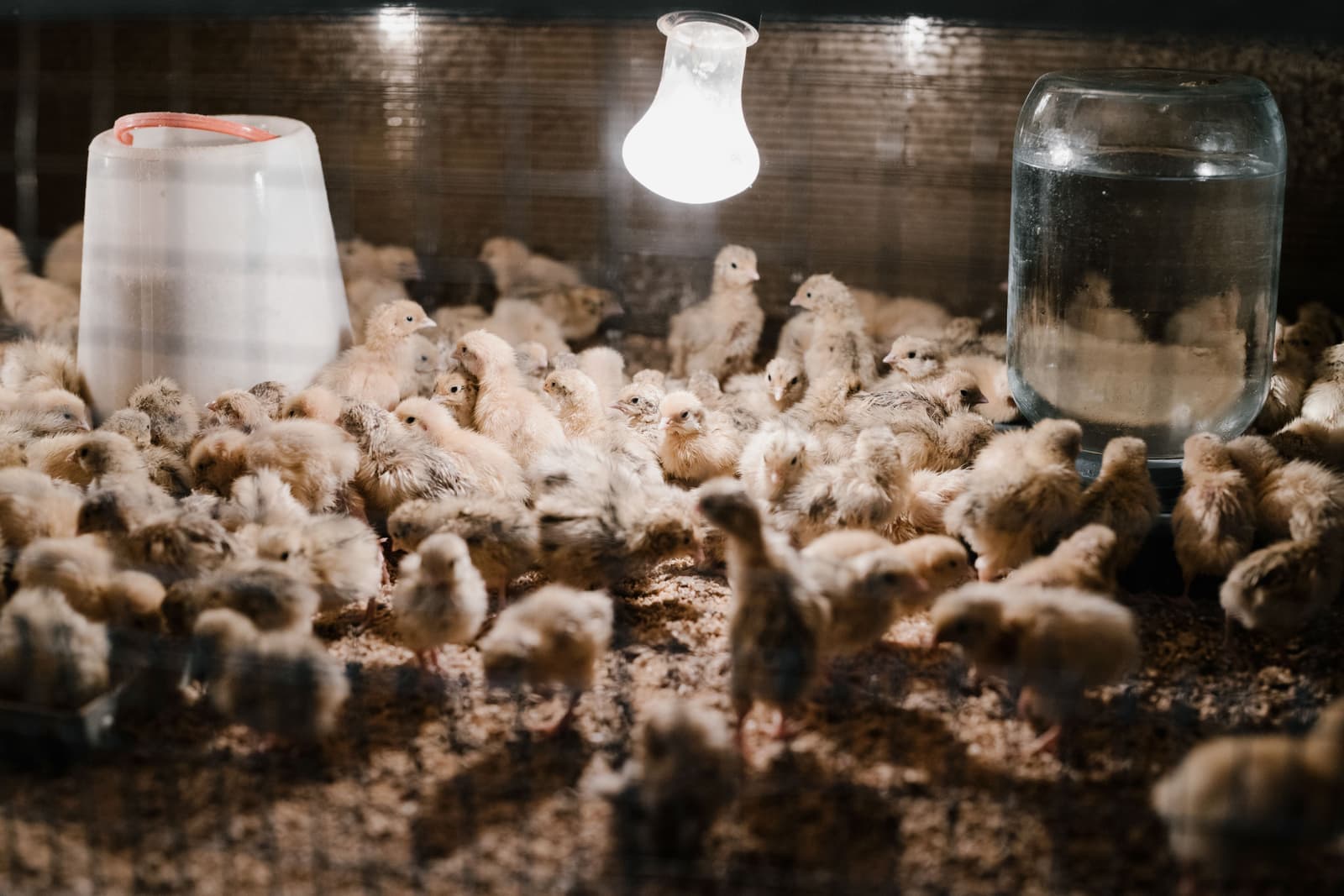
A brooder is a draft-free box you can keep warm at one end. Almost anything works: a large plastic storage tote, a stock tank, a cardboard appliance box, a sheet of hardboard bent into a ring. Purpose-built brooders exist and they are fine, but the money is better spent on the heat source.
Two requirements the container actually has to meet. It needs solid sides for the bottom foot or so, because chicks need shelter from drafts at floor level. And by week three it needs a lid or a cover of some sort, because they can fly a great deal earlier than people expect and a chick loose in a garage is a bad afternoon.
Size it for week five
This is the single most common brooder mistake, and it is entirely avoidable because the numbers are published.
Brooder floor area needed, from Penn State Extension's published space allowances.
Chicks
Week 1 (1/4 sq ft)
Weeks 3-5 (3/4 sq ft)
Weeks 5-8 (1 sq ft)
6
1.5 sq ft
4.5 sq ft
6 sq ft
10
2.5 sq ft
7.5 sq ft
10 sq ft
15
3.75 sq ft
11.25 sq ft
15 sq ft
25
6.25 sq ft
18.75 sq ft
25 sq ft
Six chicks need a square foot and a half in week one and six square feet by week five — which is a container roughly two feet by three. A large storage tote is about that, which is why totes work for small broods and stop working for larger ones around week four.
Bedding
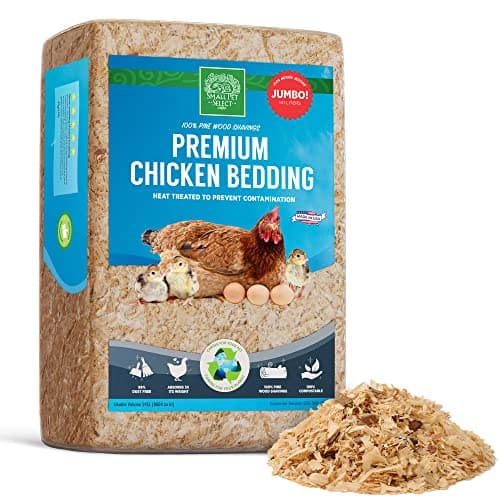
Pine shavings, two to three inches deep, are the default and for good reason: absorbent, cheap, compostable and easy to top up. The considerations are depth, dust and the surface underneath.
Depth. Two to three inches. Deep enough to absorb, shallow enough that you can see when it is wet.
Dust. An enclosed brooder is a small volume of air with young lungs in it. This is the one place a published dust-free figure on bedding is worth paying for.
Not newspaper, on its own. Slick paper gives no grip and is associated with splayed leg in the first days. If you line with paper towel for the first day or two so the chicks can find feed easily, that is fine — it has texture.
Not cedar. Cedar shavings are aromatic and the oils are an irritant. Pine or aspen.
The warm end and the cool end
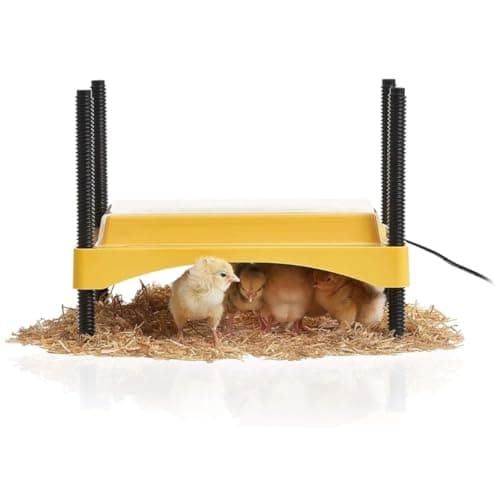
Put the heat source at one end. This is not a stylistic choice — it is the whole mechanism by which chicks regulate their own temperature. A chick that is too warm walks away from the heat; a chick that is cold goes back. If the entire brooder is at 95 F they have nowhere to go, and you have removed their ability to correct your mistakes.
It also means the feeder and drinker belong at the cooler end, not under the plate. Warm water is unappealing and warm feed spoils faster.
Before they arrive
Set it all up and run it for several hours, ideally the day before. Check 95 F at chick level at the edge of the warm zone with the heat on and the room at its normal temperature. Day-old chicks arriving into a brooder you are still adjusting is how the first day goes wrong, and shipped chicks in particular arrive tired and dehydrated with no margin for a cold hour.
Heads up: some links on this page are affiliate links. If you buy through one we may earn a commission at no extra cost to you. It never changes a ranking, and we take no payment for placement. The full version.
The picks
What goes in it
Heat, bedding and something to keep the water out of the shavings.
Brinsea
EcoGlow Safety 600
12 W
Best for: A first brood of a dozen or fewer
Twelve watts and a metal warming plate, which is the lowest published draw of any brooder plate we found and the reason it costs about two dollars to run a whole six-week brood.
Ordinary pine shavings with an unusual claim attached: triple-screened to 99 percent dust-free, which is the one bedding spec that matters in an enclosed brooder.
A raised stand that takes the feeder and drinker off the shavings, which is the single change that stops you refilling a waterer full of bedding three times a day.
#ad We have no verified Amazon listing for this one, so no number is shown. How this is funded.
FAQ
Questions people actually ask
+How big should a chick brooder be?
Size it for week five rather than week one. Penn State Extension publishes a quarter of a square foot per chick in week one rising to a full square foot at weeks five to eight, so six chicks need about a square foot and a half at the start and six square feet by the end — roughly a two-by-three-foot container.
+What bedding is best for a brooder?
Pine or aspen shavings, two to three inches deep. Avoid cedar, whose aromatic oils are a respiratory irritant, and avoid bare newspaper, which is too slick for young chicks and is associated with splayed leg. Low dust matters more in an enclosed brooder than anywhere else in chicken keeping.
+Should the whole brooder be 95 degrees?
No. Put the heat source at one end so there is a genuinely cooler area. That temperature gradient is how chicks regulate themselves — they move toward the heat when cold and away when warm. A uniformly heated brooder removes their ability to correct anything you have got wrong.
+Can I use a cardboard box as a brooder?
Yes, and plenty of successful broods happen in one. It needs solid sides at floor level to block drafts, a cover by around week three because chicks fly earlier than people expect, and replacing when it gets damp. The container is the least important part of a brooder; the heat source is the most.
Where the numbers came from
Sources
Every figure cited on this page came from one of these documents. If one of them has changed since we read it, the number here is out of date and we would like to know.
Sav-A-Chick against Durvet on published guaranteed analysis - 15% potassium versus 2% - plus when electrolytes genuinely help and when plain water is the better answer.