Chicken starter kits, and the kit we would build instead
The all-in-one box is an appealing idea that mostly does not survive contact with a real brood. Here is what goes in a first-flock kit and why we would buy the pieces separately.
A first brood needs five things: a heat plate, starter feed, a chick feeder and drinker held off the bedding, a thermometer that reads at chick level, and bedding. Packaged “starter kits” usually bundle the cheapest version of each, and the heat source is the one where cheap costs you the most.
There is an obvious appeal to a box that arrives with everything in it. You are about to take delivery of live animals, you have never done this, and somebody is offering to make the decisions for you. The trouble is that the economics of a bundle push every component toward the cheapest acceptable version, and in a brooder there is exactly one component where that matters enormously.
The heat source is where kits go wrong
Most bundled kits ship a clamp lamp and a 250 W bulb, because it is the cheapest heat source that works. It does work. It also costs roughly twenty times as much to run as a brooder plate and it is the component most often implicated in brooder fires.
What actually goes in the kit
Five items, in the order they matter. Everything else — waterer bases, chick grit, feeder guards, brooder rings — is either optional or something you improvise from what you have.
The five-item first brood kit.
Item
Why it is on the list
The figure that decides it
Heat plate
The only component where cheap costs you money and safety
12 to 22 W published draw
Starter feed
18% protein, low calcium, medicated or not depending on vaccination
18% crude protein
Feeder and drinker, raised
Chicks fill a drinker left on the floor with bedding within minutes
1 in feeder space per chick, week 1
Thermometer at chick level
The published schedule is meaningless if you measure in the wrong place
95 F falling 5 F per week
Bedding
Absorbency and low dust, in an enclosed box with young lungs
99% dust-free claim
The feeder and waterer space figures are Penn State Extension’s, from the same brooding table that gives the temperature schedule: one inch of feeder space per chick in week one, rising to two inches by week three, and half an inch of waterer space per chick for the first five weeks. Those are the numbers that tell you whether one small drinker is enough for twelve chicks. It is not.
What to skip in a kit
A brooder box in the kit. Almost anything works: a large plastic tote, a stock tank, a cardboard box replaced when it gets damp. Paying for one is paying for shipping air.
Chick grit, on day one. Chicks on complete crumble and nothing else do not need it. It becomes necessary the moment you offer a treat.
Electrolytes and vitamins, as standard. Useful for shipped chicks that arrive stressed; not something a healthy local brood needs routinely.
Anything for the coop. You have weeks. Buying coop hardware now means buying it before you know how many birds survive the brood.
Heads up: some links on this page are affiliate links. If you buy through one we may earn a commission at no extra cost to you. It never changes a ranking, and we take no payment for placement. The full version.
The short answer
The short list
Ranked on the published rubric. Every row jumps to that product's full write-up below; the button goes straight to Amazon.
#
Pick
Best for
Key spec
Score
Price
1
Our pick
Brinsea
EcoGlow Safety 600
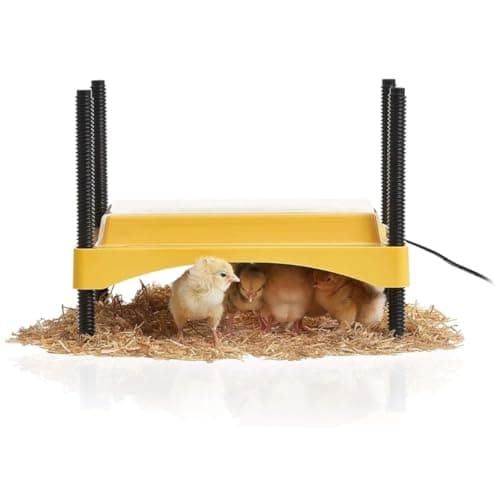
Twelve watts and a metal warming plate, which is the lowest published draw of any brooder plate we found and the reason it costs about two dollars to run a whole six-week brood.
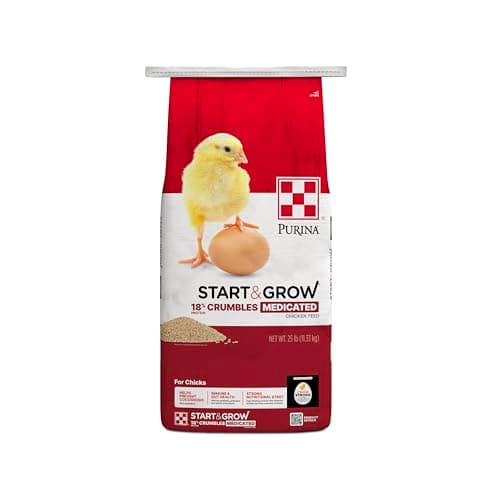
Eighteen percent crude protein with amprolium at 0.0125 percent, and a feeding direction that tells you exactly when to stop: day one until the first egg, then switch.
A raised stand that takes the feeder and drinker off the shavings, which is the single change that stops you refilling a waterer full of bedding three times a day.
A dedicated brooder thermometer whose range starts at 50 F and stops at 120 F, which is exactly the band you care about and nothing else — and it hangs at chick level rather than sitting on a shelf.
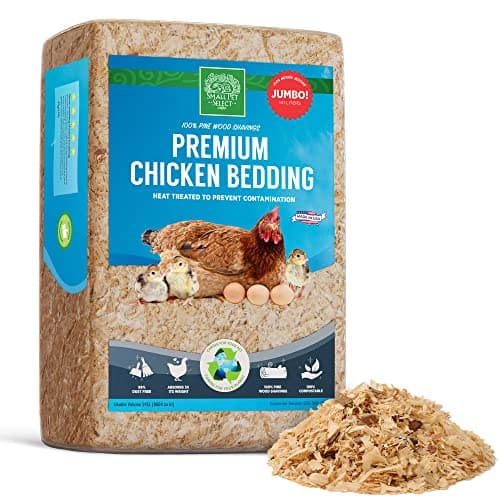
Ordinary pine shavings with an unusual claim attached: triple-screened to 99 percent dust-free, which is the one bedding spec that matters in an enclosed brooder.
#adPrices as of October 18, 2026. Scores are our own published rubric, not customer ratings.
#1 · A first brood of a dozen or fewer
Brinsea EcoGlow Safety 600
Twelve watts and a metal warming plate, which is the lowest published draw of any brooder plate we found and the reason it costs about two dollars to run a whole six-week brood.
Who it is for. Somebody starting with four to eight chicks in a spare room, a basement or an attached garage, who wants the running cost as close to zero as it can be.
Published specifications
Power
12 watts
Voltage
Safe 12 volt operation from a mains transformer, supplied
Dimensions
9 in H x 8 in W x 12 in D (229 x 203 x 305 mm)
Capacity
Up to 20 newly hatched chicks, or 10 to 12 older chicks
Height adjustment
4 adjustable legs; one end may be set lower than the other
Plate material
Metal warming plate
Minimum room temperature
Room temperature should not drop below 50 F (10 C)
The lowest published wattage in this comparison: 12 W against 22 W for the mid-size plates and 250 W for a typical heat lamp
A metal plate rather than molded plastic, which the maker states is there to even out hot and cold spots
A three-year warranty, which is longer than anything else here publishes
12 volt operation from a supplied transformer, so the mains voltage never reaches the brooder
What it costs you
The 20-chick figure is for newly hatched birds only; the maker's own published downgrade to 10 to 12 older chicks is the number that decides whether it lasts your whole brood
The published 50 F minimum room temperature rules out an unheated garage in much of the country in March
8 x 12 inches is a small plate — chicks at four weeks will be spilling out from under it
Skip it if. Your brooder lives in an unheated outbuilding. Brinsea publishes a 50 F floor on room temperature, and a plate warms the birds under it rather than the air around them.
Eighteen percent crude protein with amprolium at 0.0125 percent, and a feeding direction that tells you exactly when to stop: day one until the first egg, then switch.
Who it is for. Anybody with unvaccinated chicks, and particularly anybody brooding on reused bedding or in a space that has held birds before.
Published specifications
Crude protein (min)
18.00%
Medication
Amprolium, max 0.0125% (113.50 g/ton), to help prevent coccidiosis
Lysine (min)
0.90%
Methionine (min)
0.30%
Crude fat (min)
3.00%
Crude fiber (max)
5.00%
Calcium
0.75% min, 1.25% max
Phosphorus (min)
0.40%
Vitamin A (min)
5,000 IU/lb
Feeding directions
Feed continuously as the sole ration from day one until onset of egg production, then switch to a layer feed
RentACoop Chick Feeder, Waterer and Accessory Stand
A raised stand that takes the feeder and drinker off the shavings, which is the single change that stops you refilling a waterer full of bedding three times a day.
Who it is for. A first-time brooder who has just discovered how fast chicks fill a waterer with shavings.
Published specifications
Compatibility
Accommodates 1 L drinkers, 2 L drinkers, 5 lb feeders and 1 gallon waterers
Mounting
Attaches to RentACoop heat plates or stands on its own
Purpose
Raises feeder and waterer above brooder bedding
Source: RentACoop chick feeder, waterer and accessory stand listing, retrieved 2026-09-01
Rubric — 6.9 / 10
Capacity honesty7/10 · weight 26%
Documentation4/10 · weight 24%
Build and weather7/10 · weight 20%
Running cost8/10 · weight 15%
Daily use10/10 · weight 15%
What it gets right
Solves the actual daily problem in a brooder, which is bedding kicked into water within minutes of a fill
Works freestanding as well as attached, so it is not locked to one brand of plate
Takes several vessel sizes, so it survives the move from a 1 L drinker to a gallon waterer
What it costs you
RentACoop does not publish stand dimensions or a height, so you cannot check it against your own vessels before ordering
It is an accessory, not a feeder — you still buy the feeder and the drinker
Chicks will still perch on it, and it needs the same daily wipe as everything else in a brooder
Skip it if. You are already raising your vessels on a paver or an offcut of scrap wood. That works and costs nothing.
#ad We have no verified Amazon listing for this one, so no number is shown. How this is funded.
Score7.0no photo yet
#4 · Reading the temperature where it matters
Incubator Warehouse Brooder Thermometer, 50 F to 120 F
A dedicated brooder thermometer whose range starts at 50 F and stops at 120 F, which is exactly the band you care about and nothing else — and it hangs at chick level rather than sitting on a shelf.
Who it is for. A box brooder where the thermometer needs to hang at chick level and survive being knocked about.
Published specifications
Temperature range
50 F to 120 F
Mounting
Fits through a 1 1/8 in hole in the brooder box; can also hang inside
#ad We have no verified Amazon listing for this one, so no number is shown. How this is funded.
#5 · Dust-sensitive birds and brooders
Small Pet Select Pine Shavings Chicken Bedding
Ordinary pine shavings with an unusual claim attached: triple-screened to 99 percent dust-free, which is the one bedding spec that matters in an enclosed brooder.
Who it is for. Brooders, nest boxes and any coop where a bird has shown respiratory trouble.
Published specifications
Composition
100% natural pine shavings; no dyes, additives or irritants
Dust
Triple-screened to be 99% dust-free
Bag volume
141 liter expanded capacity
Origin
Made in the USA from sustainably sourced material
Source: Small Pet Select, Pine Shavings Chicken Bedding product listing, retrieved 2026-09-01
Rubric — 7.4 / 10
Capacity honesty8/10 · weight 26%
Documentation7/10 · weight 24%
Build and weather7/10 · weight 20%
Running cost6/10 · weight 15%
Daily use9/10 · weight 15%
What it gets right
A published dust figure, which almost no bedding brand states at all — and dust is the specific hazard in a small enclosed brooder
Volume published in liters expanded, so you can compare bags rather than guess from a picture
Pine shavings are the default bedding for good reasons: absorbent, cheap to replace, and they compost
No dyes or additives, which is what you want against a bird's respiratory tract
What it costs you
The 99 percent figure is the maker's own and comes with no published test method
Costs meaningfully more than a farm-store bale of shavings, for a difference you cannot see
No zeolite or odor control, so ammonia management is entirely down to your cleaning schedule
Skip it if. You are bedding a large, well-ventilated walk-in coop. Buy the cheap compressed bales and spend the difference on ventilation.
Only if the heat source in the box is a brooder plate rather than a clamp lamp and bulb. That single component decides both the running cost and the fire risk of the whole setup, and it is the one bundles most often economize on. If the kit contains a plate at a fair price, it is a reasonable way to buy.
+What do I need to raise chicks?
A heat source, starter feed, a feeder and drinker raised off the bedding, a thermometer that reads at chick level, bedding and a container to keep them in. The container can be a plastic tote or a cardboard box; the heat source is the only item where a cheap choice costs you meaningfully more later.
+Do chicks need grit?
Not while they are eating nothing but complete starter crumble, which is already ground. The moment you offer anything else — a treat, a scrap, grass, scratch — they need access to chick-sized insoluble grit so they can grind it. Offer it free-choice in a separate dish rather than mixing it into feed.
Where the numbers came from
Sources
Every figure cited on this page came from one of these documents. If one of them has changed since we read it, the number here is out of date and we would like to know.