Heat plate against heat lamp: the arithmetic, and the exception
One of these costs about two dollars to run for a full brood and the other about forty-six. That is the easy part. The interesting part is the case where the lamp still wins.
A brooder plate is the better choice for almost every backyard brood: it uses about 5 percent of the electricity, has no bulb to shatter over bedding, and lets chicks keep a normal day and night. A heat lamp is still the right answer in a brooder too cold for a plate to work — below roughly 50 F ambient — because a lamp heats the air and a plate does not.
They are not two versions of the same product
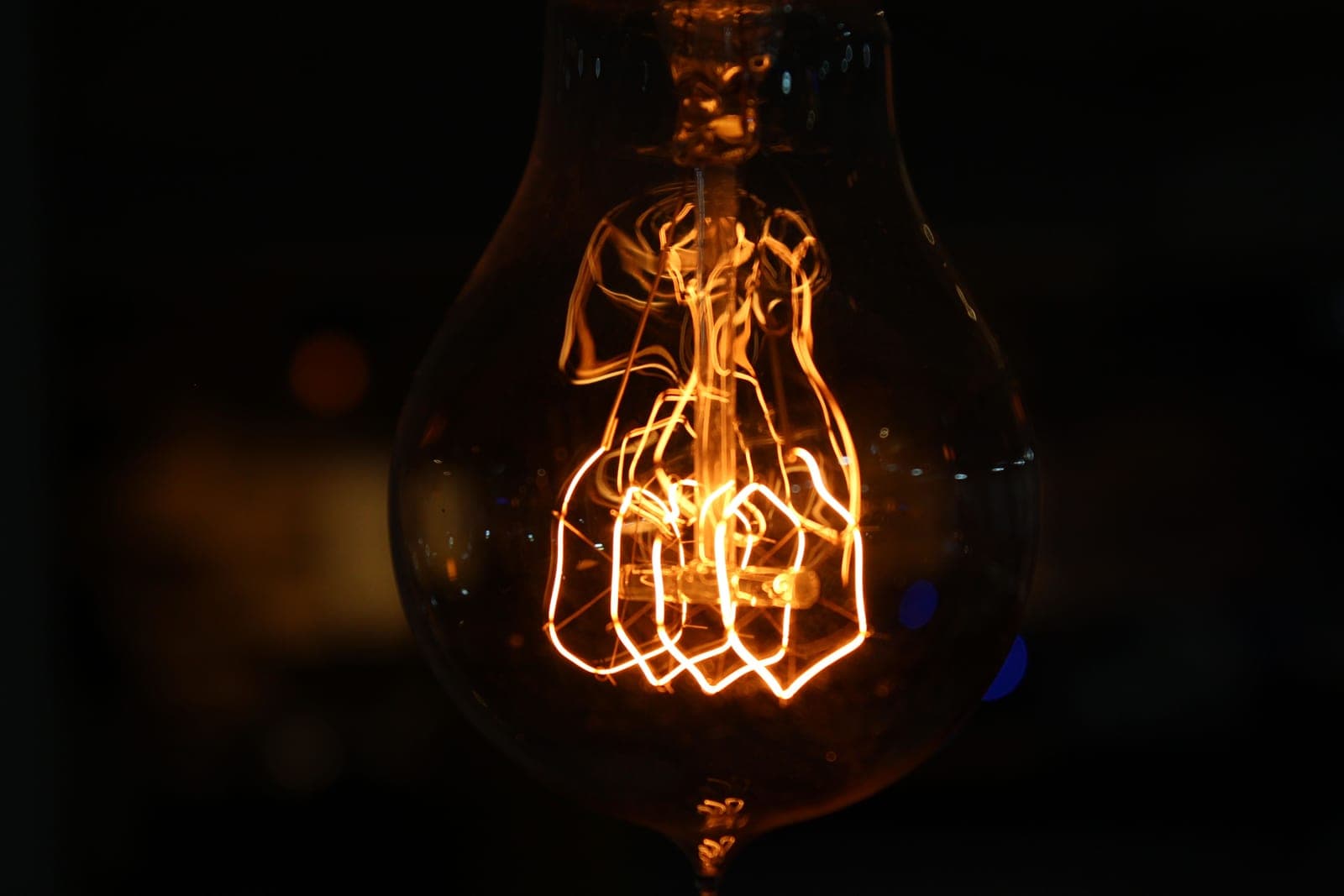
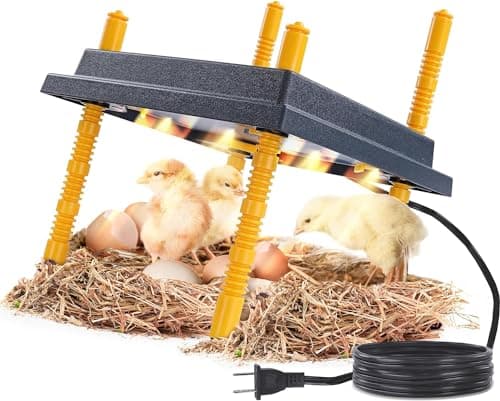
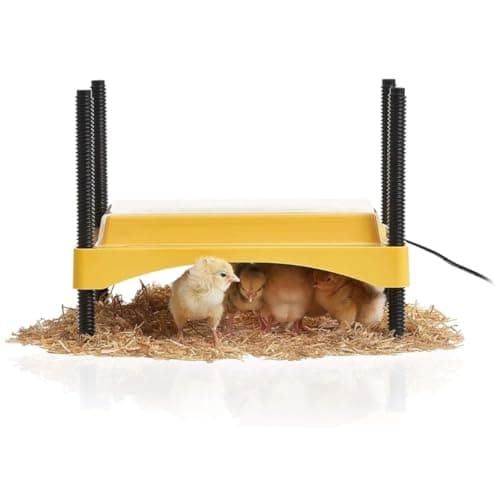
This is the thing most comparisons skip. A heat lamp heats the air in a space, and the chicks warm up because the air around them is warm. A brooder plate heats a surface the chicks stand under and press against, and the air can be whatever it likes. The second is much closer to what a broody hen does.
Every difference below follows from that one, including the case where the lamp wins.
Running cost
Brood twice a year and the plate has paid for itself against the lamp inside the first season, before you have counted the bulbs.
The fire question, stated carefully
We are not going to give you a statistic here, because we do not have a citable one and the ones that circulate on forums are not sourced. What we can say is mechanical and uncontroversial:
A 250 W bulb runs at a surface temperature that will ignite dry bedding on contact.
It is typically suspended by a clamp over that bedding, and clamps loosen. Chicks jumping at a lamp, or a curious cat, is all it takes.
The glass envelope can shatter, particularly if cold water hits a hot bulb, which is a thing that happens when you refill a drinker.
A brooder plate has none of these properties. There is no bulb and no glass.
If you use a lamp, hang it on a chain or wire as well as the clamp, use a bulb with a protective guard, and keep it far enough from bedding that a fall does not put it in contact.
Light, sleep and behavior
A lamp is on 24 hours a day, which means chicks brooded under one live in permanent daylight for six weeks. Plates emit no light. Chicks under a plate go quiet and settle at dusk, which is both more natural and considerably more pleasant if the brooder is in your house. It is a soft argument compared to the money and the fire, but it is a real one.
Where the lamp genuinely wins
Two cases, and they are worth being honest about because the plate-versus-lamp argument usually pretends there are none.
A cold ambient environment. Brinsea publishes a floor: the room temperature should not drop below 50 F for the EcoGlow 600. That is not a caution, it is an operating limit, and it exists because a plate does nothing for the air. In an unheated barn in March, a lamp warms the space and a plate does not. If your brooder cannot be kept above about 50 F, either heat the space or use a lamp.
Very large numbers of chicks. Plate capacity scales by area and gets expensive fast; commercial-scale brooding still uses radiant heat for a reason. This does not apply to anybody brooding six chicks in a garage, which is nearly everybody reading this.
Head to head, on published figures.
Heat plate
Heat lamp
Typical draw
12 to 42 W
250 W
Cost per six-week brood
$2.22 to $7.76
$46.22
Heats
The chicks under it
The air in the space
Light emitted
None
Constant
Bulb to shatter
No
Yes
Works below 50 F ambient
No (Brinsea's published floor)
Yes
Mimics a broody hen
Yes
No
For scale, the same arithmetic applied to the stage before this one comes out lower still: a full 21-day hatch costs between about $1.11 and $3.70 in electricity, which is roughly what a brooder plate costs and a fraction of what a lamp costs. The heat lamp is the single largest avoidable running cost anywhere in a first flock.
Heads up: some links on this page are affiliate links. If you buy through one we may earn a commission at no extra cost to you. It never changes a ranking, and we take no payment for placement. The full version.
The short answer
The short list
Ranked on the published rubric. Every row jumps to that product's full write-up below; the button goes straight to Amazon.
#
Pick
Best for
Key spec
Score
Price
1
Our pick
Brinsea
EcoGlow Safety 600
Twelve watts and a metal warming plate, which is the lowest published draw of any brooder plate we found and the reason it costs about two dollars to run a whole six-week brood.
Twenty-two watts and a leg range published from 1.5 to 6 inches, which is the spec that decides whether a plate still works in week five or gets shoved in a cupboard.
#adPrices as of October 18, 2026. Scores are our own published rubric, not customer ratings.
#1 · A first brood of a dozen or fewer
Brinsea EcoGlow Safety 600
Twelve watts and a metal warming plate, which is the lowest published draw of any brooder plate we found and the reason it costs about two dollars to run a whole six-week brood.
Who it is for. Somebody starting with four to eight chicks in a spare room, a basement or an attached garage, who wants the running cost as close to zero as it can be.
Published specifications
Power
12 watts
Voltage
Safe 12 volt operation from a mains transformer, supplied
Dimensions
9 in H x 8 in W x 12 in D (229 x 203 x 305 mm)
Capacity
Up to 20 newly hatched chicks, or 10 to 12 older chicks
Height adjustment
4 adjustable legs; one end may be set lower than the other
Plate material
Metal warming plate
Minimum room temperature
Room temperature should not drop below 50 F (10 C)
The lowest published wattage in this comparison: 12 W against 22 W for the mid-size plates and 250 W for a typical heat lamp
A metal plate rather than molded plastic, which the maker states is there to even out hot and cold spots
A three-year warranty, which is longer than anything else here publishes
12 volt operation from a supplied transformer, so the mains voltage never reaches the brooder
What it costs you
The 20-chick figure is for newly hatched birds only; the maker's own published downgrade to 10 to 12 older chicks is the number that decides whether it lasts your whole brood
The published 50 F minimum room temperature rules out an unheated garage in much of the country in March
8 x 12 inches is a small plate — chicks at four weeks will be spilling out from under it
Skip it if. Your brooder lives in an unheated outbuilding. Brinsea publishes a 50 F floor on room temperature, and a plate warms the birds under it rather than the air around them.
Premier 1 Supplies Chick Brooder Heating Plate, 12 in x 12 in
Twenty-two watts and a leg range published from 1.5 to 6 inches, which is the spec that decides whether a plate still works in week five or gets shoved in a cupboard.
Who it is for. Somebody who wants one plate to cover the whole brood and values a published, checkable spec table over the last few watts.
Published specifications
Power
22 watts/hr
Dimensions
12 in x 12 in
Capacity
Up to 20 chicks
Leg height adjustment
1.5 in to 6 in, via the yellow legs (legs are 9.5 in long)
Cover height
5 in
Material
ABS plastic
Cord
70 in
Source: Premier 1 Supplies, Heating Plates and Covers product page (premier1supplies.com), figures retrieved 2026-09-01
Rubric — 8.3 / 10
Capacity honesty8/10 · weight 26%
Documentation9/10 · weight 24%
Build and weather7/10 · weight 20%
Running cost9/10 · weight 15%
Daily use9/10 · weight 15%
What it gets right
The published 1.5 to 6 inch adjustment range is the widest here, and height is the one adjustment you actually make every week
Premier publishes a full size and wattage table across four plate sizes, so you can pick against your own chick count rather than guess
22 W puts a six-week brood at roughly four dollars of electricity
The optional cover is a published accessory with its own stated height, not an afterthought
What it costs you
ABS plastic rather than a metal plate, which is a real difference from the Brinsea units
The 70 inch cord is under six feet — shorter than the Brinsea 10 ft lead and the RentACoop 6 ft
Premier does not publish a minimum room temperature, so you are left to judge that yourself
Skip it if. You want the lowest possible running cost and are brooding fewer than a dozen chicks — the 12 W Brinsea 600 does the same job for half the draw.
For almost every backyard brood, yes. A plate uses roughly 5 percent of the electricity, has no bulb to shatter over bedding, and lets chicks keep a normal day and night cycle. The exception is an ambient temperature below about 50 F, where a plate is not rated to work because it warms the chicks rather than the air.
+How much does a heat lamp cost to run?
A 250 W brooder lamp run continuously for a six-week brood uses 252 kWh, which is $46.22 at the June 2026 US average residential rate of 18.34 cents per kWh. A 12 W brooder plate over the same period uses 12.1 kWh, or $2.22 — a difference of $44.00 on a single brood.
+Are heat lamps dangerous for chicks?
A 250 W bulb runs hot enough to ignite dry bedding on contact, is usually suspended by a clamp that can loosen, and has a glass envelope that can shatter if cold water hits it. If you use one, secure it with a chain as well as the clamp, fit a bulb guard, and keep it far enough from bedding that a fall does not put it in contact.
+Do chicks need light at night?
No. Chicks under a brooder plate settle and go quiet at dusk, which is closer to what happens under a broody hen. Constant light from a heat lamp is a side effect of the heat source rather than a requirement, and red bulbs exist specifically to reduce that effect.
Where the numbers came from
Sources
Every figure cited on this page came from one of these documents. If one of them has changed since we read it, the number here is out of date and we would like to know.