Chicks need 95 F at chick level for week one, then 5 F less every week until they reach 62 to 65 F, at which point they no longer need supplemental heat. Floor space per bird quadruples over the same period, from a quarter of a square foot to a full one. Both schedules are published by Penn State Extension.
The whole schedule in one table
Brooding requirements by age. All figures published by Penn State Extension.
Week
Temp at chick level
Floor space
Feeder space
Waterer space
1
95 F
1/4 sq ft
1 in
1/2 in
2
90 F
1/2 sq ft
1.5 in
1/2 in
3
85 F
1/2 sq ft
1.5 in
1/2 in
4
80 F
3/4 sq ft
2 in
1/2 in
5
75 F
3/4 sq ft
2 in
1/2 in
6
70 F
1 sq ft
2 in
3/4 in
7
65 F
1 sq ft
2 in
3/4 in
8+
Room temperature
1 sq ft
2 in
3/4 in
Penn State publishes the temperature schedule as 95 F in week one falling 5 F per week until normal daily temperature is reached, which they give as 62 to 65 F, and the space bands as quarter, half, three-quarter and one square foot across weeks one, two to three, three to five and five to eight. The weekly rows above are that schedule laid out one week at a time.
What is actually happening each week
Week 1. The chicks do almost nothing but eat, drink, sleep and pile up under the heat. Dip each chick’s beak in the water once when it arrives so it knows where water is. Check for pasty vent — droppings stuck to the vent — daily and clean it off gently with warm water, because it will kill a chick.
Weeks 2 to 3. Wing feathers appear first, then tail. They start scratching, dust-bathing in the bedding and jumping. This is when a low-sided brooder starts needing a lid. They will also begin knocking bedding into the water constantly; raising the drinker fixes it.
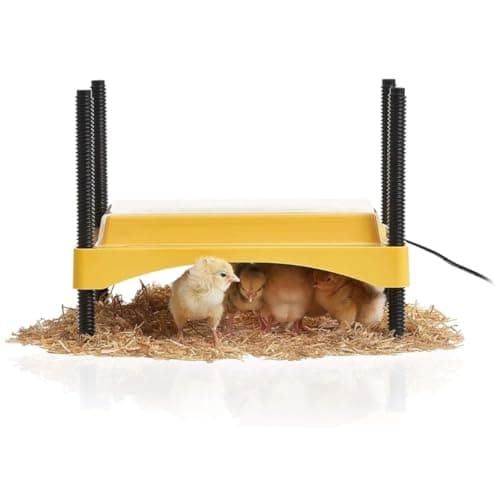
Weeks 3 to 5. The floor-space figure moves and the brooder starts feeling small. Expect the birds to spend less and less time under the plate — that is them following the schedule on their own. Raise the plate as they grow, which is why the plates with the widest published height adjustment are worth the money.
Weeks 5 to 8. Fully feathered, roosting on anything they can reach, and ready to go outside once the coop temperature is close to what the brooder had come down to. This is the handover to the coop.
When to stop following the schedule
The schedule assumes an indoor brooder at a stable room temperature. If yours is in a garage that swings from 45 F at night to 75 F in the afternoon, the number on the thermometer will chase itself and the birds are the better guide. Similarly, most chicks wean themselves off a heat plate before the schedule says to remove it — they simply stop going under it. When they have ignored it for several days and the room is above about 65 F, it can come out.
Heads up: some links on this page are affiliate links. If you buy through one we may earn a commission at no extra cost to you. It never changes a ranking, and we take no payment for placement. The full version.
The picks
What we would buy
Brinsea
EcoGlow Safety 600
12 W
Best for: A first brood of a dozen or fewer
Twelve watts and a metal warming plate, which is the lowest published draw of any brooder plate we found and the reason it costs about two dollars to run a whole six-week brood.
Best for: Reading the temperature where it matters
A dedicated brooder thermometer whose range starts at 50 F and stops at 120 F, which is exactly the band you care about and nothing else — and it hangs at chick level rather than sitting on a shelf.
#ad We have no verified Amazon listing for this one, so no number is shown. How this is funded.
Purina
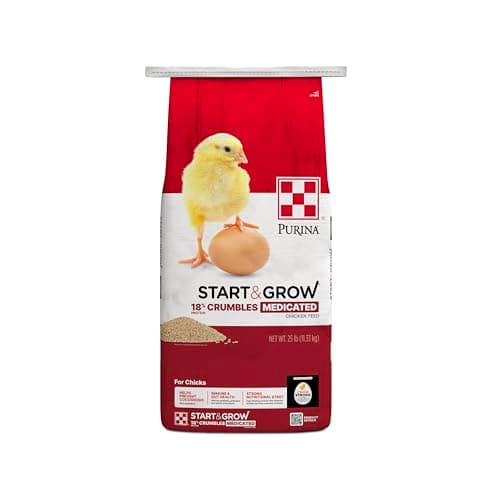
Start & Grow Medicated Chick Feed
18% protein
Best for: Chicks from a mixed-source order
Eighteen percent crude protein with amprolium at 0.0125 percent, and a feeding direction that tells you exactly when to stop: day one until the first egg, then switch.
Penn State Extension publishes 95 F at chick level in week one, decreasing by 5 F per week until normal daily temperature of 62 to 65 F is reached. That works out to roughly 90 F in week two, 85 F in week three, 80 F in week four, 75 F in week five and 70 F in week six.
+How much space do chicks need in a brooder?
Penn State Extension publishes a quarter of a square foot per bird in week one, half a square foot in weeks two and three, three quarters in weeks three to five, and a full square foot from week five to eight. The requirement quadruples over the brood, so size the brooder for week five rather than week one.
+What is pasty vent and how do I fix it?
Pasty vent is droppings drying and sealing over a chick's vent, which is fatal if left. Check daily in the first week. Soften and remove it with a cloth and warm water, taking care not to pull the skin, and dry the chick afterwards. It is often associated with stress or a brooder that is too hot.
+When can chicks stop using a heat plate?
Following the published schedule, at around six to eight weeks when they reach room temperature. In practice most chicks wean themselves earlier — they stop going under the plate as they feather out. When they have ignored it for several days and the room is above about 65 F, it can come out.
Where the numbers came from
Sources
Every figure cited on this page came from one of these documents. If one of them has changed since we read it, the number here is out of date and we would like to know.