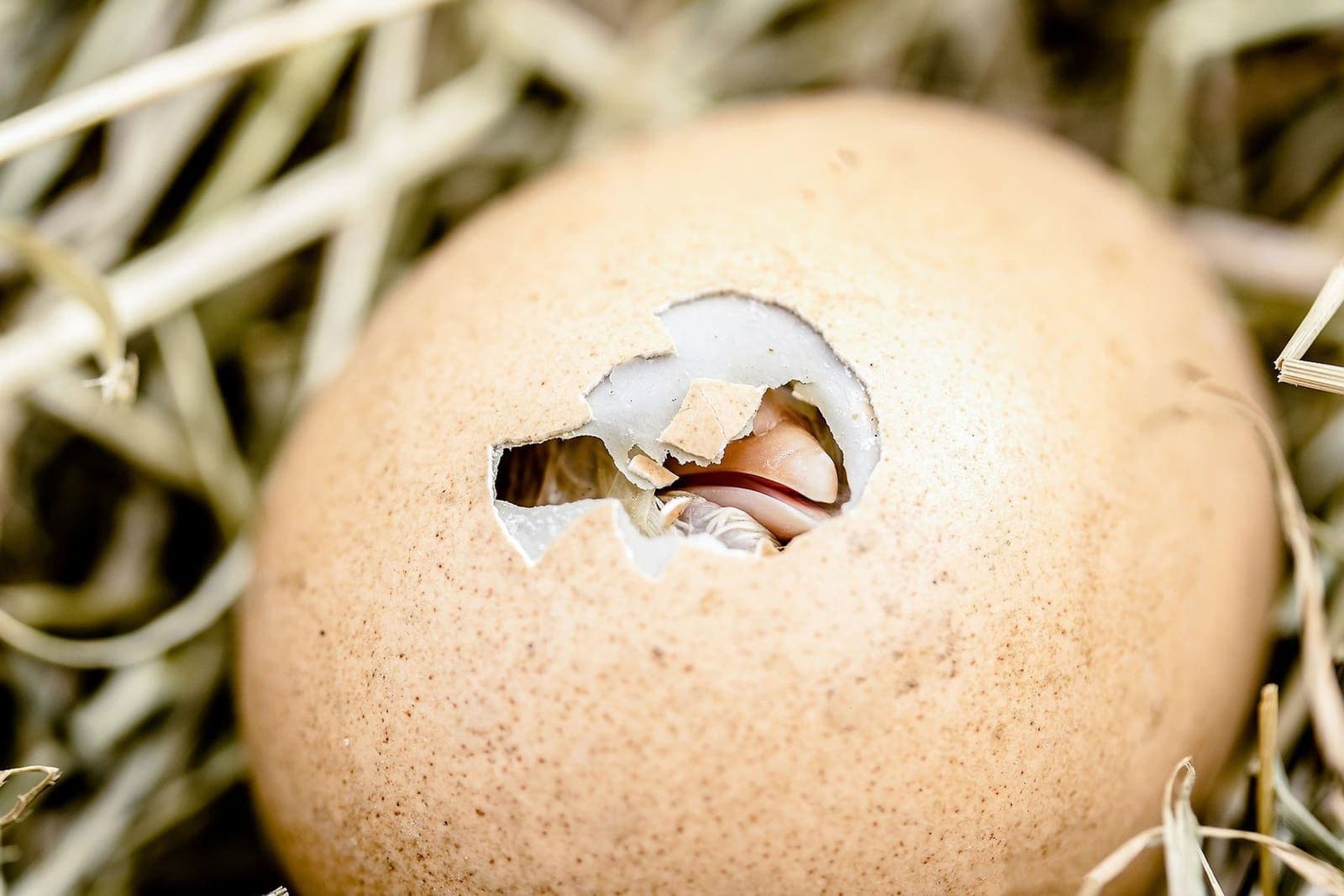
Hatching day by day: what happens, and what you do, across 21 days
Every figure on this page is published by an extension service. The only thing we have added is the order they happen in, and the one day most first hatches get wrong.
Chicken eggs hatch on day 21. Hold 100 F in a forced-air incubator (102 F still-air) and 58 to 60 percent humidity from setting through day 18, turning at least four to six times a day. Candle on days 4 to 7 and again on days 14 to 16. On day 18 stop turning and raise humidity to 65 percent or more. Do not open the incubator again until the hatch is over.
Every number in that paragraph is published by Mississippi State University Extension, in publication P1182. They do not vary by brand, by breed or by opinion. What follows is the same figures laid out in the order you will meet them, plus the one thing the publications assume you already know and first-timers reliably do not.
Before day 1: the eggs
Hatchability is decided before the incubator is switched on. P1182 publishes the storage conditions: keep hatching eggs “in a cool, humid room,” with the best storage “near 60 F.” It also publishes the decay curve, which is the part worth knowing — hatchability falls with storage time, and “after 3 weeks of storage, the hatchability is near 0 percent.”
The practical version: set eggs within about a week of collection, ten days at the outside. A refrigerator is too cold, a warm kitchen counter is too warm, and an unheated spare room in spring is usually about right. Do not wash them. The egg handling page covers why the bloom on a shell matters.
The whole 21 days in one table
The published incubation timeline for chicken eggs. Figures from Mississippi State University Extension.
Day
Temperature
Humidity
Turning
What you do
1
100 F forced air
58 to 60%
Start turning
Set the eggs; log the date
2 to 3
100 F
58 to 60%
4 to 6 times daily
Check temperature and water
4 to 7
100 F
58 to 60%
4 to 6 times daily
First candling — remove clears
8 to 13
100 F
58 to 60%
4 to 6 times daily
Top up water; otherwise leave it
14 to 16
100 F
58 to 60%
4 to 6 times daily
Second candling — remove quitters
17
100 F
58 to 60%
4 to 6 times daily
Last full day of normal running
18
100 F
Raise to 65%+
STOP turning
Lockdown: last time you open it
19 to 20
100 F
65% or more
None
Do not open. Vents more open
21
100 F
65% or more
None
Hatch. Leave them in until dry
The half-degree disagreement, and what to do about it
Mississippi State Extension publishes 100 F for forced-air incubators. Brinsea ships every machine factory-preset to 99.5 F. Both figures are published by credible sources and the gap is half a degree.
The honest answer is that this half-degree is smaller than the difference between where your sensor sits and where the eggs sit. A thermometer at the top of a dome reads differently from one lying between the eggs, and both read differently from the inside of an egg. Leave the machine at its factory setting, put an independent thermometer at egg level, and worry about a two-degree drift rather than a half-degree calibration argument.
The still-air figure is the one not to fudge: P1182 publishes 102 F for a still-air incubator against 100 F forced-air, because without a fan the air stratifies and the reading at the top of the eggs is warmer than the air below. If your machine has no fan, the higher number is not an error.
Candling: two checks, not one
Candling is holding a bright focused light against the shell to see what is inside. P1182 publishes two checks: the first “after 4-7 days of incubation” and the second “after 14-16 days.” Doing only one is the commonest shortcut and it costs you twice. The candling page has what each of the three results actually looks like, the air cell as a humidity gauge, and which lamp to use on a dark shell.
The first check finds clears — infertile eggs, which never started. There is nothing wrong with them; fertility in a backyard flock is rarely total. Removing them matters because an unfertilized egg held at 100 F for three weeks can spoil and, in the worst case, burst, which contaminates the machine and the hatch.
The second check finds quitters — eggs that started and stopped. Same reasoning, later in the process, and it also tells you how many chicks to expect so day 21 is not a disappointment measured against the number you set.
Do both quickly and in a warm room. Every minute the egg is out of the incubator is a cooling minute, and the Brinsea machines actually publish a periodic egg-cooling feature on the basis that brief cooling is normal — a broody hen leaves the nest daily.
Day 18: lockdown, and the rule people break
Day 18 is the single most important day of the process and it consists mostly of things you stop doing.
Stop turning. P1182 is unambiguous: “DO NOT turn eggs during the 3 days before hatching.” A chick positions itself in the shell to pip, and turning it after that point can leave it unable to get out. If your machine has an automatic stop, confirm which day it triggers — the machines compared on this site stop two or three days out and one publishes no stop at all, so they are not interchangeable on this point.
Raise humidity to 65 percent or more, which P1182 gives as 89 to 90 F wet bulb. Open the vents further; the same publication notes air vents “should be almost fully open during the latter stages of hatching,” because a hatching chick is breathing air rather than diffusing oxygen through a shell.
Then close the lid and leave it closed. Every time you open an incubator during lockdown, humidity falls sharply and the membrane inside the shell can dry onto the chick. That is the mechanism behind “shrink-wrapping,” and it is the reason experienced hatchers are so insistent about a rule that sounds like superstition. Twenty-one days of patience is undone by curiosity on day 20.
Day 21 and after
Leave hatched chicks in the incubator until they are dry and fluffy. They can go 24 hours or more without food or water after hatching, on the yolk they absorbed, so there is no rush and opening the lid to remove one wet chick risks the eggs still hatching.
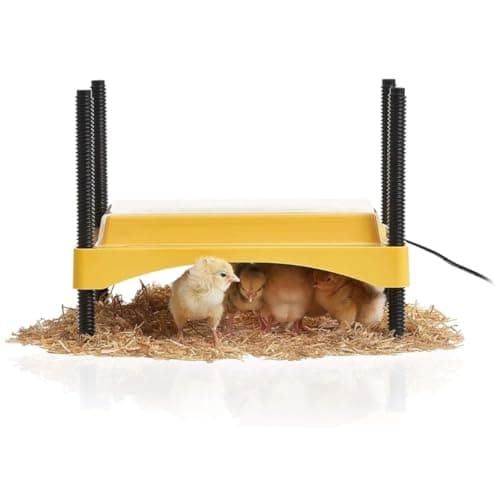
Once dry, they move to the brooder — and the brooder needs to have been running and up to temperature before that moment, not after. The published brooding schedule starts at 95 F at chick level under the heat source in week one, dropping about five degrees a week. That is the same figure whether the chick hatched in your kitchen or arrived in a box from a hatchery, and it is why setting the brooder up belongs on your day-18 list rather than your day-21 list.
Eggs that have not hatched by the end of day 21 occasionally hatch on day 22. After that, they are not going to. Do not keep a machine running for a week hoping.
Heads up: some links on this page are affiliate links. If you buy through one we may earn a commission at no extra cost to you. It never changes a ranking, and we take no payment for placement. The full version.
The picks
The three things to have before day 1
An independent thermometer and hygrometer, because the machine's display reports its own sensor and not the air around the eggs — and the brooder heat, because day 21 arrives whether or not it has.
Score7.8no photo yet
ThermoPro
TP49 Digital Hygrometer Thermometer
+/- 1.8 F
Best for: A published accuracy figure
The only unit here that publishes an accuracy tolerance — plus or minus 1.8 F — and it reads humidity too, which is the number that actually predicts winter frostbite in a coop.
#ad No live price feed yet, so no number is shown rather than a stale one. How this is funded.
Score7.5no photo yet
AcuRite
00613 Indoor Temperature and Humidity Monitor
+/- 2 F, 32-122 F
Best for: Humidity you can trust in the normal band
Plus or minus 2 F and a published humidity tolerance that is honest about where it holds — plus or minus 3 percent between 20 and 80 percent RH, and varying outside it.
#ad No live price feed yet, so no number is shown rather than a stale one. How this is funded.
Brinsea
EcoGlow Safety 600
12 W
Best for: A first brood of a dozen or fewer
Twelve watts and a metal warming plate, which is the lowest published draw of any brooder plate we found and the reason it costs about two dollars to run a whole six-week brood.
#ad No live price feed yet, so no number is shown rather than a stale one. How this is funded.
FAQ
Questions people actually ask
+How long does it take to hatch chicken eggs?
21 days. Mississippi State University Extension publishes that all chicks should be out of their shells by the end of the 21st day. A few hatch on day 22; after that they are not going to, and there is no value in keeping the machine running.
+What humidity do chicken eggs need in an incubator?
58 to 60 percent relative humidity, or 85 to 87 F wet bulb, from setting until three days before hatching. For the final three days it is increased to at least 65 percent, or 89 to 90 F wet bulb. Those are the figures Mississippi State University Extension publishes, and they do not vary by machine.
+What is lockdown in egg incubation?
Day 18, when you stop turning the eggs, raise humidity to 65 percent or more, open the vents further, and stop opening the incubator until the hatch is over. It exists because a chick positions itself in the shell around day 18, and both turning and humidity drops after that point can prevent it getting out.
+When should I candle eggs?
Twice. Mississippi State University Extension publishes a first candling after four to seven days of incubation and a second after fourteen to sixteen days. The first removes infertile clears before they can spoil in a warm machine; the second removes eggs that started and stopped, and tells you what to expect on day 21.
+Should I help a chick hatch?
No. Hatching takes hours and a chick that has pipped may rest for twelve hours before it starts to zip around the shell. Assisting almost always tears membrane blood vessels that have not yet withdrawn. Judge against the published timeline instead: all chicks should be out by the end of day 21.
Where the numbers came from
Sources
Every figure cited on this page came from one of these documents. If one of them has changed since we read it, the number here is out of date and we would like to know.
Incubators compared on published watts and egg capacity, the running cost of a 21-day hatch, and the extension figures for temperature, humidity and turning.