A freshly laid egg carries a natural coating called the bloom or cuticle that seals the pores in the shell. Leave it intact and the egg keeps at room temperature for a long time. Wash it and the seal is gone, and the egg then belongs in the refrigerator.
The bloom explains everything
An eggshell is porous — it has to be, because a developing embryo needs to exchange gases through it. Those same pores are a route in for bacteria. So a hen applies a thin protective coating as the egg is laid, sealing them.
That is why an unwashed egg keeps on a counter and a washed one does not. It is also why supermarket eggs in the United States are refrigerated and much of Europe’s are not: US commercial practice is to wash and sanitize eggs, which removes the bloom and commits them to a cold chain. It is a difference in handling, not in the eggs.
The practical rule follows directly: do not wash an egg until you are about to use it.
The routine
Collect daily, more often in very hot or very cold weather. Eggs left in a nest get stepped on, frozen or sat on.
Brush off anything dry with a dry cloth or a soft brush. Dry cleaning leaves the bloom largely intact.
Store unwashed, pointed end down, somewhere cool and out of direct sun.
Wash only what needs it, immediately before use, in water warmer than the egg. Cold water contracts the contents and draws surface bacteria in through the pores, which is the opposite of what you want.
Refrigerate anything you have washed, and use it sooner.
Counter or refrigerator?
Storage, by what you did to the egg.
Egg
Where
Note
Unwashed, bloom intact
Counter or a cool pantry
The traditional approach; keeps for weeks
Unwashed
Refrigerator
Also fine, and keeps longer still
Washed
Refrigerator only
The seal is gone; treat it like a supermarket egg
Cracked
Refrigerate and use quickly
Or discard if it has been in the nest
Frozen and cracked in the nest
Discard
The shell breach happened in a dirty place
One rule that matters if you go the counter route: once refrigerated, keep them refrigerated. A cold egg brought out to room temperature condenses moisture on the shell, and moisture on a shell is a transport medium into the pores.
The float test, and what it does and does not tell you
As an egg ages the contents lose moisture through the shell and the air cell grows. So a very old egg floats. Put an egg in water: lying flat on the bottom is fresh, standing on end is older but usable, floating is old.
What the test measures is age, not spoilage. A floating egg is not necessarily bad and a sinking egg is not necessarily good. It is a useful rough sort and the definitive test is still to crack it into a separate bowl and use your nose.
The real fix is upstream
Almost every question about washing eggs is downstream of a nest problem. Eggs come in dirty because the nest is dirty, or because there is not enough bedding, or because a hen is sleeping in the box and fouling it overnight.
Heads up: some links on this page are affiliate links. If you buy through one we may earn a commission at no extra cost to you. It never changes a ranking, and we take no payment for placement. The full version.
The picks
The upstream fix
Most of the egg-washing problem is a nest-cleanliness problem. Fixing the nest means fewer eggs ever need washing.
Precision Pet
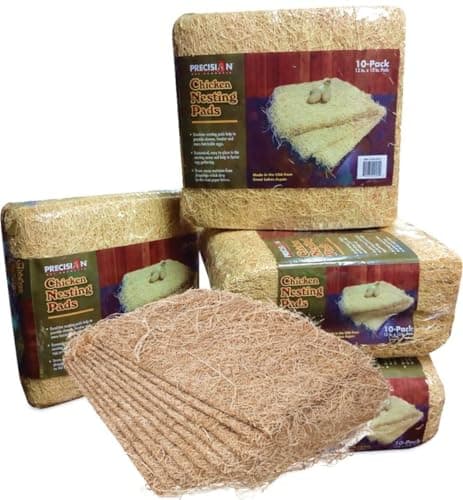
Chicken Nesting Pads (Excelsior)
13 x 13 in
Best for: A nest that stays put
Aspen excelsior fibers on a kraft-paper backing at a standard 13 by 13 inches, which is the size nearly every nest box is built around and the reason these are the default.
Not until you are about to use them. A freshly laid egg carries a natural coating called the bloom that seals the pores in the shell; washing removes it and the egg then needs refrigeration. Brush off anything dry instead, and wash only the ones that genuinely need it, immediately before cooking.
+Do fresh eggs need to be refrigerated?
Unwashed eggs with the bloom intact keep at room temperature for weeks, which is why much of Europe does not refrigerate eggs. Washed eggs need refrigeration. The one firm rule is that once an egg has been refrigerated it should stay that way, because condensation on a cold shell is a route for bacteria into the pores.
+How long do fresh eggs last?
Unwashed and stored cool, several weeks; refrigerated, longer still. The float test sorts by age — flat on the bottom is fresh, standing on end is older, floating is old — but it measures age rather than spoilage. The definitive check is cracking the egg into a separate bowl and using your nose.
+How do I clean a dirty egg?
Dry first: a dry cloth or soft brush removes most soiling while leaving the bloom largely intact. If it genuinely needs washing, use water warmer than the egg — cold water contracts the contents and draws surface bacteria in through the pores — and then refrigerate it and use it sooner.
Where the numbers came from
Sources
Every figure cited on this page came from one of these documents. If one of them has changed since we read it, the number here is out of date and we would like to know.