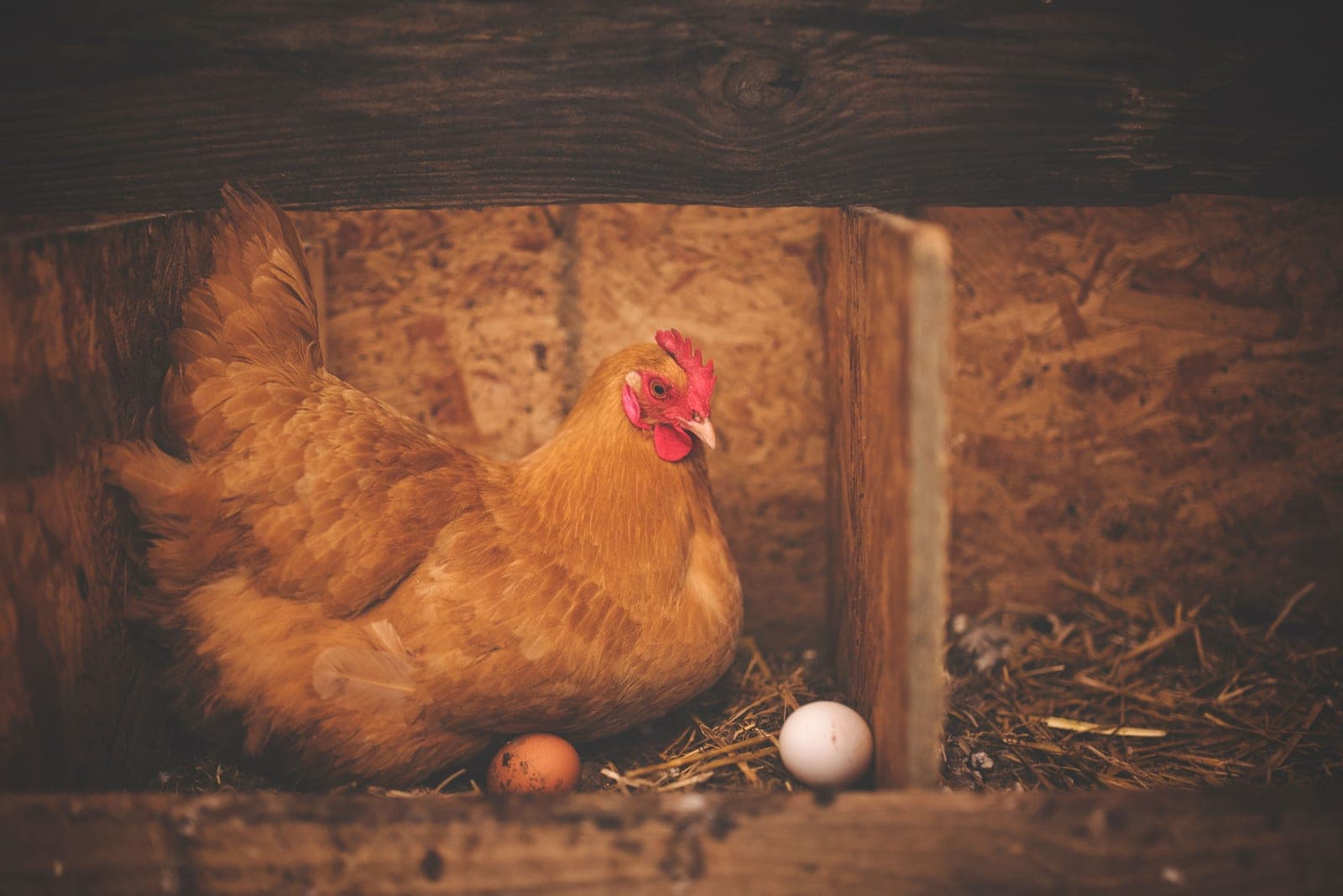
University of Maryland Extension publishes one nest for every four to five birds, mounted 18 to 20 inches off the floor and placed on the ground at first until pullets get used to them. For a flock of six that is two boxes, and more rarely helps because hens tend to queue for whichever one they collectively prefer.
How many, and why more does not help
The published ratio is one nest per four to five birds. It is worth understanding why the number is so low: a hen occupies a nest for perhaps half an hour a day, and the flock does not lay simultaneously. The constraint is scheduling, not capacity.
What actually happens in a coop with four boxes and six hens is that all six use one box. They queue, they sit on each other, they lay on top of the previous egg, and three boxes stay empty. Nobody knows why hens do this. Providing more does not change it.
So provide the published ratio, in the darkest and most private part of the coop, and spend the difference on making those boxes clean and comfortable rather than on more of them.
The options
Published nest box specifications.
Box
Published dimensions
Stated capacity
Type
Best Nest Box 24 in
24 L x 20 T x 19.5 W in
Up to 20 hens
Communal roll-out, reversible
Best Nest Box 36 in
35-7/8 L x 21 D x 19-3/4 T in
Up to 32 hens
Communal roll-out, reversible
Built-in coop nest boxes
Varies; often not published
Usually 2 to 3 per coop
Individual compartments
DIY box
12 to 14 in square is the working range
One hen at a time
Individual
The capacity figures on the commercial roll-out boxes — 20 and 32 hens — are commercial ratings and are not useful to a backyard keeper. What matters for a flock of six is whether the box fits your coop wall and whether it is a shape hens will use. The 24-inch model is the one that fits a real backyard coop; the 36-inch is a three-foot span that most small coops do not have.
What makes a box hens actually use
Dark and private. A hen wants to feel hidden. The single most effective improvement to an unpopular box is a curtain across the front — the roll-out boxes here ship with V-shaped vinyl curtains for exactly this reason.
Off the floor but below the roost. University of Maryland Extension publishes 18 to 20 inches. Below the roost matters because hens sleep on the highest available surface, and a nest box higher than the roost becomes a bedroom.
Deep enough that the hen is fully inside. A shallow box means a hen with her tail out, and eggs that get pushed over the lip.
Bedding that stays put. Loose shavings get scratched into a corner within a day. Nest pads are the answer.
Accessible to you. External-access boxes are excellent for collection and are also excellent for a raccoon. Latch them.
Placement, and the pullet problem
University of Maryland Extension includes a detail that most advice omits: nests should be placed on the ground until pullets get accustomed to using them, then secured firmly at 18 to 20 inches. A young bird that has never seen a nest box does not naturally go looking for one at chest height.
Alongside that, put a fake egg or a golf ball in each box before the first egg. Hens are strongly drawn to laying where eggs already are, which is the same instinct that makes a floor corner with one egg in it become the flock’s permanent nest.
Heads up: some links on this page are affiliate links. If you buy through one we may earn a commission at no extra cost to you. It never changes a ranking, and we take no payment for placement. The full version.
The short answer
The short list
Ranked on the published rubric. Every row jumps to that product's full write-up below; the button goes straight to Amazon.
#
Pick
Best for
Key spec
Score
Price
1
Our pick
Best Nest Box
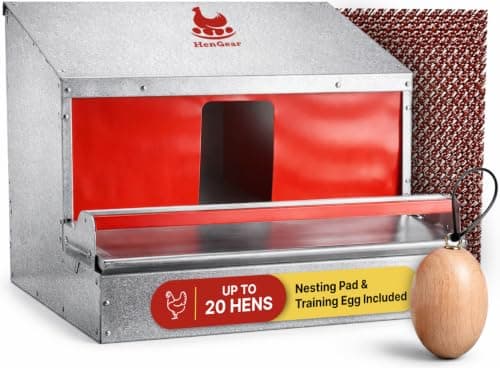
Small 24" Reversible Roll-Out Nest Box
The same roll-out mechanism in a two-foot box, which is the version that actually fits a backyard coop rather than a commercial layer house.
A sloped-floor box that rolls the egg away from the hen into a protected tray, which stops the two problems that ruin eggs in a nest box: dirt and the hen that learns to eat them.
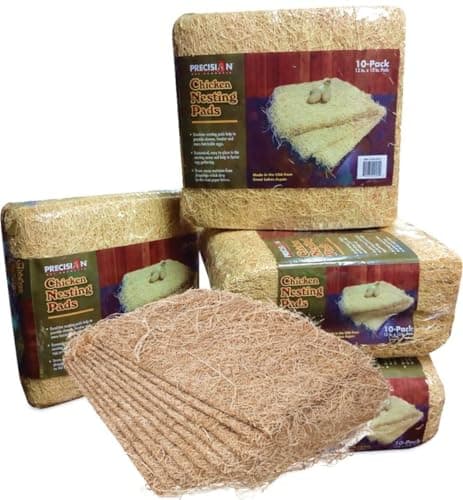
Aspen excelsior fibers on a kraft-paper backing at a standard 13 by 13 inches, which is the size nearly every nest box is built around and the reason these are the default.
Best Nest Box Medium Extended 36" Reversible Roll-Out Nest Box
A sloped-floor box that rolls the egg away from the hen into a protected tray, which stops the two problems that ruin eggs in a nest box: dirt and the hen that learns to eat them.
Who it is for. A flock of eight or more, or anybody who has already lost eggs to a hen that learned what is inside them.
Published specifications
Dimensions
35-7/8 in length, 19-3/4 in tall at the highest point, 21 in depth
Weight
34 pounds
Stated capacity
Accommodates up to 32 hens
Roll-out mechanism
Precisely sloped floor allows eggs to roll away from hens to a separate protected collection area
Egg guard
Angled metal egg guard discourages hens from reaching the collection area
Reversibility
Can be configured at any time as front or rear roll-out
Source: Best Nest Box, Medium Extended 36" Reversible Roll Out Nest Box product page (bestnestbox.com), retrieved 2026-09-01
Rubric — 8.2 / 10
Capacity honesty7/10 · weight 26%
Documentation8/10 · weight 24%
Build and weather9/10 · weight 20%
Running cost8/10 · weight 15%
Daily use10/10 · weight 15%
What it gets right
The roll-out design removes egg-eating as a possibility rather than trying to break the habit later, and egg-eating is close to incurable once it starts
Eggs land on wire in a covered tray rather than in bedding a hen has stood in, so they need washing far less often
Reversible collection means you can mount it against a wall either way round, which is the difference between fitting and not fitting your coop
Published dimensions to an eighth of an inch, so you can check it fits before it arrives
What it costs you
The 32-hen figure is a commercial rating; for a backyard flock the relevant guidance is University of Maryland Extension's one nest per four to five birds, and this is a communal box rather than four nests
Thirty-four pounds and nearly three feet wide is a lot of box for six hens
No published warranty
Roll-out boxes need to be genuinely level, or eggs collect at one end and crack against each other
Skip it if. You have three or four hens in a small coop. This is more nest box than your flock will ever use, and it will not fit.
#ad We have no verified Amazon listing for this one, so no number is shown. How this is funded.
#3 · A nest that stays put
Precision Pet Chicken Nesting Pads (Excelsior)
Aspen excelsior fibers on a kraft-paper backing at a standard 13 by 13 inches, which is the size nearly every nest box is built around and the reason these are the default.
Who it is for. Anybody collecting dirty or cracked eggs, and anybody who finds the nest bedding kicked into a corner every morning.
Published specifications
Dimensions
13 in x 13 in
Material
Aspen excelsior wood fibers adhered to a kraft paper backing
Thickness
Approximately 3/4 in (varies by brand and reporting)
Fit
Designed to fit most nesting boxes
Source: Precision Pet / Petmate and Pecking Order excelsior nesting pad product listings, retrieved 2026-09-01
Rubric — 7.1 / 10
Capacity honesty8/10 · weight 26%
Documentation5/10 · weight 24%
Build and weather7/10 · weight 20%
Running cost6/10 · weight 15%
Daily use10/10 · weight 15%
What it gets right
13 by 13 inches is the de facto standard nest-box footprint, so a pad drops in without cutting
The kraft backing means the pad stays as a pad instead of being scratched into a corner within a day, which is what loose shavings do
Aspen excelsior is springy enough to cushion an egg falling six inches, which is the difference between a cracked egg and a whole one
Lifting one pad out and dropping a new one in takes seconds, so nests actually get cleaned
What it costs you
Consumable — you replace them rather than clean them, so this is a recurring cost that loose bedding is not
Nobody in this category publishes a durability figure, so how long a pad lasts is anybody's guess
A 13 inch pad in a larger community nest box leaves gaps at the edges
Skip it if. Your hens lay reliably on clean shavings and nothing is getting broken or dirty. Pads solve a problem you may not have.
One nest for every four to five birds, published by University of Maryland Extension. For a flock of six that is two boxes. Adding more rarely helps, because hens tend to settle collectively on one preferred box and queue for it while the others stay empty.
+How high should nesting boxes be?
18 to 20 inches off the floor, per University of Maryland Extension, and always below roost height. Hens sleep on the highest available surface, so a nest box above the roost becomes a bedroom rather than a nest. Start pullets with boxes at ground level until they are used to them.
+Why won't my chickens use the nesting boxes?
Usually the box is too bright, too exposed, or above roost height. Move it to the darkest private corner, add a curtain across the front, make sure it is below the roost, and put a fake egg or golf ball inside. If a hen has already chosen a floor spot, block that spot off.
+What should go in a chicken nesting box?
Bedding that stays put. Loose shavings get scratched into a corner within a day, leaving eggs landing on bare wood. Excelsior nest pads at the standard 13-inch square size, or a deep bed of straw topped up frequently, are the two practical options.
Where the numbers came from
Sources
Every figure cited on this page came from one of these documents. If one of them has changed since we read it, the number here is out of date and we would like to know.