The number decides the coop, and the coop is the budget. Here is the arithmetic that connects the two, using figures published by extension services rather than folklore.
Start with three at minimum, because chickens are social and a lone bird does badly. Most suburban keepers settle on four to six: enough eggs for a household, enough birds that losing one does not leave a solitary chicken, and small enough that the coop still fits a garden.
This is the first real decision and it cascades into every other one. Bird count sets coop size; coop size sets the budget; and the coop is the purchase that is hardest to undo. It is worth getting right on paper before anything is ordered.
Why three is the floor
Chickens are a flock species with a real social structure, and a single bird kept alone is a stressed bird. Two is workable but fragile: lose one and you are back to a solitary chicken at exactly the moment you are least prepared to buy more. Three gives you one loss of headroom. This is the reason the minimum is three and not one, and it is not a preference — it is about the animals.
Why most people land on four to six
Six is the number that keeps appearing, and there are three reasons for it that have nothing to do with each other, which is usually a sign a number is real:
Eggs. Six hens laying well in season produce more eggs than a typical household eats, which leaves a surplus to give away — and giving eggs away is a large part of why people enjoy this.
Coop availability. The backyard coop market is built around four and six birds. Below four you are overpaying per bird; above six the coops get large fast.
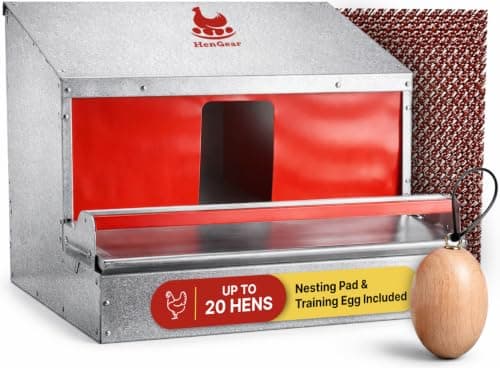
Nest boxes. University of Maryland Extension publishes one nest per four to five birds. Six birds means two boxes, which is what nearly every commercial coop provides.
Turning a bird count into square feet
This is the arithmetic worth doing before you shop, using published extension figures rather than a coop maker’s box copy.
Space requirement by flock size, at the published extension figures.
Birds
Coop floor at 3 sq ft
Coop floor at 4 sq ft
Run at 10 sq ft
Roost at 8 in
3
9 sq ft
12 sq ft
30 sq ft
24 in
4
12 sq ft
16 sq ft
40 sq ft
32 in
6
18 sq ft
24 sq ft
60 sq ft
48 in
8
24 sq ft
32 sq ft
80 sq ft
64 in
10
30 sq ft
40 sq ft
100 sq ft
80 in
The 3 to 4 square feet indoors and 10 square feet outdoors are published by poultry.extension.org for laying hens. Oregon State University Extension publishes at least 3 square feet per bird where run access exists, rising to 8 to 10 square feet where it does not. The 8 inches of roost sits in the middle of University of Maryland Extension’s published 6 to 10 inch range.
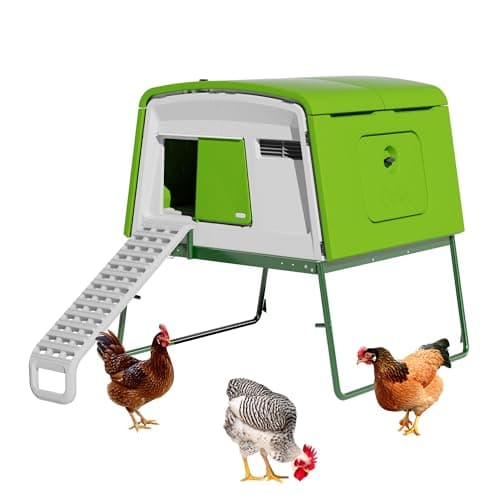
Now take those numbers shopping. A widely sold plastic coop states six large hens and publishes an interior of 34 by 33 inches, which is 7.79 square feet — 1.30 square feet a bird. Against the table above, that shell is a three-bird coop by the indoor figure, or a six-bird coop only if the attached run is genuinely never closed. The coop size page does this for several real coops.
How many eggs is that, honestly
A healthy production hen in her first laying year lays most days in season, less in deep winter when day length drops, and stops entirely for a few weeks during her annual moult. Heritage breeds lay fewer and often for more years. We are not going to give you a precise weekly number, because it depends on breed, age, day length and how the birds are fed — but the shape is: a good week in June looks nothing like a week in December, and planning on the June number will disappoint you in December. The beginner breed comparison sets out what each breed’s registry actually publishes for eggs a year.
Heads up: some links on this page are affiliate links. If you buy through one we may earn a commission at no extra cost to you. It never changes a ranking, and we take no payment for placement. The full version.
The picks
What we would buy
Omlet
Eglu Cube
7.8 sq ft interior
Best for: Cleaning in ten minutes, not an hour
A plastic coop that hoses out, with published interior dimensions you can actually check — and once you check them, a six-hen claim that only works because the run is permanently attached.
A steel-framed wooden coop with three nest boxes and a published external footprint — and no published interior floor area or roost length, which is the pair of numbers the six-chicken claim rests on.
Three at minimum, because chickens are social and a bird kept alone does badly. Most beginners settle on four to six, which produces enough eggs for a household, leaves headroom if you lose a bird, and matches the sizes the backyard coop market is actually built around.
+How much space do six chickens need?
At the published extension figures of 3 to 4 square feet per hen indoors and 10 square feet outdoors, six hens need 18 to 24 square feet of coop floor and 60 square feet of run, plus about 48 inches of roost bar and two nest boxes.
+Do I need a rooster to get eggs?
No. Hens lay whether or not a rooster is present; without one the eggs are simply unfertilized, which makes no difference to eating them. A rooster is only needed to hatch your own chicks, and many urban and suburban ordinances prohibit keeping one because of the noise.
+Can I start with just two chickens?
It works, but it is fragile. Chickens are a flock species and two birds leaves you one loss away from a solitary chicken, which is a genuinely stressed animal. Three gives you headroom, and adding birds to an established pair is harder than starting with three.
Where the numbers came from
Sources
Every figure cited on this page came from one of these documents. If one of them has changed since we read it, the number here is out of date and we would like to know.
Eight beginner breeds compared on published egg figures, standard weights and the registry's own temperament wording — including where no figure is published at all.