The best chickens for beginners, using figures somebody actually published
Every breed list carries a number of eggs a year and almost none of them says who counted. This one uses a single registry, names it on every row, and leaves the cell empty where no figure exists.
For a first flock the Australorp has the strongest published case: The Livestock Conservancy puts a backyard Australorp at 250 or more eggs a year and describes the bird as “active, yet gentle.” The Plymouth Rock and the Sussex are calmer again, at a published 200 and 200 to 250 eggs a year. The breed to leave until a second flock is the Leghorn, which out-lays all of them and which the same registry calls “very active,” with strains “known to be flighty and easily startled.”
Breed lists are the easiest page in this hobby to write badly. Every one of them carries an eggs-per-year number and almost none of them says who counted, which leaves a reader with no way to tell which figure was measured and which was copied from the list before it.
So this page does something narrower. Where The Livestock Conservancy publishes an annual egg figure for a breed, that figure is used and the page links to it. Where the registry publishes no figure, the row says so and stays empty. Two of the eight breeds below have no published annual figure, which is a more useful answer than a number invented to fill a column.
What separates a good first breed from a bad one
Before any breed names, here is what the ranking is actually made of. All five of these are checkable against a document; none of them is a matter of taste.
A published egg figure, and whether one exists at all. A breed with a published range tells you what to expect. A breed with no published figure is not a bad breed — it means nobody in a position to know has committed to a number, and you should not either.
Temperament in the registry’s own words. “Calm and curious” and “very active” are quoted, not paraphrased. Docility is the trait that decides whether a beginner enjoys the first year, because a bird you cannot pick up is a bird you cannot inspect for mites or treat for anything.
Standard weight. An eight-pound hen and a four-and-a-half-pound hen are not the same coop problem. Weight drives floor area, roost length and nest box size, and those are the purchases that are hardest to undo.
Comb type. Winter damage in a backyard flock lands on combs and wattles. That is mostly a ventilation problem rather than a breed one, but comb type is the part of it you buy rather than build.
Availability, read off the conservation status. The Livestock Conservancy lists breeds it considers at risk. A breed that has “graduated” off that list is no longer considered at risk. A breed listed as Critical is one you will have to search for, and a first flock is the wrong place to take that on.
Broodiness is a sixth factor and it is the one nobody warns beginners about. A broody hen sits on eggs instead of laying them, for weeks. The Livestock Conservancy notes of Rhode Island Reds that most hens “can become broody except within the strains that have been heavily selected for egg production” — which is a useful general rule, because it says broodiness tracks the strain you buy at least as much as the breed on the label. The broody hen page collects what the registry publishes for all eight of these breeds, and the extension method for ending a broody spell in three to four days.
The eight breeds, and what is published about them
Standard weights, published annual egg figures and registry temperament wording. Source: The Livestock Conservancy breed profiles, retrieved 2026-09-03.
Breed
Hen weight
Eggs a year, published
Egg color
Registry wording
Australorp
6.5 lb
250+
Tinted to light brown
Active, yet gentle
Plymouth Rock
7.5 lb
About 200
Brown
Calm, sweet and docile
Rhode Island Red
6 lb
200 to 300
Brown
Calm
Sussex
7 lb
200 to 250
Tan to brown
Calm and curious
Orpington
8 lb
Not published
Light to dark brown
Calm, friendly
Wyandotte
6.5 lb
Not published
Light to brown
Calm and friendly
Leghorn
4.5 lb
150 to 320
White
Very active
Araucana
4 lb
150 to 200
Blue
Calm, curious and friendly
Australorp — the default answer
The Livestock Conservancy profile is unusually specific: “a backyard Australorp lays 250+ tinted to light brown, medium/large eggs a year,” from a hen with a standard weight of 6.5 pounds. That is the highest published floor of any calm breed here, from one of the lighter bodies, and the temperament note runs “active, yet gentle” and “friendly (even the roosters).” It graduated off the conservation priority list in 2023, so it is not a breed you will have to hunt for.
The honest downside: the plumage is black, and the registry says so in the same breath as the heat caveat — “due to their black color, they do well if they have ample shade in warm weather so they don’t get overheated.” A yard with no afternoon shade in a hot climate is the one setting where this bird is the wrong first choice.
Plymouth Rock — the one to pick if children will handle them
The Plymouth Rock profile gives approximately 200 large brown eggs a year from a 7.5 pound hen, and its temperament wording is the warmest of the eight: “a calm temperament and both males and females are generally sweet and docile,” and “friendly with people... a good family breed as they are good with children.” It graduated off the priority list in 2023 too.
The honest downside: about 200 eggs is the lowest published figure of the four production breeds here, roughly fifty a year behind the Australorp’s published floor, from a bird a pound heavier. If your reason for keeping chickens is eggs in volume, you are paying for the temperament.
Rhode Island Red — the widest published range
The Rhode Island Red profile says the breed “can lay 200 – 300 eggs a year starting as early as six months of age,” from a 6 pound hen — the lightest body of the four production breeds and the highest ceiling. Temperament is listed simply as “Calm.”
The honest downside: a 200-to-300 range is a hundred-egg spread, and a spread that wide is a statement about strains rather than a promise about your bird. The same profile notes that “some roosters may be aggressive at times,” which matters if a straight-run order hands you one. And the broodiness note above is attached to this breed specifically.
Sussex — calm and curious, and the one you order early
The Sussex profile publishes “between 200-250 large tan/brown eggs a year” from a 7 pound hen, with the temperament given as “Calm and Curious.” On published figures it sits between the Rock and the Australorp, on a body half a pound heavier than the Australorp’s.
The honest downside: its conservation status is “Recovering” rather than graduated, which it shares with the Leghorn. That is a sourcing signal rather than a quality one: expect fewer hatcheries to carry it, and expect to order earlier in the season.
Orpington — the one people fall for, with a missing number
The Orpington profile gives females at 8 pounds and males at 10, a “calm, friendly disposition,” and eggs described as large to extra large and light to dark brown. University of Minnesota Extension adds that at that weight the breed’s “heavy size is ideal for cold weather.” It graduated off the priority list in 2016.
The honest downside: the registry publishes no annual egg figure for it, and neither does the extension page. Every eggs-per-year number you will read for an Orpington online comes from somewhere unattributed, and this page is not going to add another. Separately, eight pounds is the heaviest hen here: it wants more floor area, more roost length and a deeper nest box than the six-pound birds above it.
Wyandotte — the cold-climate pick
The Wyandotte profile gives a 6.5 pound hen, “calm” and “friendly,” brown eggs, and the detail that actually matters in January: a rose comb that lies fairly flat against the head. University of Minnesota Extension describes the breed as having a “good disposition” and being “great for small flocks and rugged conditions.”
The honest downside: same gap as the Orpington — no published annual egg figure from either source. If your decision hinges on volume, this bird cannot be compared on the axis you care about, and choosing it is a decision about winter and temperament instead. The egg-output ranking takes the six breeds that do publish a figure and sorts them on the bottom of the range.
Leghorn — the most eggs, and the wrong first bird
The Leghorn profile publishes “between 150 and 320 large to extra-large, white eggs a year” from a 4.5 pound hen. That is the highest published ceiling on this page, from the smallest body on it.
The honest downside: the registry lists the temperament as “Very Active” and adds that “some Leghorn strains are known to be flighty and easily startled.” The first time you have to catch a bird to check it over, that sentence becomes your whole afternoon. Keep Leghorns once you are confident handling chickens, not while you are learning.
Araucana — the blue egg, and the question to ask the hatchery
The Araucana profile gives hens “up to four pounds” and roosters five, a “mild temperament” described as “calm, curious, and friendly,” and “about 150-200 blue colored eggs a year at the height of productive years.” Its conservation status is Critical.
The honest downside: Critical means genuinely hard to source, and the same profile records why that matters — “the popularity of hybrid blue-egg chicken varieties has led to problems for the long-term security of Araucanas.” Many of the blue-egg birds sold to beginners are those hybrids rather than standard-bred Araucanas. That is not a scam and the birds are usually perfectly good, but it is a different purchase: a hybrid has no published standard weight and no published egg figure to hold it to. If blue eggs are the reason you are buying, ask the hatchery in plain words which of the two you are getting.
Winter is a coop decision that a breed choice only nudges
Cold hardiness is the criterion beginners over-weight. The University of Kentucky’s frostbite article on poultry.extension.org is direct about where the damage lands: “birds’ combs, wattles, and possibly toes are the most vulnerable to freezing,” frostbite is most common in roosters “because they typically have larger combs and wattles,” and breeds with smaller comb types see much less of it.
That is a real argument for the Wyandotte’s rose comb over a large single comb. But read the next line of the same article: frostbite “is more likely to occur during the nighttime hours in a cold, poorly ventilated coop with damp bedding.” The variable with the largest effect is not the bird. It is whether the moisture the flock breathes out overnight has anywhere to go. Ventilation is not draft works through the difference, and it is free.
What a published egg figure is, and what it is not
None of the numbers in the table is a forecast for your yard. University of Minnesota Extension publishes the shape of a laying year plainly: hens “begin laying at around six months of age,” they “will lay roughly six eggs each week,” and production “can continue for five to 10 years, with peak production occurring in the first two years.”
The practical version: whatever breed you buy, plan your first winter around fewer eggs than the table says and be pleased when you are wrong. When chickens start laying covers the first-egg timing in detail.
What the breed decision does not change
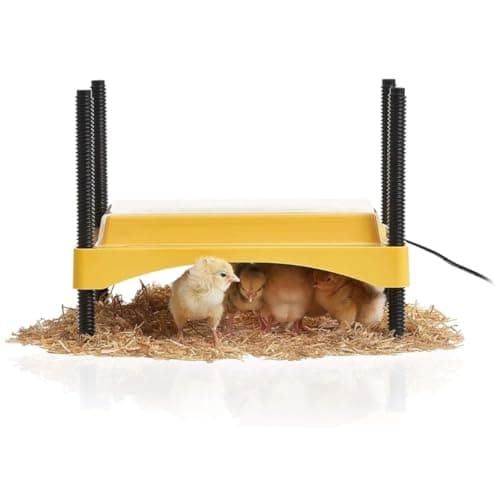
This is the part that saves money. Almost nothing on the first-flock shopping list moves when you change your mind about breed. The brooder is identical: chicks of every breed on this page need the same temperature schedule, the same feeder space and the same starter feed, and the heat plate that suits one suits all of them. The coop is sized from bird count and floor area, not from breed — how many chickens to start with does that arithmetic.
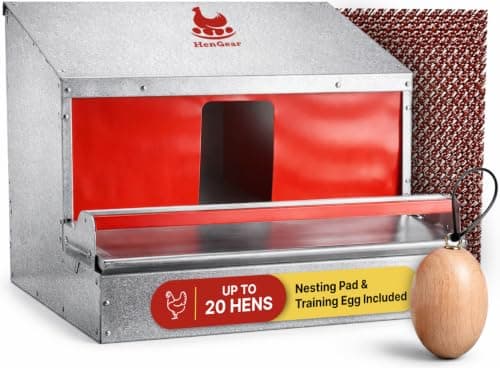
Three things do move, and they are the picks below. A bird at the top of the published laying range is pulling calcium out of herself every day, which is what free-choice oyster shell is for and why grit and oyster shell are not the same product. An eight-pound Orpington needs a nest box she fits in rather than perches on. And the brooder gear is on the list precisely because it does not change — buy it once and stop thinking about it.
Heads up: some links on this page are affiliate links. If you buy through one we may earn a commission at no extra cost to you. It never changes a ranking, and we take no payment for placement. The full version.
The picks
The three things the breed choice actually touches
Not the brooder, not the feeder, not the waterer. Calcium at the top of the laying range, a nest box that fits an eight-pound bird, and heat that is identical whichever breed is in the box.
Score8.3no photo yet
Manna Pro
Crushed Oyster Shell
33-38% calcium
Best for: Shell quality once laying starts
Thirty-three to thirty-eight percent calcium in a crushed form, offered free-choice — the supplement that fixes thin shells and the one most first-time keepers confuse with grit.
Twelve watts and a metal warming plate, which is the lowest published draw of any brooder plate we found and the reason it costs about two dollars to run a whole six-week brood.
On published figures, the Australorp. The Livestock Conservancy puts a backyard Australorp at 250 or more eggs a year from a 6.5 pound hen and describes the temperament as active yet gentle and friendly. The Plymouth Rock and the Sussex are calmer still, at a published 200 and 200 to 250 eggs a year, and all three are widely available from hatcheries.
+What is the easiest chicken to raise for beginners?
The calmest widely available breeds are the Plymouth Rock and the Sussex. The Livestock Conservancy describes the Plymouth Rock as sweet and docile and a good family breed that is good with children, and the Sussex as calm and curious. Ease has more to do with docility than with hardiness, because a bird you can pick up is a bird you can inspect and treat.
+Which backyard chicken breed lays the most eggs?
The Leghorn, on published figures: The Livestock Conservancy gives between 150 and 320 large to extra-large white eggs a year from a 4.5 pound hen. The same profile lists the temperament as very active and notes that some strains are known to be flighty and easily startled, which is why it is not the breed to learn on.
+What chickens are best for cold weather?
Breeds with small, flat combs lose less tissue to frostbite, which is why the rose-combed Wyandotte is a common cold-climate pick, and University of Minnesota Extension notes that the Orpington's heavy size is ideal for cold weather. But poultry.extension.org is clear that frostbite is most likely in a cold, poorly ventilated coop with damp bedding, so ventilation matters more than the breed you choose.
+How many eggs will my hens actually lay in a year?
Fewer than the breed figures suggest. University of Minnesota Extension publishes roughly six eggs per hen per week in lay, which annualizes to 312 — but no hen is in lay all year. Day length drops, the annual molt stops her for weeks, and peak production covers only the first two years of a five to ten year laying life. Treat a published annual figure as a good year rather than a schedule.
+Are Easter Eggers the same as Araucanas?
No. The Araucana is a standardized breed with published figures: hens up to four pounds, about 150 to 200 blue eggs a year, and a conservation status of Critical. Many of the blue-egg birds sold to beginners are hybrid blue-egg crosses, which The Livestock Conservancy notes have become popular enough to threaten the Araucana itself. The hybrids are usually fine birds, but they carry no published standard weight or egg figure, so ask the hatchery which one you are buying.
Where the numbers came from
Sources
Every figure cited on this page came from one of these documents. If one of them has changed since we read it, the number here is out of date and we would like to know.