The best egg-laying breeds, ranked on the bottom of the published range
Every breed page quotes the top of the range. The top is what one bird did in one good year. The floor is what a registry is prepared to stand behind, and it is the number to build a flock on.
On the floor of the published range, the Australorp is the best backyard egg breed: The Livestock Conservancy publishes “250+” eggs a year for a backyard bird, which is the highest guaranteed-to figure of any breed here. The Leghorn has the highest ceiling at 320 white eggs a year but the range starts at 150, and a hundred-and-seventy-egg spread is a statement about strains rather than a promise about your hen.
Almost every list of laying breeds quotes the top of a range. It is the more exciting number and it is nearly useless: the top of a range is what some birds of that breed achieved under conditions nobody is describing. The bottom of the range is different. It is the number a breed registry is willing to put its name to as a floor, and it is what you should size a flock against if you want eggs rather than an anecdote.
So this page ranks on the floor. Every figure comes from The Livestock Conservancy breed profiles, and where that registry publishes no annual figure, the breed does not appear in the ranking at all — which excludes two of the most popular backyard birds in America, for a reason worth reading.
How the ranking is built
The floor of the published annual range, first. A breed published at “200 to 300” is ranked at 200. A breed published at “250+” is ranked at 250.
Eggs per pound of hen, second. A hen eats roughly in proportion to her body weight. Two breeds laying the same number of eggs are not equally efficient if one weighs 4.5 pounds and the other 7.5, and the registry publishes standard weights for every breed here.
Egg color, as information rather than ranking. Shell color has no bearing on what is inside. It is listed because it is genuinely the reason many people pick a breed, and there is no sense pretending otherwise.
Availability, from the conservation status. A breed listed as Critical is one you will search for. That matters more on an egg-production page than on a temperament one, because you want several of them.
No figure, no ranking. If the registry does not publish an annual number, we do not supply one.
Six breeds with a published annual figure
Published annual egg figures, sorted by the bottom of the range. Source: The Livestock Conservancy breed profiles, retrieved 2026-09-06.
Breed
Published range
Floor
Hen weight
Egg color
Australorp
250+
250
6.5 lb
Tinted to light brown
Rhode Island Red
200 to 300
200
6 lb
Brown
Sussex
200 to 250
200
7 lb
Tan to brown
Plymouth Rock
About 200
200
7.5 lb
Brown
Leghorn
150 to 320
150
4.5 lb
White
Araucana
150 to 200
150
4 lb
Blue
Sorting on the floor rather than the ceiling reorders the list almost completely. The Leghorn, which every other page on the internet puts first, lands fifth — not because it is a poor layer, which it emphatically is not, but because its published range is so wide that its floor is the second-lowest here.
The second question: eggs per pound of hen
Egg count on its own rewards big birds unfairly, because a bigger hen eats more to produce the same egg. Dividing the published floor by the published standard weight is a crude proxy for feed efficiency, and it is a legitimate one because both numbers come from the same registry.
Note what happens to the Leghorn here. On the floor of its range it ties with the Rhode Island Red per pound, from a bird two-thirds the size — which is exactly why the commercial white-egg sector was built on it, and why its low floor is more a statement about the enormous variation between Leghorn strains than about the breed.
The breeds, and the honest cost of each
Australorp — the highest published floor
The registry gives “a backyard Australorp lays 250+ tinted to light brown, medium/large eggs a year” from a 6.5-pound hen, with the temperament noted as “active, yet gentle.” It graduated off the conservation priority list in 2023, so sourcing is not a problem. On both measures used here it is first.
The cost: the plumage is black, and the same profile pairs that with a heat caveat — “due to their black color, they do well if they have ample shade in warm weather so they don’t get overheated.” In a hot climate with no afternoon shade this is the wrong bird, and heat stress suppresses laying, so the caveat bites directly on the reason you bought it.
Rhode Island Red — the widest useful range
Published at “200 – 300 eggs a year starting as early as six months of age,” from the lightest body of the four brown-egg breeds here at 6 pounds. Temperament is listed simply as “Calm.” If you get a bird from the top of that range you have the best layer on this page.
The cost: a hundred-egg spread means the strain you buy matters more than the breed name on the label. The same profile notes hens “can become broody except within the strains that have been heavily selected for egg production” — and a broody hen stops laying for weeks. If eggs are the goal, ask a hatchery which strain you are getting rather than assuming.
Sussex — 200 to 250, and harder to find
Published at “between 200-250 large tan/brown eggs a year” from a 7-pound hen, with the temperament “Calm and Curious.” A narrower published range than the Rhode Island Red, which is itself a form of information: the registry is more confident about what this bird will do.
The cost: conservation status is “Recovering” rather than graduated, so fewer hatcheries carry it and you may need to order earlier in the season. At 7 pounds it is also on the heavier side for its output, landing fourth on the per-pound arithmetic above.
Plymouth Rock — about 200, and the calmest of them
“Approximately 200 large, brown eggs per year” from a 7.5-pound hen. The registry describes it as having “a calm temperament,” with birds “generally sweet and docile” and “good with children.” Graduated off the priority list in 2023.
The cost: it is last on the per-pound arithmetic — the heaviest bird here for the joint-lowest brown-egg output. You are paying about fifty eggs a year against the Australorp for a temperament difference. That is a completely reasonable trade if children will be handling the birds, and it is a bad one if the reason for the flock is eggs. The temperament-first comparison ranks the same breeds the other way round for exactly this reason.
Leghorn — the highest ceiling and the lowest confidence
“Between 150 and 320 large to extra-large, white eggs a year” from a 4.5-pound hen. That ceiling is the highest number on this page by a distance, from the smallest bird on it.
The cost: two things. The floor is 150, so the range spans more than double, and you have no way to know in advance which end of it your bird sits at. And the registry lists the temperament as “Very Active” with the note that “some Leghorn strains are known to be flighty and easily startled” — which is survivable if you have kept chickens before and genuinely unpleasant if you have not.
Araucana — blue eggs, and a Critical listing
“About 150-200 blue colored eggs a year at the height of productive years,” from a hen of up to four pounds, with a “mild temperament” described as “calm, curious, and friendly.” The lowest output here and the only genuinely different-looking egg.
The cost: its conservation status is Critical, which makes it hard to source, and the registry records why that matters — “the popularity of hybrid blue-egg chicken varieties has led to problems for the long-term security of Araucanas.” Many blue-egg birds sold to beginners are those hybrids, which are usually fine birds but carry no published egg figure or standard weight to hold them to. Ask the hatchery which you are buying.
The two breeds this page cannot rank
The Orpington and the Wyandotte are two of the most commonly recommended backyard birds in the United States, and neither appears in the table above. The reason is simple: The Livestock Conservancy publishes standard weights, egg color and temperament for both, and publishes no annual egg figure for either. University of Minnesota Extension does not supply one either.
They are not bad layers. We have no idea what kind of layers they are, and neither does anybody quoting you a number for them — every eggs-per-year figure you will read for an Orpington traces back to somebody’s estimate rather than to a registry. On a page whose entire method is ranking published floors, a breed with no published figure cannot be ranked, and inventing one to fill the row would defeat the point of the page.
What is published about them is still useful. The Orpington is given at 8 pounds with a “calm, friendly disposition” and large to extra-large light-to-dark brown eggs, and University of Minnesota Extension notes that its heavy size “is ideal for cold weather.” The Wyandotte is 6.5 pounds, “calm” and “friendly,” with a rose comb that lies flat against the head — which is a real advantage where frostbite is a concern.
What an annual figure is worth in practice
None of these numbers is a forecast for your yard, and the shape of a laying year matters more than the total. University of Minnesota Extension publishes it plainly: hens “begin laying at around six months of age,” they “will lay roughly six eggs each week,” and production “can continue for five to 10 years, with peak production occurring in the first two years.”
Six eggs a week annualizes to 312, which is above every published figure here except the Leghorn ceiling — and that gap is the whole point. No hen is in lay for 52 weeks. Day length falls, the annual molt stops her for several weeks, and the five-to-ten-year laying life is heavily front-loaded into the first two. A published annual figure has already absorbed all of that. Treat it as a good year, not a rate.
The practical consequence for flock sizing: work from the floor of the range, assume a winter dip, and remember that year three is not year one. When chickens start laying covers the front end of that timeline in detail, and chicken molting covers the stretch each year when the count goes to zero and stays there for months.
Heads up: some links on this page are affiliate links. If you buy through one we may earn a commission at no extra cost to you. It never changes a ranking, and we take no payment for placement. The full version.
The picks
What a high-output hen actually needs from you
Two hundred and fifty eggs a year is 250 shells a hen has to build out of calcium she does not have, laid in a box that decides whether they arrive clean or cracked.
Score8.3no photo yet
Manna Pro
Crushed Oyster Shell
33-38% calcium
Best for: Shell quality once laying starts
Thirty-three to thirty-eight percent calcium in a crushed form, offered free-choice — the supplement that fixes thin shells and the one most first-time keepers confuse with grit.
#ad No live price feed yet, so no number is shown rather than a stale one. How this is funded.
Precision Pet
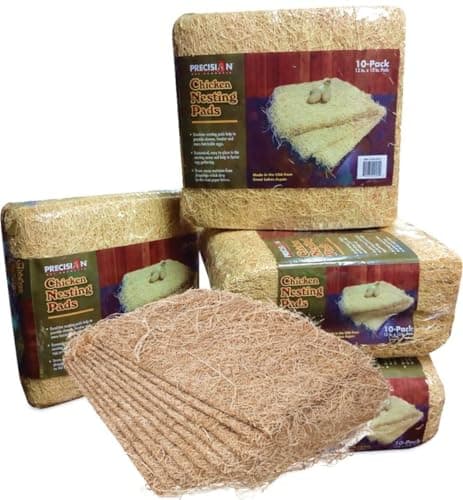
Chicken Nesting Pads (Excelsior)
13 x 13 in
Best for: A nest that stays put
Aspen excelsior fibers on a kraft-paper backing at a standard 13 by 13 inches, which is the size nearly every nest box is built around and the reason these are the default.
#ad No live price feed yet, so no number is shown rather than a stale one. How this is funded.
FAQ
Questions people actually ask
+What chicken breed lays the most eggs?
On the highest published ceiling, the Leghorn: The Livestock Conservancy gives between 150 and 320 large to extra-large white eggs a year. On the highest published floor, which is the more useful number, the Australorp at 250 or more. The Leghorn's range spans more than double, so which end of it your bird lands on depends heavily on the strain.
+What is the best egg laying chicken for beginners?
The Australorp. It has the highest published annual floor of any breed here at 250 or more eggs, the best eggs-per-pound-of-hen figure, a registry temperament note of active yet gentle, and it graduated off the conservation priority list in 2023 so it is widely available. The one caveat the registry attaches is that its black plumage needs ample shade in warm weather.
+How many eggs a year does a backyard hen actually lay?
Fewer than the breed figure suggests in most years. University of Minnesota Extension publishes roughly six eggs per hen per week in lay, which annualizes to 312 — but no hen is in lay for 52 weeks. Day length falls in winter, the annual molt stops her for several weeks, and peak production covers only the first two years of a five-to-ten-year laying life.
+Do Orpingtons and Wyandottes lay well?
Nobody publishes a figure. The Livestock Conservancy publishes standard weights, egg color and temperament for both breeds but no annual egg count, and University of Minnesota Extension does not supply one either. Any eggs-per-year number you see quoted for these two traces to an estimate rather than a registry, so we do not rank them on this page.
+Does egg shell color affect the egg?
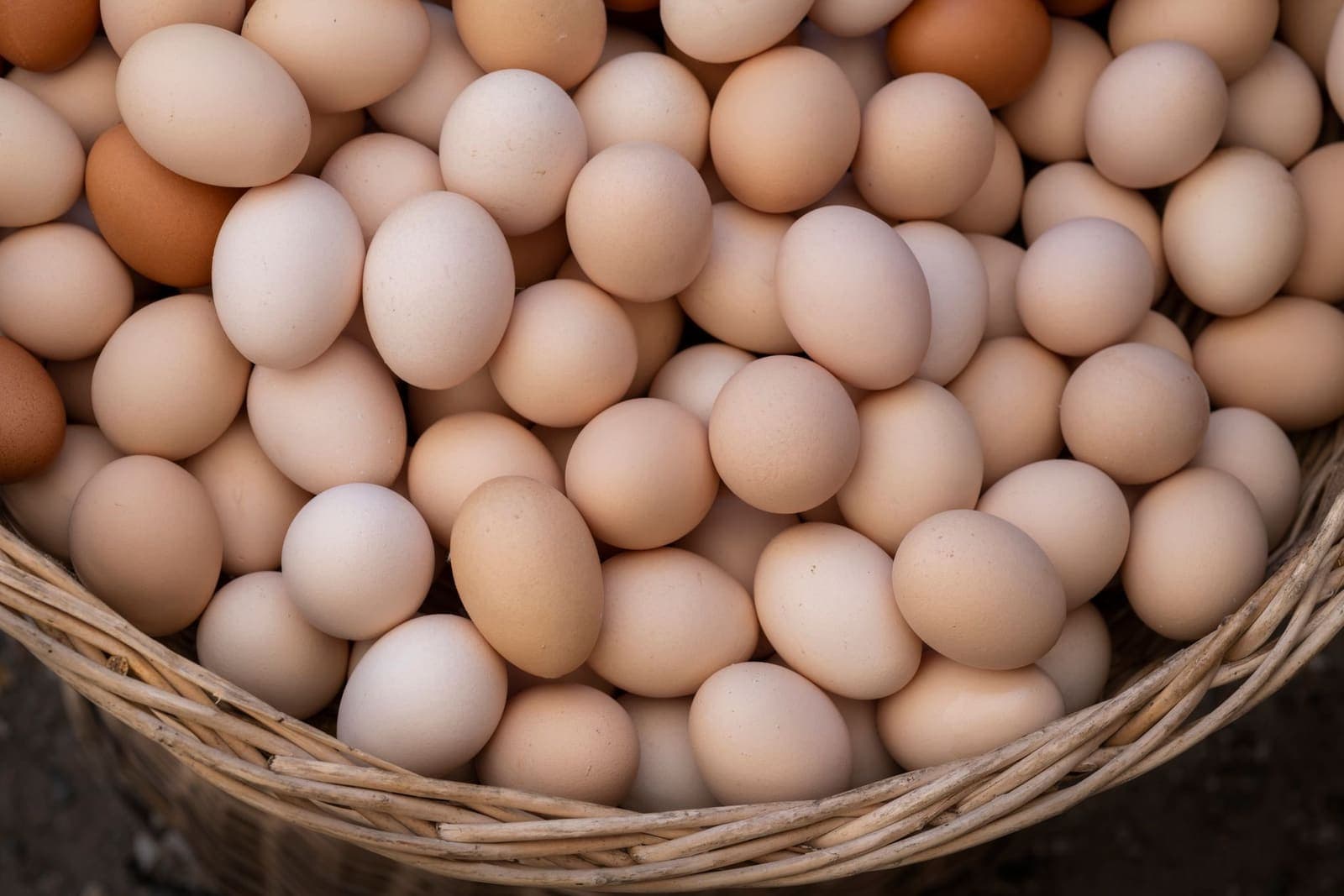
No. Shell color is genetics and has no bearing on nutrition, taste or quality. It is worth choosing on only because a mixed basket is genuinely one of the pleasures of keeping your own hens — white from a Leghorn, brown from a Rhode Island Red or Australorp, and blue from an Araucana.
+How many hens do I need for a dozen eggs a week?
Two to three of a good laying breed, in season. At the Australorp's published floor of 250 eggs a year, one hen averages just under five eggs a week across the whole year, so three hens covers a dozen a week with margin in summer and a shortfall in deep winter. Size the flock on the floor of the published range, not the ceiling.
Where the numbers came from
Sources
Every figure cited on this page came from one of these documents. If one of them has changed since we read it, the number here is out of date and we would like to know.
Eight beginner breeds compared on published egg figures, standard weights and the registry's own temperament wording — including where no figure is published at all.