Nothing keeps water liquid through a sustained freeze without energy. Insulated containers, dark rubber tubs, floating balls and salt-water bottles buy hours at the margins. Through a night below 20 F, the only reliable answers are a thermostatic heated waterer or carrying warm water out twice a day.
This page exists because “heated chicken waterer without electricity” is a thing people genuinely search for and the honest answer is unsatisfying. We would rather say so than sell you something that does not work.
The uncomfortable physics
Freezing is a matter of heat leaving the water. To stop it you either add heat or slow the loss. Slowing the loss — insulation, mass, dark colors in sun — extends the time before freezing but does not prevent it, because there is nothing replacing the heat that leaves.
Over a mild night that hovers around freezing, slowing the loss is enough. Over a night at 15 F, it is not. That is the whole story and every product claim should be read against it.
What the no-power options actually buy you
Honest assessment of the common no-electricity approaches.
Approach
What it does
What it does not do
Black rubber tub in sun
Absorbs solar gain in daylight; flexes so ice can be knocked out without cracking it
Nothing after dark, which is when it freezes
Larger volume of water
More thermal mass means slower freezing
Prevent freezing; it delays it by hours
Insulated container or tire surround
Slows heat loss meaningfully
Add heat; a sustained freeze still wins
Ping-pong balls on the surface
Wind moves them and disrupts a still surface forming ice
Work on a calm night, or at low temperatures
Salt water in a sealed bottle, floated
The saline stays liquid longer and the bottle moves
Add heat. It is the ping-pong ball idea with extra steps
Siting out of the wind
Genuinely reduces heat loss; free
Prevent freezing on a still cold night
Twice-daily warm refills
Actually works, indefinitely, for zero cost
Happen while you are at work
Note the last row. Carrying warm water out morning and evening is not a workaround, it is a legitimate answer, and for a mild climate with a handful of freezing mornings it is the right one. The problem it does not solve is a working day: water frozen at 8 a.m. and nobody home until 6 p.m. is ten hours of a flock unable to drink, and a laying hen stops laying within about a day of that.
What works
A thermostatically controlled heated waterer or a heated base under the drinker you already own. That is the list. The choices within it, with published figures, are on heated waterers, and the summary is:
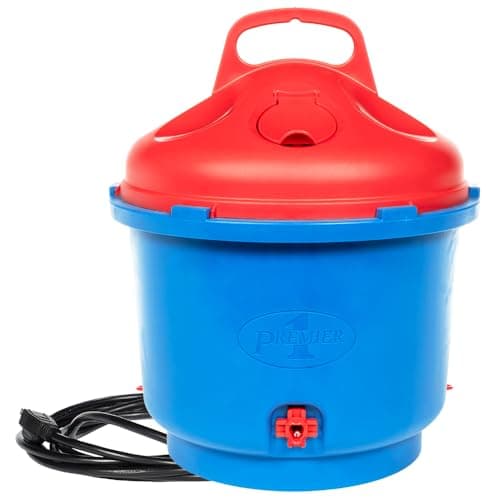
Premier 1, 100 W: published unfrozen to -20 F, thermostat on below 40 F and off at 60 F. The only unit publishing its switching points.
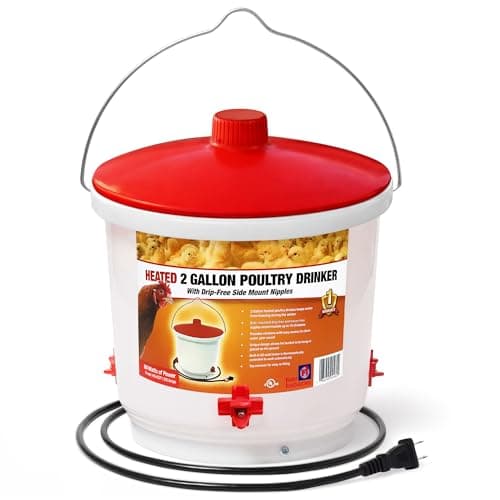
Farm Innovators HB-60P, 60 W: the lowest draw, thermostatic, but no published temperature rating at all.
Harris Farms heated base, 125 W: published only to 10 F, and heats an open drinker.
If there is no power at the coop
This is the real constraint behind most searches for a non-electric solution, and it has two honest answers.
Run power to the coop properly. An outdoor-rated extension run or a buried circuit to a GFCI outlet is not a large job and it also gets you the option of a light, a heated waterer and a mains-powered automatic door. It is the durable answer.
Or accept the twice-daily routine and design around it. Two containers, swapped morning and evening: bring the frozen one in to thaw while the warm one is out. Rubber tubs rather than plastic, because you can flex the ice out of rubber without breaking the container. Site them out of the wind.
Heads up: some links on this page are affiliate links. If you buy through one we may earn a commission at no extra cost to you. It never changes a ranking, and we take no payment for placement. The full version.
The picks
The options that actually work through a freeze
All three of these use energy, because nothing else works. They differ in how much, and in what temperature they are published to survive.
Premier 1 Supplies
All-Season Heated Poultry Waterer, 3 Gallon
100 W, unfrozen to -20 F
Best for: Cold climates, published to -20 F
The only heated waterer here that publishes the temperature it is rated to and the thermostat's actual switching points — 100 watts, on below 40 F, off at 60 F, unfrozen to minus twenty.
Sixty thermostatic watts across two gallons and three side-mounted nipples — the lowest published draw of the heated waterers here, and the one whose running-cost ceiling is under thirty-two dollars for a whole winter.
A heated base rather than a waterer: it takes the plastic or metal drinker already in your run and keeps it liquid to a published ten degrees Fahrenheit.
#ad We have no verified Amazon listing for this one, so no number is shown. How this is funded.
FAQ
Questions people actually ask
+How do I keep chicken water from freezing without electricity?
You slow the freezing rather than prevent it. A black rubber tub in sun, a larger volume of water, insulation, siting out of the wind and floating objects that keep the surface moving all buy hours. None of them works through a sustained hard freeze, and the honest non-electric answer is carrying warm water out twice a day.
+Do ping pong balls stop chicken water freezing?
Only marginally, and only in wind. The idea is that the balls move on the surface and disrupt ice forming on still water. On a calm night, or at genuinely low temperatures, they do nothing. It is a real effect at the margins rather than a solution.
+How long can chickens go without water?
Not long before it matters. A laying hen deprived of water for a day typically stops laying, and the effect on condition compounds quickly after that. This is why frozen water is the one winter problem that genuinely threatens the birds rather than merely inconveniencing you.
+What is the cheapest way to stop chicken water freezing?
Two containers swapped morning and evening — bring the frozen one indoors to thaw while the warm one is outside. Use rubber tubs rather than rigid plastic so you can flex the ice out without cracking them, and site them out of the wind. It costs nothing and works, provided somebody is home twice a day.
Where the numbers came from
Sources
Every figure cited on this page came from one of these documents. If one of them has changed since we read it, the number here is out of date and we would like to know.