Keeping chickens through winter, in order of what actually works
The list is ordered by effect, and heat is not near the top. The thing that matters most is free.
By Scooter M.·Published September 1, 2026 · Updated October 18, 2026
The short answer
In order of effect: keep the coop ventilated above roost height, keep bedding dry, keep water unfrozen, block low drafts, and give them a wind-sheltered outdoor space. Adding heat is last and for most flocks unnecessary — chickens handle dry cold well, and it is moisture that causes frostbite.
The list, ordered by effect
What to do about winter, most effective first.
Rank
What
Why it is where it is
1
Ventilate above roost height
Frostbite is condensing moisture, not cold. This is the actual cause and the fix is free
2
Keep bedding dry
Damp bedding is a moisture source inside the coop, working against the ventilation
3
Keep water unfrozen
The only winter problem that genuinely threatens the birds. A hen that cannot drink stops laying within a day
4
Block drafts at and below roost height
Air moving across roosting birds disrupts the insulating layer in their feathers
5
Give them somewhere sheltered outside
Birds shut in all winter get bored and start picking at each other
6
Feed a little scratch before roosting
Digestion generates heat overnight. Small effect, genuinely real, costs nothing
7
Add supplemental heat
Last. Creates a dependency, and does not address the moisture that causes the damage
How cold is too cold, in published figures
This is the question everyone actually wants answered, so here are the numbers rather than reassurance. University of Minnesota Extension publishes all four.
Published cold-weather figures. University of Minnesota Extension, Caring for chickens in cold weather, except where noted.
Figure
Published value
What it actually means
Body temperature
106 F
A chicken runs far hotter than you do, under a down coat it grew itself
Comfort range
60 to 75 F
"Most poultry can maintain their body temperatures when the environmental temperature is between 60 and 75 degrees Fahrenheit" — the band where it costs them nothing
Supplemental heat threshold
Below 35 F
The published point at which to CONSIDER heat, at nest-box or lower-roost height. Not a survival limit, and not a recommendation to heat
Feed intake in cold
Up to 25 percent higher
"your flock's feed intake may increase up to 25 percent during cold weather" — the real cost of winter, and the one not to economize on
So the honest answer to “how cold is too cold” is that there is no published temperature at which a healthy, dry, well-feathered adult hen is in danger from cold alone. What the publications warn about is the combination: Minnesota names “high moisture and cold temperatures” together as the main causes of frostbite, which affects “a chicken’s comb, wattles and feet.” Cold on its own is a feed bill. Cold plus damp is an injury.
The moisture is not weather, either — it is the birds. Minnesota publishes the figure that explains the whole page: “Chicken manure is 70% water.” A closed coop with six hens in it is a humidifier running all night, which is why the next section says what it says.
The counterintuitive part, again
Everybody arrives at winter wanting to close the coop up, and it is exactly wrong. A sealed coop full of birds is a humid coop, that humidity condenses on combs and wattles, and wet tissue below freezing is frostbite. The birds are not cold; they are damp.
The ventilation page covers the distinction between ventilation (above the birds, keep it) and draft (across the birds, block it). If you read one thing before winter, read that. And if you are buying rather than adapting, the winter coop roundup ranks coops on the airflow their makers publish — which turns out to be the only cold-weather specification any of them puts in writing.
Water is the one that actually threatens them
Everything else on this page is about comfort and long-term condition. Frozen water is different: a hen that cannot drink stops laying within about a day and loses condition quickly after that. And it fails during a working day — frozen at 8 a.m., nobody home until evening.
Two workable answers. A thermostatic heated waterer, with published cold ratings from 10 F to -20 F depending on the unit. Or two containers swapped morning and evening, which genuinely works if somebody is home. The full treatment, including which no-power tricks are worth anything, is on its own page.
Things that feel helpful and are not
Sealing every gap. Covered above. It causes the problem.
Heavy insulation. Slows heat loss from a space that is not being heated, so it delays the coop reaching outdoor temperature rather than preventing it. Unsealed insulation is also somewhere mites and rodents live.
Vaseline on combs. Widely recommended, and the reasoning does not hold up: a greasy coating on tissue does not stop the underlying moisture problem and may trap moisture against the skin. Fix the humidity instead.
Heat lamps. Fire risk plus dependency. See coop heaters.
Sweaters. They flatten the feathers, which is where the insulation is, and they get wet. Charming photographs, poor thermodynamics.
What actually changes in winter
Laying drops or stops. Day length triggers laying, so shorter days mean fewer eggs. This is normal and not a health problem. Some keepers add light to keep production up; others deliberately let the birds rest.
They eat more. Maintaining body temperature costs energy. Expect feed consumption to rise and do not restrict it.
They spend more time inside. Which makes coop space, ventilation and boredom all more pressing. Chickens shut in with nothing to do start picking at each other, so something to peck at — a cabbage hung up, a pile of leaves to scratch through — earns its place.
Bedding gets damp faster. More time inside means more droppings in the same space, and less drying. Change it more often than you do in summer.
Heads up: some links on this page are affiliate links. If you buy through one we may earn a commission at no extra cost to you. It never changes a ranking, and we take no payment for placement. The full version.
The picks
Winter gear, in the order it matters
Unfrozen water first, dry bedding second, and a heater only if you have decided you genuinely need one.
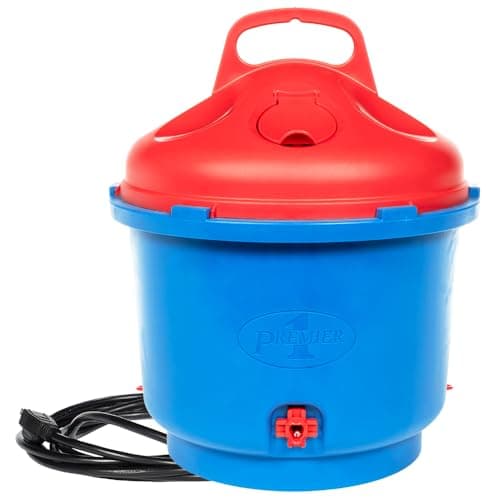
Premier 1 Supplies
All-Season Heated Poultry Waterer, 3 Gallon
100 W, unfrozen to -20 F
Best for: Cold climates, published to -20 F
The only heated waterer here that publishes the temperature it is rated to and the thermostat's actual switching points — 100 watts, on below 40 F, off at 60 F, unfrozen to minus twenty.
Chopped hay and straw with zeolite already blended in, and the only bedding here that publishes its coverage — 63 square feet at two inches, which is a number you can divide by your coop.
A flat radiant panel that runs at roughly 130 F rather than a bulb at several hundred, which is the whole safety argument — and 200 watts, which is the whole cost argument against it.
#ad We have no verified Amazon listing for this one, so no number is shown. How this is funded.
FAQ
Questions people actually ask
+How cold is too cold for chickens?
There is no published temperature at which a healthy, dry, well-feathered adult hen is in danger from cold alone. University of Minnesota Extension publishes a comfort range of 60 to 75 F, a body temperature of 106 F, and a threshold of below 35 F for considering supplemental heat - which is a point to consider it, not a survival limit. What the same source warns about is the combination: high moisture and cold temperatures together are named as the main causes of frostbite.
+How cold can chickens tolerate?
Far colder than most keepers expect, provided the coop is dry and ventilated. A chicken runs a body temperature of 106 F under feathers it grew for the purpose. The published figures to plan around are not a minimum temperature but a feed figure and a moisture one: University of Minnesota Extension publishes that feed intake may rise up to 25 percent in cold weather, and that chicken manure is 70 percent water, which is what makes a sealed coop dangerous rather than cozy.
+What temperature is too cold for chickens in a coop?
Minnesota Extension's published figure is below 35 F for considering supplemental heat at nest-box or lower-roost height. Treat that as the point to check your ventilation and bedding rather than to plug in a heater - this page ranks heat seventh of seven for a reason. Breeds with large combs and light feathering need more attention at any temperature, and Minnesota names Plymouth Rock, Wyandotte, Ameraucana and Orpington as over-wintering well.
+How do I keep chickens warm in winter without electricity?
Ventilate above roost height so moisture escapes, keep bedding dry, block drafts at and below roost height, provide a wind-sheltered outdoor area, and feed a little scratch before roosting because digestion generates heat overnight. Chickens handle dry cold well; it is damp air that causes frostbite.
+Do chickens need a heat lamp in the winter?
Generally no, and a heat lamp is the most dangerous thing you can install in a wooden coop full of dry bedding. Healthy adult standard-breed birds in a dry, ventilated coop handle cold well, and birds acclimated to a heated coop are in far more danger when the power fails.
+Should I put Vaseline on chicken combs to prevent frostbite?
The reasoning does not hold up well. Frostbite is caused by moisture in the coop air condensing on the comb, and a greasy coating does not address that and may trap moisture against the skin. Fixing the coop humidity through ventilation deals with the cause rather than the symptom.
+Why did my chickens stop laying in winter?
Day length. Laying is triggered by increasing daylight, so production naturally drops or stops as the days shorten and resumes as they lengthen. It is normal rather than a health problem. Some keepers add supplemental light to maintain production; others deliberately let the birds rest.
Where the numbers came from
Sources
Every figure cited on this page came from one of these documents. If one of them has changed since we read it, the number here is out of date and we would like to know.
Feather pecking is a management problem before it is a boredom problem. The published causes, the enrichment extension services actually name, and what is worth buying.
The published order is shade, water, ventilation. What to buy for each, the signs of heat stress in severity order, and the CFM arithmetic that rules a fan out of most coops.
The published 10% ceiling, the dilution arithmetic that shows where a ration actually breaks, and the treats worth buying - with the grit their makers say to provide alongside.