Keeping chickens cool, in the order the extension services put it
Heat kills more backyard birds than cold does, and the published fix is unglamorous: shade first, water second, airflow third. This page ranks what you can buy against that order, and shows why the fan is usually the wrong purchase.
poultry.extension.org puts it in a fixed order: shade, water and ventilation are the three basic needs for keeping chickens comfortable in summer. That order is also a budget. Shade over the run costs the least and does the most; more water in more places costs almost nothing; a fan is the expensive third item, and the arithmetic below shows why most backyard coops do not need one.
Reading the bird, in severity order
A hen has no sweat glands. She sheds heat by panting and by holding her wings away from her body, so the early signs are behaviors rather than symptoms. What matters is telling “hot” from “in trouble”, and the published descriptions are specific.
poultry.extension.org, Managing Backyard Chickens During Periods of Extreme Summer Temperature.
Stage
What you see
Hot, coping
Panting more heavily and holding her wings away from her body, but otherwise acting normally
Heat exhaustion — act now
Heavy panting and wings held out, plus pale wattles and comb; she may be lethargic, limp or unconscious
How we judged what to buy
The extension order gives us the ranking criteria directly, so we have used it rather than inventing our own:
Does it create shade where the birds are at midday? Named first in the published guidance, and the only intervention that works with no power and no maintenance.
Does it get more cool water into more places? Named second. Birds drink far more in heat, and the guidance is explicit about multiple sources in shaded spots.
Does it move air without creating a new problem? Named third, and the one where a purchase most easily does more harm than good.
Is it sized for a backyard coop? Most hot-weather hardware sold for “coops” is repurposed shed and greenhouse equipment.
1. Shade, which is where the money should go
The published guidance names natural landscaping first — trees and vegetation — and treats built shade as the substitute where none exists: “Tarps or shade cloths can be used over an existing structure for a ‘quick fix’ to provide extra shaded areas for birds.” The placement detail is the part people get wrong. Put the shade at the middle or west end of the run, because that is where the sun will be during the hottest part of the day, midday to afternoon. Shade on the east side is shade at breakfast.
Prefer mesh to a solid tarp. A solid sheet stops sun and airflow together, and airflow is the third thing on the same list. A 90 percent shade mesh cuts the radiant load while still letting a breeze through, which is why it is the first pick below.
2. Water, in more places than you think
Birds drink substantially more in heat because evaporation from panting is how they lose it. The published guidance is about placement and temperature as much as volume: multiple water sources, located in shady cool areas, with ice cubes, ice blocks or frozen bottles used to keep them cool. A detail worth copying is low-sided dishes the birds can wade in — chickens dump heat through their feet, and a shallow pan in the shade is free.
A closed nipple system is the counterpart: it keeps the main supply clean while the open pans do the cooling. The waterer roundup covers the birds-per-nipple figures and how to switch a flock over.
3. Ventilation, and the arithmetic that decides the fan
The published advice here is cheap before it is expensive: crack open coop windows, and consider wind turbine vents in the roof to let hot air escape. Fans are mentioned as circulation, with a safety note — keep electrical cords well out of reach of curious chickens.
Before buying one, size it. Coop fans almost never publish a CFM figure; the one on this page does, which makes the check possible.
Eleven seconds is not a subtle amount of ventilation. A fan at that scale belongs on a walk-in coop or a converted shed, where the volume is several times larger and the building has no useful cross-breeze. In a small prefab coop the same money buys shade cloth, three extra waterers and a bag of ice, and the published order says those come first anyway.
There is also a structural cost nobody mentions: an 8 inch fan needs an 8 inch hole, and that hole is a predator opening for the rest of the coop's life unless you back it with half-inch hardware cloth. The predator-proofing page covers the mesh; the ventilation page covers why coop airflow is a year-round design question rather than a summer purchase.
Electrolytes, briefly
Worth having in the cupboard before a heat wave rather than during one. The important published constraint is that an electrolyte solution supplements plain water rather than replacing it — Sav-A-Chick's own direction is to offer it “alongside a source of plain drinking water in a separate container”, and poultry.extension.org goes further, saying to provide an electrolyte mix only for a few hours, then remove it and replace with fresh plain water. The electrolytes page compares what the two main brands actually publish, and the difference is larger than the shelf suggests.
Heads up: some links on this page are affiliate links. If you buy through one we may earn a commission at no extra cost to you. It never changes a ranking, and we take no payment for placement. The full version.
The short answer
The short list
Ranked on the published rubric. Every row jumps to that product's full write-up below; the button goes straight to Amazon.
#
Pick
Best for
Key spec
Score
Price
1
Our pick
Chicken Coop Sun Shade Net
90% UV Block Shade Cloth, 11.5 x 6.6 ft
Shade is the first of the three things poultry.extension.org names for hot weather, and a 90 percent mesh over the run is the cheapest way to create it where no tree does.
Four nipples and a bucket you already own, which is the cheapest way to end the open-water problem for good and is rated by the maker at three chickens per nipple.
The only electrolyte mix here whose published analysis is built around potassium rather than salt, and the maker's own instruction is the honest one: offer it alongside plain water, never instead of it.
The only item here that publishes a number you can do arithmetic with — and the arithmetic says it is far more fan than a six-bird coop needs, which is exactly why it is worth understanding before you buy one.
#adPrices as of September 21, 2026. Scores are our own published rubric, not customer ratings.
#1 · The first thing extension services list
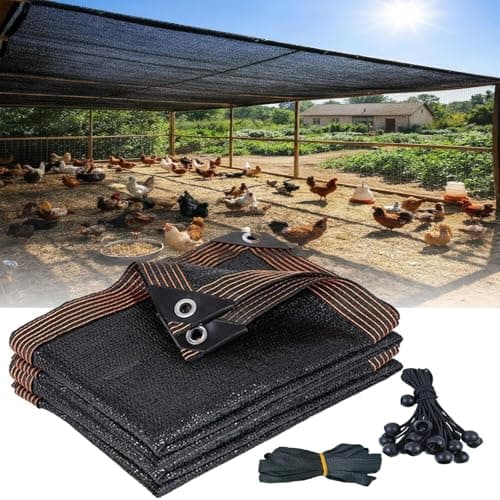
Chicken Coop Sun Shade Net 90% UV Block Shade Cloth, 11.5 x 6.6 ft
Shade is the first of the three things poultry.extension.org names for hot weather, and a 90 percent mesh over the run is the cheapest way to create it where no tree does.
Who it is for. Anybody whose run bakes from midday to late afternoon with nothing overhead, which is most suburban runs built against a south or west fence.
Mesh rather than solid tarp, so it shades without stopping the airflow that the same extension guidance asks for
Bungee cords are included, which is the part people improvise badly with cable ties
Big enough to cover the sunny half of most backyard runs, which is all you need
Cheapest item on this page by a wide margin, against a problem that kills birds
What it costs you
No manufacturer specification sheet exists — the shade percentage and dimensions come from the retail listing, not a published datasheet, and there is no independent shade-factor rating
A generic brand with no published warranty or UV-life figure, so treat it as a consumable that needs replacing
Mesh shade does nothing for a coop that is itself in full sun; it shades the run, not the box
Needs a frame or fence line to tension against, and it will sag and pool water without one
Skip it if. Your run is already shaded for the middle of the day by trees or the house. poultry.extension.org names natural landscaping first for exactly this reason.
Four nipples and a bucket you already own, which is the cheapest way to end the open-water problem for good and is rated by the maker at three chickens per nipple.
Who it is for. Anybody tired of scrubbing a fouled open waterer daily, who is comfortable drilling a bucket.
Published specifications
Quantity
4 nipples
Rated capacity
Each watering nipple accommodates three chickens
Installation
Fits a plastic container or PVC pipe to create a closed watering system
#ad We have no verified Amazon listing for this one, so no number is shown. How this is funded.
#3 · Heat stress and shipping stress
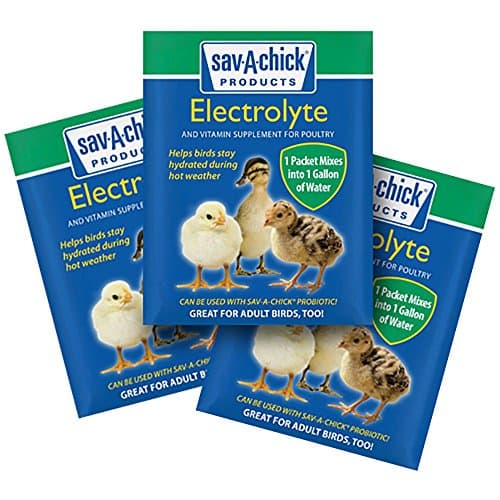
Sav-A-Chick Electrolyte & Vitamin Supplement, 0.25 oz packets
The only electrolyte mix here whose published analysis is built around potassium rather than salt, and the maker's own instruction is the honest one: offer it alongside plain water, never instead of it.
Who it is for. Anybody heading into a heat wave, collecting shipped chicks, or nursing a bird back after illness.
Published specifications
Potassium (min)
15.00%
Salt
8.00% min, 9.00% max
Sodium
14.00% min, 14.50% max
Zinc (min)
120 ppm
Vitamin A (min)
1,280,000 IU/lb
Vitamin D3 (min)
3,200,000 IU/lb
Vitamin E (min)
960 IU/lb
Packet
0.25 oz, mixed into 1 gallon of clean, cool water
Maker's direction
Offer alongside a source of plain drinking water in a separate container at all times during hot weather or other stress; make fresh solution daily
Publishes 15 percent minimum potassium — the mineral a panting bird is actually losing, and roughly seven times the figure Durvet publishes
The maker tells you to keep plain water available alongside it, which is the instruction most keepers get wrong
Single-gallon packets, so you mix exactly what you need and throw nothing away
Full guaranteed analysis published on the maker's own site, including zinc and three vitamins
What it costs you
Vitamins are published per pound of powder while Durvet publishes per 5 g dose, so the vitamin figures between the two brands cannot be compared directly
Packets are single-gallon, which is fiddly and more expensive per gallon than a jar if you run a big flock
Contains added colors (Yellow 6, Red 40) that do nothing for the bird
Must be made fresh daily, so it is a chore for as long as the heat lasts
Skip it if. Nothing is stressing the flock. Extension guidance is that clean cool water is the thing that matters; electrolytes are for heat, shipping and recovery, not a daily supplement.
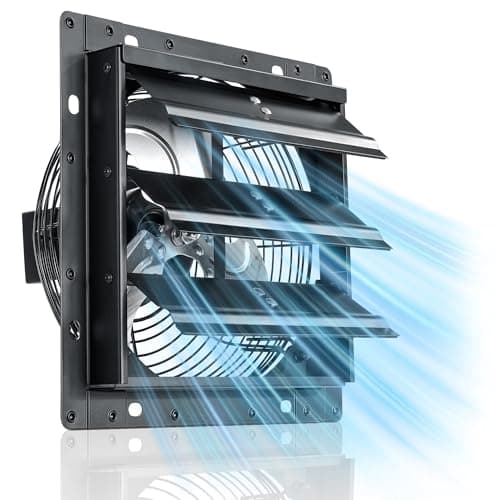
The only item here that publishes a number you can do arithmetic with — and the arithmetic says it is far more fan than a six-bird coop needs, which is exactly why it is worth understanding before you buy one.
Who it is for. Somebody with a walk-in coop or converted shed in a climate where summer nights stay hot, who already has power out there.
In the order poultry.extension.org publishes: shade, water, then ventilation. Get shade over the middle or west end of the run so it covers the midday to afternoon sun, provide multiple water sources in shaded spots and keep them cool with ice, and open up the coop's vents. A fan comes last and most small coops do not need one.
+What are the signs of heat stress in chickens?
Early on, a hen pants more heavily and holds her wings away from her body while otherwise behaving normally. The serious stage adds pale wattles and comb, and the bird may be lethargic, limp or unconscious. That is heat exhaustion and needs immediate cooling.
+How do you cool down an overheated chicken?
poultry.extension.org publishes the procedure: submerge her body up to her neck - not her head - in a bucket of cool, not icy, water. Cool rather than cold is deliberate, and keeping the head clear matters because a limp bird can drown.
+Do chickens need a fan in the coop?
Usually not. Fans appear third in the published list, after shade and water, and coop-marketed fans are mostly shed equipment. A 760 CFM shutter fan works out at roughly 5.3 air changes a minute in a six-bird coop - the whole air volume every 11 seconds. In a walk-in coop or converted shed in a hot climate it earns its place; in a small prefab it does not.
+Should I put ice in my chickens' water?
Yes for the drinker - the published guidance suggests ice cubes, ice blocks or frozen bottles to keep water cool. No for an overheated bird, where the same source specifies cool and not icy water. Change open water daily, because warm standing water encourages coccidiosis.
+Should I give chickens extra treats in hot weather?
No. The published guidance says to limit treats and not to overfeed scratch grains during heat waves. Frozen fruit or vegetables in the shade are a way of getting cool water into a bird, but scratch is the wrong direction in heat.
Where the numbers came from
Sources
Every figure cited on this page came from one of these documents. If one of them has changed since we read it, the number here is out of date and we would like to know.
Sav-A-Chick against Durvet on published guaranteed analysis - 15% potassium versus 2% - plus when electrolytes genuinely help and when plain water is the better answer.