Keeping chickens out of the garden, and what clipping a wing really buys
The usual advice is to clip a wing. The published description of that procedure contains two details that change the decision — it only makes flight difficult rather than impossible, and it undoes itself every fall.
Fence the beds, not the birds. A 48-inch welded-wire barrier around the vegetable patch is permanent, needs nothing repeating, and fails in ways you can see. Wing clipping is the alternative and the published description is narrower than its reputation: poultry.extension.org says it “makes it very difficult for the birds to fly” — not impossible — and that “The procedure needs to be repeated after each molt.” Clip only if a bird is clearing a fence that is otherwise doing its job.
Which problem do you actually have?
These get conflated and they have different answers. Be honest about which one is happening in your yard before buying anything.
Three versions of the same complaint, and what each one needs.
What is happening
What it is
What fixes it
Birds walk into the beds and scratch
A containment problem, not a flight problem. Most common by a distance
A barrier around the beds. Height is nearly irrelevant
Birds fly over a fence they could not walk through
A genuine flight problem
A taller barrier, a covered run, or clipping
Birds are destroying the whole yard, beds and lawn
A range problem - too many birds on too little ground
Rotation, or a run. Maryland Extension publishes rotating birds off bare ground and reseeding it
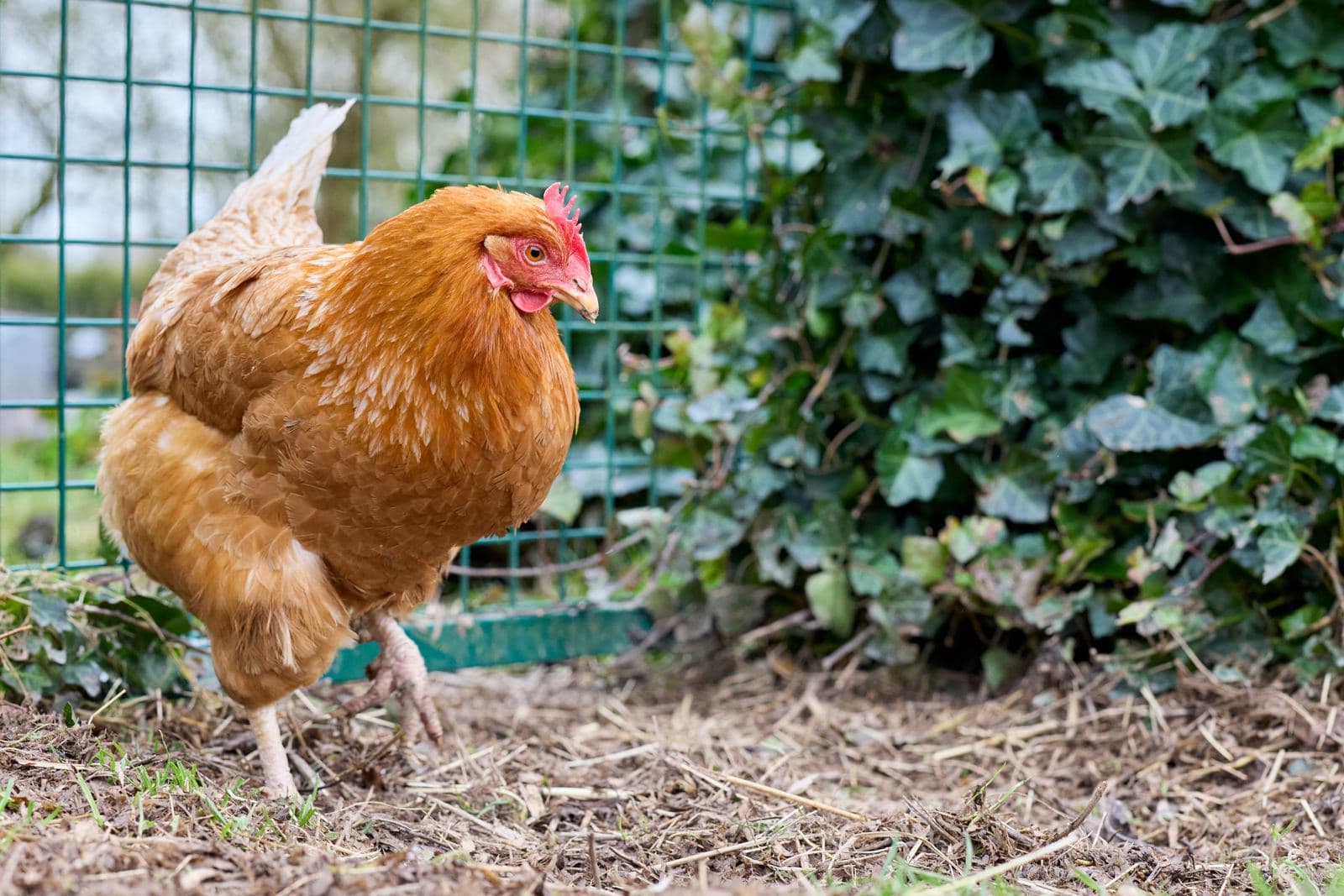
The first row is the one almost everybody has, and it is worth saying plainly because it changes what you buy: a chicken in a flower bed usually walked there. It got in at ground level, through a gap, under a gate, or around the end of a fence that stops short. Chickens are persistent and systematic about this, not acrobatic.
Why the fence goes round the beds
It is a smaller fence. A vegetable patch has a perimeter; a yard has a bigger one. Fencing the beds also leaves the birds doing the things you actually want them doing — eating ticks, turning the compost, scratching through leaf litter — rather than confining them to stop one behavior.
Two published points shape the specification. University of Maryland Extension defines the general approach: “Confinement and yarding is when fencing is used to confine poultry to a smaller area than what they would normally range.” And on ground that has been worked over: rotate the birds off it, reseed, and “just make sure to keep birds off until the cover has grown back.”
The bottom matters more than the top. Chickens push along a fence line looking for a gap, and a bird is a surprisingly low, wide shape. Pin the wire down or bury the bottom few inches.
Mesh small enough to stop a head. A one-inch mesh keeps a hen out; a wide garden mesh lets her get her head and then her shoulders through.
Welded, not hexagonal. Chickens stand on fences and lean. Welded wire holds its shape where hexagonal netting deforms into a step.
48 inches is enough for a heavy breed, and not for a light one. An Orpington is not going over four feet from standing. A Leghorn or a Hamburg might, and for those the answer is a roof or a clip.
The movable option
Electric poultry netting is the other shape of answer, and it inverts the logic: instead of a permanent barrier around what you are protecting, you put a movable barrier around the birds and shift it when the ground needs a rest. That suits exactly the third row of the table above — the yard being worn out rather than one bed being raided — and it pairs with Maryland’s published rotation advice.
It is a bigger commitment: an energizer, grounding, and a fence line to keep clear of vegetation. The electric netting page covers the sizing, including the published rule for matching an energizer to a length of net.
Wing clipping: exactly what is published
poultry.extension.org publishes a short article on it, and it is worth quoting almost in full because the full text is less than people assume.
What it is for: wing clipping is “often used to prevent birds in a poultry flock from escaping the area in which they are confined.”
What it is: “It involves clipping the primary feathers on one wing, about midway down the feathers.”
What it achieves: it “makes it very difficult for the birds to fly.”
How long it lasts: “The procedure needs to be repeated after each molt because the clipped wing feathers will be lost and replaced with new unclipped feathers.”
Three things follow, and they are the reason this page puts the scissors last rather than first.
One wing, not two. The published procedure is explicit, and the mechanism is asymmetry — the bird cannot balance a lifting stroke. Clipping both wings restores the symmetry and gives you a bird that flies, badly, in a straight line.
“Very difficult” is not “impossible”. A motivated clipped hen can still get somewhere she badly wants to be. If the fence is the only thing between your flock and a road, a clip is not the plan.
It expires every fall. A molt replaces the clipped primaries with unclipped ones, so this is a recurring task for the life of the bird rather than a fix. The molting page covers the timing.
There is also a trade-off the extension material raises in a different context. University of Maryland Extension, discussing predation, notes that clipping is “sometimes necessary if the birds are flying out of their enclosure where they will be more vulnerable to predators.” The implication runs both ways: a clipped bird inside a safe enclosure is safer, and a clipped bird caught in the open has lost an escape route. Clipping and an uncovered run are a poor combination.
Things that do not work
Chasing them off. It teaches the birds when you are watching, not where the boundary is.
Smell repellents on the beds. We found no published evidence for any of them in poultry, and the ones sold for this are formulated against mammals.
A low decorative border. Nine inches of wire is a thing a chicken steps over on her way to the lettuce.
Free-ranging only when supervised. This works and it is not a fix, it is you being the fence. It also means the flock is shut in on exactly the days you are busiest.
The one genuinely free intervention is timing. Birds let out in the last couple of hours before roosting do far less damage than birds out all day, because they spend much of that window working toward the coop anyway. It is a mitigation rather than a solution, and it costs nothing to try before buying wire.
Heads up: some links on this page are affiliate links. If you buy through one we may earn a commission at no extra cost to you. It never changes a ranking, and we take no payment for placement. The full version.
The picks
Fence first, scissors last
Wire around the beds is permanent and needs no repeating. Electric netting moves with you. The scissors are here because clipping is sometimes the right call, and if you are going to do it, do it with the right tool.
Tongmo
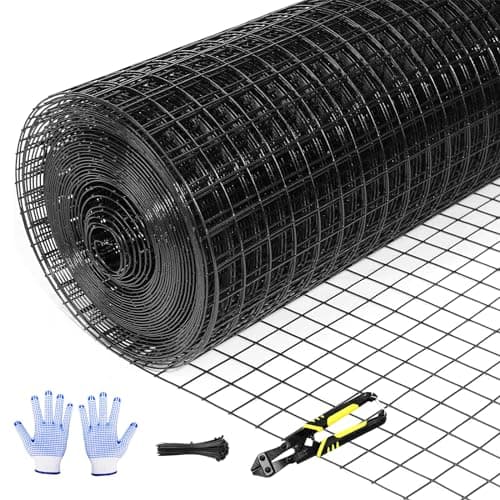
Vinyl-Coated Welded Wire, 48 in x 100 ft, 1 in mesh
48 in, 1 in mesh, 19 ga
Best for: A bed the birds never get into
Welded wire rather than netting, at a published mesh and gauge, which is what a garden barrier has to be: the point of failure with chickens is not the top of the fence, it is the bottom.
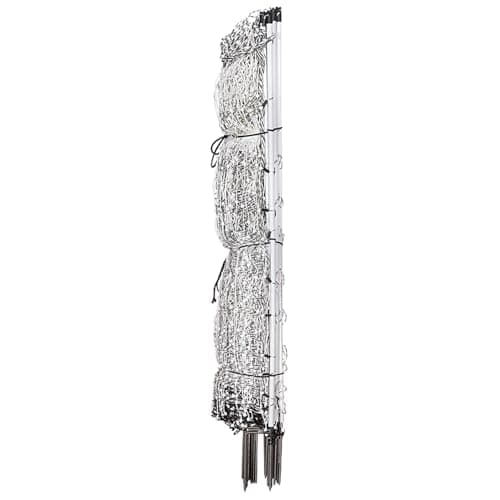
Twelve horizontal strands, eleven of them live, on posts already built into the roll — the only containment product on this site that both holds chickens in and actively deters what wants to get at them.
Above the 0.6 joule minimum Premier publishes for up to three rolls of netting, with the solar panel and battery built into one unit — which is the only practical way to electrify a fence at the bottom of a field.
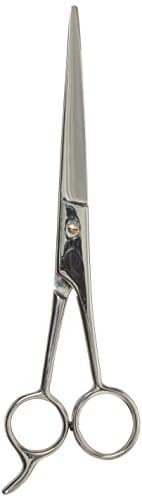
A purpose-made feather scissor, which matters for one reason: a clean cut through ten primaries needs a blade that grips the feather rather than folding it, and kitchen scissors fold it.
+How do I keep chickens out of my vegetable garden?
Fence the beds rather than the yard. It is a shorter perimeter, it fails visibly, and it leaves the flock doing the things that make free-ranging worth it. Use welded wire with a mesh around an inch so a hen cannot get her head through, 48 inches high for heavy breeds, and pin or bury the bottom few inches - most birds get in at ground level rather than over the top.
+How high a fence do chickens need?
48 inches stops a standard heavy breed such as an Orpington or a Plymouth Rock from a standing start. Light, flighty breeds like Leghorns and Hamburgs can clear that, and for those the honest answers are a covered run or a wing clip rather than an ever-taller fence. No extension service publishes a fence height for poultry, so this is observation rather than a cited figure.
+Does clipping a chicken's wings stop them flying?
Not entirely, and the published wording is careful about it. poultry.extension.org says clipping the primary feathers on one wing makes it very difficult for the birds to fly - not impossible. A motivated bird can still get over a fence she badly wants to be on the other side of, so clipping is not a substitute for a barrier where the consequence of escape is serious.
+Which wing do you clip on a chicken?
One wing only. poultry.extension.org publishes the procedure as clipping the primary feathers on one wing, about midway down the feathers. The mechanism is asymmetry - the bird cannot balance a lifting stroke. Clipping both wings restores the balance and largely defeats the point.
+How often do you need to clip a chicken's wings?
After every molt. poultry.extension.org states the procedure needs repeating because the clipped feathers are lost and replaced with new unclipped ones. For most backyard hens that means annually, in autumn. It is a recurring task for the life of the bird, which is the strongest argument for fixing the fence instead.
+Does wing clipping hurt the chicken?
A fully grown feather is dead tissue, like a fingernail, and cutting it midway down does not hurt. A growing feather still in pin has a blood supply and must not be cut. The extension article gives no caution on this at all, which is an omission rather than permission - if you cannot confidently tell a pin feather from a mature one, watch somebody do it before you try.
+Will chickens destroy my lawn?
A few birds on a large area will not; several birds on a small one will, and the result is bare ground. That is a stocking problem rather than a behavior problem. University of Maryland Extension's published answer is rotation - move the birds to a new yard, reseed the bare patch, and keep them off until the cover has grown back. Electric netting is what makes that practical.
+Do chicken repellent sprays work?
We found no published evidence for any of them in poultry, which is why none is recommended here. Most products sold as animal repellents are formulated against mammals that are deterred by smell, and that is not how a chicken decides where to forage. A physical barrier is the only approach with published support.
Where the numbers came from
Sources
Every figure cited on this page came from one of these documents. If one of them has changed since we read it, the number here is out of date and we would like to know.
Electric netting compared on published strand count and post spacing, with the joule rule for sizing an energizer and what netting does not protect against.
Mobile coops and tractors on published dimensions, the combined indoor-plus-run allowance they are sold against, and the wheel kit that converts the coop you already own.