The deep litter method, and the one number that decides whether it works
Almost everything written about deep litter is a routine. Almost none of it gives you the figure the routine exists to hold — litter moisture, which extension research puts a hard number on.
Deep litter means adding fresh bedding on top of old rather than stripping the coop, and letting the pack compost in place. It works when the litter stays dry and fails loudly when it does not. Mississippi State University Extension publishes the threshold: litter moisture above about 25 percent produces increased ammonia, with 20 to 30 percent the ideal band and caked litter running 40 percent or more. Start at 4 to 6 inches, turn it, keep the coop ventilated, and clean out in spring.
Deep litter is the most-recommended and least-quantified practice in backyard chicken keeping. Every account of it is a routine — add shavings, stir weekly, clean out once a year — and almost none says what the routine is for or how you would know it was failing before your birds told you.
It is for one thing: keeping the pack dry enough that it composts rather than putrefies. And there is a published number attached to it.
The number the routine exists to hold
The most precise litter figures come from commercial broiler research, and they transfer to a backyard coop because the chemistry does not care how many birds are standing on the litter. Mississippi State University Extension publication P2744 (Tabler, Wells and Zhai) publishes these:
Published litter moisture figures. Source: Mississippi State University Extension P2744, Managing Litter Moisture in Broiler Houses with Built-Up Litter.
Condition
Published figure
What it means in your coop
Ideal litter moisture
20 to 30 percent
The pack composts; little ammonia
Ammonia threshold
Above about 25 percent
Ammonia production increases
Caked litter
40 percent or more
Remove it; it will not recover in place
House relative humidity
50 to 70 percent
Outside this, litter moisture climbs
Two things follow immediately. First, the ideal band and the ammonia threshold overlap: 20 to 30 percent is ideal and above 25 percent ammonia starts rising, so the working target is the lower half of the ideal band, not the middle of it. Second, the humidity figure is the one you can actually measure without a laboratory. You are not going to oven-dry a litter sample. You can hang a hygrometer.
How to tell without a laboratory
Three checks, in the order they go wrong.
The squeeze. Take a handful at pack depth. It should feel like a wrung cloth, not a wet sponge, and should fall apart when you open your hand. If it holds its shape in a ball, it is too wet.
The nose, at roost height, first thing. Ammonia is heavier work than smell suggests — if you can smell it standing up, the birds have been breathing it all night at roost level. Any ammonia at all means the pack is past the threshold.
The hygrometer. P2744 gives 50 to 70 percent house humidity as the band that keeps litter moisture in range. A coop reading much above outdoor humidity on a cold morning is telling you the moisture has nowhere to go, which is a ventilation problem rather than a bedding one.
What makes a bedding suitable for deep litter
Not every bedding works in a pack that is meant to compost. Four properties decide it, and only some of them get published.
Carbon, and enough of it. Droppings are the nitrogen. The bedding is the carbon that balances them. Wood shavings and chopped straw both work; grass clippings and shredded paper mat down and go anaerobic.
Absorbency without compaction. The pack has to hold moisture and still let air through when you turn it. Fine sawdust absorbs well and compacts into a mat, which is the worst combination.
Low dust. A pack you turn weekly is a pack you aerosolize weekly. Published dust figures are rare and worth paying for.
Compostability at the end. The whole payoff is that the spring clean-out is garden material rather than waste. Anything treated, dyed or synthetic breaks that.
Sand fails the first test outright — it does not compost, because there is no carbon in it. It is a legitimate coop floor and a poor deep-litter substrate, and the two get conflated constantly.
How much bedding a pack actually takes
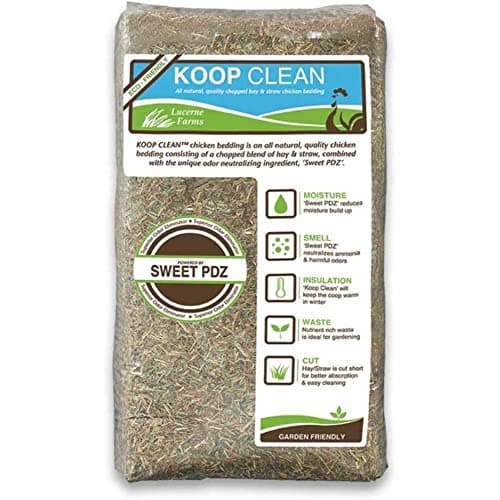
The starting depth published for backyard coops is 4 to 6 inches — University of Minnesota Extension gives “4 to 6 inches of straw or shavings” with periodic stirring and a deep clean in spring. Turning that into a shopping list needs one published coverage figure, and Koop Clean is one of the few beddings that publishes one.
The routine, and what each step is for
Start deep. Four to six inches, not the two inches a change-out routine uses. A shallow pack has no thermal mass and no capacity to absorb a wet week.
Turn it, and let the birds do most of it. Scratching is the aeration. Scattering a handful of scratch grain into the pack gets it turned thoroughly for free — the one genuinely clever trick in this method. Add a fork yourself where the birds do not go, which is under the roost, where it matters most.
Top up rather than replace. When the surface looks dirty or damp, add two inches of fresh bedding on top. You are feeding carbon to a composting pile.
Remove cake, always. P2744 is explicit that caked litter runs 40 percent moisture or more. It does not dry out in place and it will not compost. Lift it out and replace it — this is the one place where deep litter means removing something.
Clean out in spring, not autumn. A deep pack is genuinely warmer than a bare floor as it composts, which is worth having in January and worth nothing in July. Strip it when the weather turns and put it on the garden.
When deep litter goes wrong, it goes wrong quietly
The failure mode is not dramatic. The pack gets damp, ammonia rises past the threshold, and the birds breathe it at roost height for weeks before anything visible happens. What shows up first is respiratory — and by then the litter has been out of range a long time.
The two causes are almost always the same pair. The coop is under-ventilated, so the moisture the birds exhale overnight never leaves; or the waterer is inside the coop and it leaks. Moving the drinker into the run solves more deep-litter failures than any bedding change does.
There is a second tell, and it arrives before the smell does. Damp litter breeds flies: extension entomology puts the threshold at 30 percent moisture, close enough to the ammonia figure that a rising fly count is usually the first sign a pack has gone wet.
Heads up: some links on this page are affiliate links. If you buy through one we may earn a commission at no extra cost to you. It never changes a ranking, and we take no payment for placement. The full version.
The picks
What deep litter actually needs you to buy
Two beddings that suit the method for different reasons, and the instrument that tells you whether it is working rather than leaving you to guess from the smell.
Lucerne Farms
Koop Clean Chicken Bedding
63 sq ft at 2 in
Chopped hay and straw with zeolite already blended in, and the only bedding here that publishes its coverage — 63 square feet at two inches, which is a number you can divide by your coop.
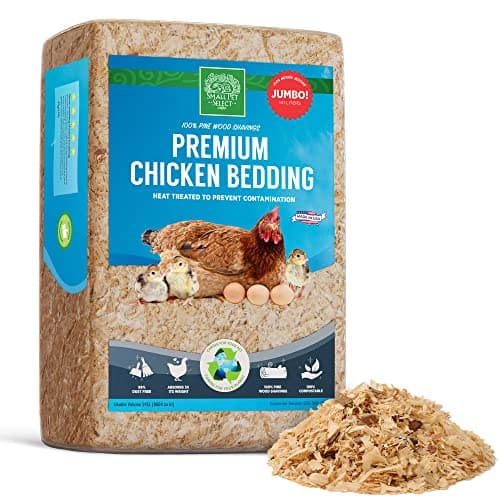
Ordinary pine shavings with an unusual claim attached: triple-screened to 99 percent dust-free, which is the one bedding spec that matters in an enclosed brooder.
Plus or minus 2 F and a published humidity tolerance that is honest about where it holds — plus or minus 3 percent between 20 and 80 percent RH, and varying outside it.
#ad We have no verified Amazon listing for this one, so no number is shown. How this is funded.
FAQ
Questions people actually ask
+How deep should deep litter be?
Start at 4 to 6 inches, which is the figure University of Minnesota Extension publishes for bedding a coop in cold weather, then top up two inches at a time as the surface dirties. A shallow pack has no capacity to absorb a wet week and will cake instead of composting.
+Why does my deep litter smell of ammonia?
It is too wet. Mississippi State University Extension publishes that litter moisture above about 25 percent results in increased ammonia production, and caked litter runs 40 percent or more. The cause is almost always under-ventilation or a waterer leaking inside the coop rather than the bedding itself.
+How often do you clean out a deep litter coop?
Once a year, in spring. The pack generates some warmth as it composts, which is worth having through winter and worth nothing in summer, so stripping it when the weather turns gets you both the winter benefit and garden-ready material at the right time of year. Caked patches come out whenever they appear.
+Can you use sand for the deep litter method?
No. Sand contains no carbon, so there is nothing for the droppings to compost with — the pack cannot break down and simply accumulates. Sand is a legitimate coop floor managed by sifting, but that is a different method with a different routine, and the two get conflated constantly.
+Does deep litter get rid of mites?
No, and treating it as pest control is the most common mistake made with it. A warm composting pack is a comfortable environment for northern fowl mites. Mite infestations need a treatment used to its label; deep litter manages moisture and waste, which is a different job.
+Is deep litter cheaper than cleaning out the coop?
It uses the same bedding, added less often, so the running cost is similar or slightly lower — the saving is labor rather than money. Using Koop Clean's published coverage of 63 square feet at 2 inches, one bag starts a 24 square foot coop at 5 inches deep, and you top up from there rather than repeating that outlay every few weeks.
Where the numbers came from
Sources
Every figure cited on this page came from one of these documents. If one of them has changed since we read it, the number here is out of date and we would like to know.