Bedding has one job and it is not comfort. It is absorbing moisture fast enough that the coop never smells of ammonia, because ammonia is what damages birds.
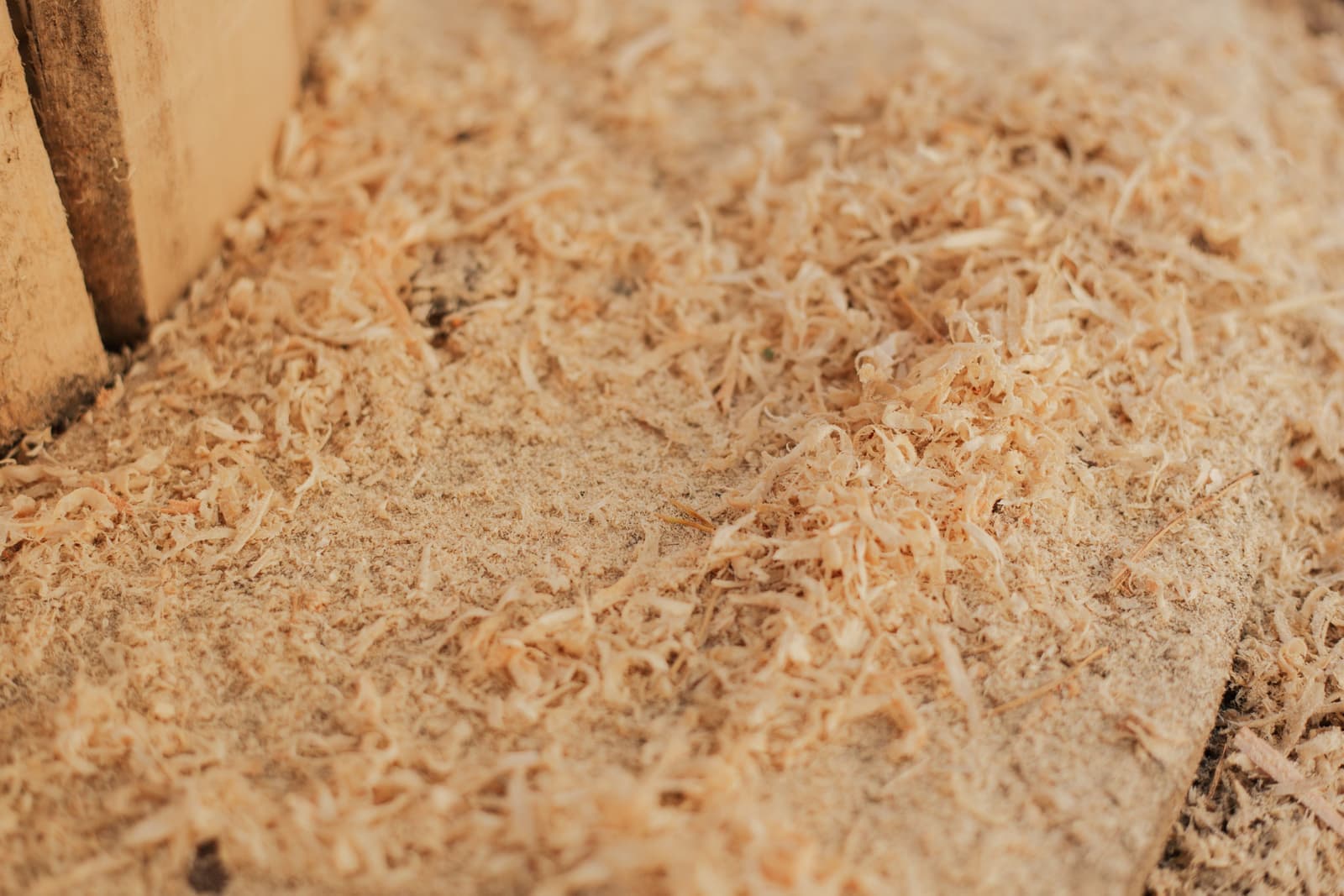
Pine shavings are the default for good reasons: absorbent, cheap, compostable. If your coop is small, close to neighbors or poorly ventilated, a hay-and-straw blend with zeolite mixed in targets the ammonia specifically. Never cedar, whose aromatic oils are a respiratory irritant.
What bedding is actually for
It is easy to think of bedding as comfort. It is not. Chickens roost on a bar to sleep and they do not much care what is under them. Bedding exists to absorb droppings and moisture fast enough that the coop does not develop an ammonia problem.
Ammonia is the thing to actually worry about. It is produced as droppings break down, it damages the respiratory tract lining, and it makes birds more susceptible to everything else. The practical test is your nose at coop height on a still morning: if you can smell ammonia, the birds have been breathing it all night.
And ammonia is a ventilation problem as much as a bedding one. No bedding rescues a sealed coop. Ventilation versus draft is the companion page and arguably the more important of the two.
The options, on what is published
Coop bedding compared. Published figures only.
Bedding
Published
Best at
Watch for
Pine shavings
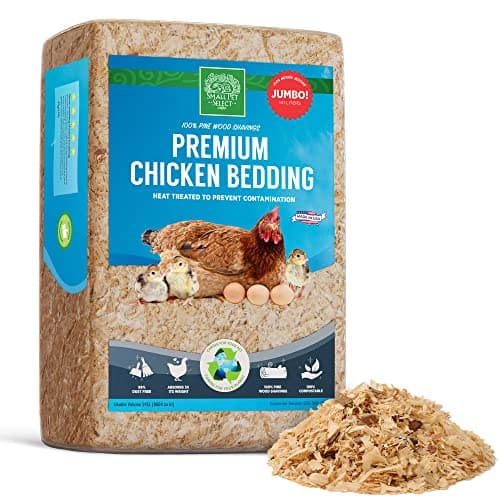
Small Pet Select: 100% pine, triple-screened 99% dust-free, 141 L bag
Absorbency and cost; the default for a reason
Dust in enclosed spaces; buy a low-dust grade
Hay and straw with zeolite
Koop Clean: chopped hay and straw plus Sweet PDZ zeolite, covers 63 sq ft at 2 in
Ammonia specifically, in small or close-neighbor coops
Costs more per cubic foot; holds moisture differently
Straw alone
No standardized published figures
Cheap, and warm in deep litter
Poor absorbency; hollow stems can harbor mites
Sand
No standardized published figures
Drains, easy to sift daily like a litter box
Heavy, does not compost, gets cold, dusty when dry
Cedar shavings
n/a
Nothing. Do not use it
Aromatic oils are a respiratory irritant
Koop Clean is the only bedding in this category we found that publishes a coverage figure at a stated depth — 63 square feet at 2 inches — which lets you actually work out how many bags a season takes instead of guessing. Small Pet Select is the only one publishing a dust figure. Everybody else publishes a bag and a photograph.
Deep litter, briefly
Deep litter is a method rather than a product: you add fresh bedding on top rather than stripping the coop, and the layer composts in place, generating a little warmth and a microbial population that competes with pathogens. It changes how often you do the full clean-out rather than removing it. Done properly it works well and reduces both labor and cost.
Done improperly it is a damp, ammoniac mess. The requirements are real: a dry coop, good ventilation, enough carbon material added regularly, and turning. If you are not going to commit to that, plain shavings changed regularly is the more reliable choice and there is no shame in it.
There is a published number behind all of that, and it is the whole difference between the two outcomes: the deep litter method page works through the litter-moisture threshold extension research puts the method on, and the routine that holds it.
Nest boxes are a different problem
Loose bedding in a nest box gets scratched into a corner within a day, and then eggs are landing on bare wood. That is a different requirement from coop floor bedding and it has a different answer — pads that stay put. Nest pads covers it.
Heads up: some links on this page are affiliate links. If you buy through one we may earn a commission at no extra cost to you. It never changes a ranking, and we take no payment for placement. The full version.
The short answer
The short list
Ranked on the published rubric. Every row jumps to that product's full write-up below; the button goes straight to Amazon.
#
Pick
Best for
Key spec
Score
Price
1
Our pick
Lucerne Farms
Koop Clean Chicken Bedding
Chopped hay and straw with zeolite already blended in, and the only bedding here that publishes its coverage — 63 square feet at two inches, which is a number you can divide by your coop.
Ordinary pine shavings with an unusual claim attached: triple-screened to 99 percent dust-free, which is the one bedding spec that matters in an enclosed brooder.
#adPrices as of October 18, 2026. Scores are our own published rubric, not customer ratings.
#1 · Coops with neighbors close by
Lucerne Farms Koop Clean Chicken Bedding
Chopped hay and straw with zeolite already blended in, and the only bedding here that publishes its coverage — 63 square feet at two inches, which is a number you can divide by your coop.
Who it is for. A small suburban coop where the ammonia smell is a social problem as well as a bird-health one.
Published specifications
Composition
Chopped hays and straw combined with Sweet PDZ odor-neutralizing zeolite
Coverage
Covers 63 square feet at a depth of 2 in
Odor control
Odor-neutralizing natural zeolite
Disposal
Composts; stated as a good addition to a garden or compost bin
Ordinary pine shavings with an unusual claim attached: triple-screened to 99 percent dust-free, which is the one bedding spec that matters in an enclosed brooder.
Who it is for. Brooders, nest boxes and any coop where a bird has shown respiratory trouble.
Published specifications
Composition
100% natural pine shavings; no dyes, additives or irritants
Dust
Triple-screened to be 99% dust-free
Bag volume
141 liter expanded capacity
Origin
Made in the USA from sustainably sourced material
Source: Small Pet Select, Pine Shavings Chicken Bedding product listing, retrieved 2026-09-01
Rubric — 7.4 / 10
Capacity honesty8/10 · weight 26%
Documentation7/10 · weight 24%
Build and weather7/10 · weight 20%
Running cost6/10 · weight 15%
Daily use9/10 · weight 15%
What it gets right
A published dust figure, which almost no bedding brand states at all — and dust is the specific hazard in a small enclosed brooder
Volume published in liters expanded, so you can compare bags rather than guess from a picture
Pine shavings are the default bedding for good reasons: absorbent, cheap to replace, and they compost
No dyes or additives, which is what you want against a bird's respiratory tract
What it costs you
The 99 percent figure is the maker's own and comes with no published test method
Costs meaningfully more than a farm-store bale of shavings, for a difference you cannot see
No zeolite or odor control, so ammonia management is entirely down to your cleaning schedule
Skip it if. You are bedding a large, well-ventilated walk-in coop. Buy the cheap compressed bales and spend the difference on ventilation.
Pine shavings for most coops: absorbent, inexpensive and compostable. If your coop is small, poorly ventilated or close to neighbors, a hay-and-straw blend with zeolite mixed in targets ammonia specifically. Avoid cedar shavings entirely, because the aromatic oils are a respiratory irritant in an enclosed space.
+How deep should chicken coop bedding be?
Two to four inches for a conventional change-out approach, deeper if you are running deep litter. Koop Clean publishes coverage of 63 square feet at a depth of 2 inches, which is a useful figure for working out how many bags a coop takes per change rather than guessing.
+Is sand good bedding for a chicken coop?
It drains well and can be sifted daily like a litter box, which some keepers prefer. Against that: it is heavy, it does not compost, it gets cold in winter, and it is dusty when dry. It is a workable choice for somebody committed to daily sifting and a poor one for anybody who is not.
+Why does my chicken coop smell of ammonia?
Because moisture and droppings are accumulating faster than the bedding absorbs and the ventilation removes. It is usually a ventilation problem rather than a bedding one. Ammonia damages birds' respiratory tracts, so treat the smell at coop height on a still morning as a problem to fix rather than a normal condition.
Where the numbers came from
Sources
Every figure cited on this page came from one of these documents. If one of them has changed since we read it, the number here is out of date and we would like to know.