The egg-bound hen, and the word that is doing two jobs
Search this and you will be told to run a warm bath, give calcium and lubricate the vent. The extension publication that defines the term says something very different, and the gap between the two is worth understanding before you handle a sick bird.
The extension answer is that there is no treatment, and that the bird may have to be euthanized. poultry.extension.org defines an egg-bound hen as one overloaded by internal laying, gives a distended abdomen as the sign, and states: “There is no treatment for this condition and it may be necessary to euthanize the affected hen.” That is a different condition from the stuck egg most advice describes. Work out which one you are looking at, then call a vet — and put the money into calcium and the right feed, which is the part that is actually published as preventable.
One phrase, two different problems
This is the reason the advice you find contradicts itself. “Egg bound” is used for two conditions that look superficially alike and are not alike at all.
The two conditions the phrase covers, and what is published about each.
Internal laying overload
An obstructed oviduct
What it is
Yolks the oviduct never collected are shed into the body cavity. Usually they are reabsorbed; too many, too often, and the cavity is overloaded
A formed egg that the hen cannot pass
The published sign
A distended abdomen
Straining, a hen off the perch, often a tail-down posture
What poultry.extension.org publishes
"There is no treatment for this condition and it may be necessary to euthanize the affected hen."
Not described on the egg-bound page at all; it refers the reader to the Merck Veterinary Manual
Where it goes next
Egg peritonitis, if a shed yolk becomes infected
A veterinary decision
The practical consequence is simple and worth being blunt about. The home remedies circulating for “egg bound” are aimed at the second condition, while the publication that defines the term is describing the first. A warm bath does nothing for a body cavity full of yolk.
Where internal laying goes wrong
The same source explains the mechanism, and it is worth reading because it also explains why so many hens recover from internal laying without anyone noticing. The ovary produces yolks; the oviduct collects them. A yolk the oviduct misses is released into the body cavity, and that is internal laying — which is normally harmless, because the yolk is reabsorbed.
The failure is bacterial. poultry.extension.org, on egg peritonitis: the yolk is “a good medium for bacteria”, and an infected one causes peritonitis, which “may result from secondary bacterial infection” and “causes a buildup of fluid in the abdominal area.” On outcome: “It is possible for a hen with egg peritonitis to die quickly or to become ill gradually.” On treatment: “There is no treatment for egg peritonitis, although an antibiotic can be used if the condition is caught quickly.”
What this page will not tell you to do
We went looking for published support for the standard advice. We did not find it, so we are not going to repeat it with our name on it.
The warm bath. No extension publication we found describes soaking an egg-bound hen. It may well be harmless and it may well help a genuinely obstructed bird; we cannot cite anybody who publishes it.
Lubricating and manually removing the egg. Breaking an egg inside a hen is a described route to exactly the bacterial problem above. If this needs doing, it needs doing by somebody qualified.
An emergency calcium injection or oral dose. Calcium has real published standing in prevention, below. We found none for dosing an acutely ill bird at home.
Any timescale. “A hen will die within 48 hours if not treated” is everywhere online and is in none of the publications we read.
That is an unsatisfying answer to an emergency, and we would rather give you an unsatisfying true one. The first aid kit page sets out where a keeper’s remit ends generally; this is squarely past that line.
The part that is published, and it is calcium
Prevention is where the publications become specific, because the underlying machinery is nutritional. poultry.extension.org, on cage layer fatigue — the bone-weakening condition in hens at peak production — describes a hen short of dietary calcium drawing it from her own skeleton: “As more and more calcium is withdrawn from the bones, they become weak and fragile.”
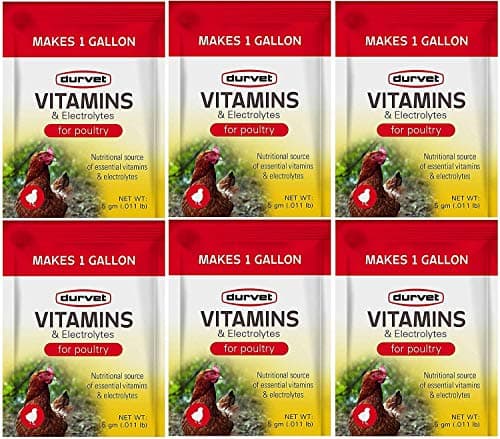
The same page gives the intervention in one sentence: “Topdressing feed with oyster shell or limestone will usually reduce the incidence of cage layer fatigue in young hens.” And for older birds it names a different deficiency: “In older hens, the problem is most likely a deficiency of phosphorus and/or vitamin D3”, with topdressed dicalcium phosphate and a vitamin and electrolyte supplement in the water as the published responses.
Who it happens to
Worth stating plainly: the publications we read do not give risk factors for the egg-bound condition. Neither the egg-bound page nor the peritonitis page covers age, body condition, egg size or laying rate, and both refer the reader onward to the Merck Veterinary Manual for more detail. We are not going to fill that gap with the usual list.
What is published, on the cage layer fatigue page, is that the demand on a hen is highest at peak production and that exercise matters: “Because exercise seems to alleviate the condition, lack of exercise in caged hens may be a partial cause”, and many affected hens “recover quickly once removed from cages and allowed to walk normally on the floor.” For a backyard flock with a run, that is already true, and it is one of the quiet advantages a backyard hen has over a caged one.
Why a crate is on the list
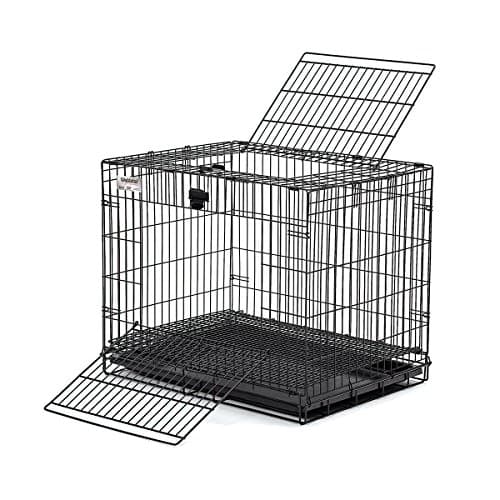
If you have a hen you are worried about, the single most useful thing you can do is separate her where you can see her — eating, drinking, droppings, posture, and whether an egg appears. That turns “she seems off” into something a vet can act on, and it is the same reason the broody hen page uses a crate for an entirely different purpose.
Keep her within sight of the flock. A bird reintroduced after days alone has a pecking order to re-enter, and a sick hen is the worst-placed bird in the yard to do that.
Heads up: some links on this page are affiliate links. If you buy through one we may earn a commission at no extra cost to you. It never changes a ranking, and we take no payment for placement. The full version.
The picks
What is worth buying, which is all prevention
Nothing on this page treats an egg-bound hen, because no publication we found describes a treatment. These are the things the published guidance does support: calcium offered properly, a ration that is right for the bird's age, somewhere to isolate and watch, and the supplement one publication names for older hens.
Score8.3no photo yet
Manna Pro
Crushed Oyster Shell
33-38% calcium
Best for: Shell quality once laying starts
Thirty-three to thirty-eight percent calcium in a crushed form, offered free-choice — the supplement that fixes thin shells and the one most first-time keepers confuse with grit.
#ad We have no verified Amazon listing for this one, so no number is shown. How this is funded.
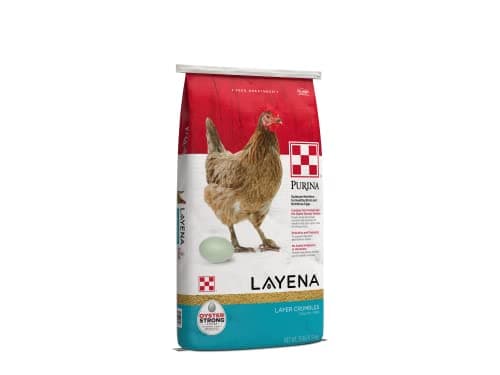
Purina
Layena 16% Layer Crumbles, 25 lb
16% protein, 3.25-4.25% calcium
Best for: The default layer ration
The bag most American backyard keepers actually buy, and on published figures it earns the position: a complete 16 percent ration with the fullest guaranteed analysis in this comparison, down to the phytase.
A half-inch grid mesh floor over a slide-out pan, which is the only thing Mississippi State's method actually requires — and the only complete cage here that arrives ready to use rather than needing a crate you already own.
A salt-and-vitamin mix rather than a potassium mix — it publishes its vitamin content per dose, which is genuinely more useful than a per-pound figure, but its mineral profile is the opposite shape to what a panting bird loses.
It depends who is using the phrase, which is the root of most of the confusion. poultry.extension.org defines an egg-bound hen as one whose body cavity has been overloaded by internal laying - yolks the oviduct failed to collect - and gives a distended abdomen as the sign. Most online advice uses the same phrase for a formed egg physically stuck in the oviduct. They are different problems with different answers.
+How do you tell if a chicken is egg bound?
The only sign the extension publication gives is a distended, swollen abdomen. It does not list straining, tail position or any of the other signs commonly described, and we are not going to add them. If a hen has a swollen abdomen, is off her feet or is standing unusually upright, that is a veterinary visit rather than a checklist.
+How do you treat an egg bound hen?
poultry.extension.org states plainly that there is no treatment for the condition it defines as egg-bound, and that it may be necessary to euthanize the affected hen. For egg peritonitis, the related condition, the same source says there is no treatment although an antibiotic can be used if it is caught quickly. Both of those are decisions for a veterinarian, not for a keeper at home.
+Does a warm bath help an egg bound hen?
We could not find an extension publication that describes it, so this site does not recommend it. That is not the same as saying it is harmful - it may well help a genuinely obstructed bird. It is that the sources this site is built on do not publish it, and the condition those sources define as egg-bound is a body cavity overloaded with yolk, which a bath cannot affect.
+Can calcium prevent egg binding?
Calcium has real published standing in prevention rather than treatment. poultry.extension.org publishes that topdressing feed with oyster shell or limestone will usually reduce the incidence of cage layer fatigue in young hens, the condition in which a laying hen withdraws calcium from her own bones. For older hens the publication points to phosphorus or vitamin D3 instead.
+Should I give my hens oyster shell in their feed?
In a separate dish, free choice, not mixed in. Oyster shell runs 33 to 38 percent calcium against a layer ration's 2.5 to 4.5 percent, so blending it into feed forces the same dose on pullets, cockerels and molting hens that do not need it. Offered loose, each bird takes what she needs.
+Is egg binding the same as egg peritonitis?
They are linked but not the same. Internal laying - yolks released into the body cavity - is the common root. Usually those yolks are reabsorbed harmlessly. Egg peritonitis is what happens when one becomes infected, because egg yolk is a good medium for bacteria, and it causes a buildup of fluid in the abdomen. The egg-bound condition as the publication defines it is an overload of internal laying rather than an infection of it.
Where the numbers came from
Sources
Every figure cited on this page came from one of these documents. If one of them has changed since we read it, the number here is out of date and we would like to know.
Layer feeds compared on published protein, calcium, methionine and fiber against the extension figures for a hen in production - plus when a layer ration is the wrong choice.