Crop problems, and the three things people call sour crop
A hard crop like a golf ball, a crop that smells sour, and a crop that hangs down are three different conditions with three different outcomes - and one of them cannot be fixed. The morning check that tells them apart takes ten seconds.
The crop is, in University of Maryland Extension's words, “a storage sack that holds the feed and slowly releases it to the gizzard where it is ground into smaller pieces.” Check it in the morning, before the birds eat. It should be empty and you should be able to move it with your fingers. Hard like a golf ball is impacted. Squashy and smelling sour is sour crop. Hanging down at the front is pendulous, and that one does not recover.
The morning check
Everything on this page depends on one habit. A full crop is normal — the publication notes that when full “it is visible as a small protrusion at the base of the neck in front of the chest.” A crop that is still full first thing in the morning, after a night without food, is not normal. That is the whole diagnostic, and it is why the check has to happen before the flock eats.
University of Maryland Extension EBR-60, Common Crop Issues in Backyard Chickens.
What you find in the morning
Condition
Outlook
Empty, movable under the fingers
Normal
Nothing to do
Still full and “hard like a golf ball”, will not move when massaged
Impacted crop
Often manageable; surgical if it hardens for days
Full or squashy with a distinct “sour” smell; possibly a white film in the mouth
Sour crop (Candida albicans)
Treatable, and usually caused by something you can fix
Hangs down at the front of the bird, never empties properly
Pendulous crop
No recovery — the muscles and ligaments are damaged
Impacted crop
The published cause is blunt: “eating large amounts of poorly digestible materials like newspapers, grass, feathers, string, plastic or other indigestible material.” Long grass is the one that catches backyard keepers out, because it looks like the most natural food in the world.
The published signs are physical. The crop stays full despite an overnight fast, and “if you palpate the crop, it will feel hard like a golf ball. You will not be able to move the crop around when you massage it.”
Treatment as published: isolate the bird with water but no feed at first, “continue to provide lots of water and gently massage the crop to help move the material through the digestive track.” If the impaction persists for days and hardens, “surgical intervention might be necessary” — contact a veterinarian.
Sour crop
A different thing entirely: “a yeast infection caused by Candida albicans”, and “most easily identified by the ‘sour’ smell it emits.” It can extend up into the mouth and “appear as a fine white pseudo-membrane.”
The causes are the useful part, because most of them are husbandry:
Long courses of oral antibiotics. The publication names “long-term administration (1-2 weeks) of oral antibiotics, which affects the microflora of the upper digestive tract and causes yeast overgrowth.”
Bad or spoiled feed. Which is a storage problem — feed kept in its paper sack in a damp shed is the usual route.
“Slimy or unclean water, and watering systems that lack proper hygiene.” An open drinker with a biofilm in it is the most common version of this in a backyard flock.
An existing impacted or pendulous crop, or anything that leaves a bird immunocompromised.
On treatment the publication names an antifungal approach and a flush, and is careful about one of them. Copper sulfate at a 1:2000 dilution in drinking water “is commonly used to treat and prevent fungal infections in poultry” — with the explicit warning that “copper sulfate overdose can be toxic for the birds” and that veterinary dosing guidance should be followed carefully. The simpler measure is a flush: “one teaspoon” of epsom salts in a cup of water, and “treatment is most effective when applied to an empty crop, so it is best to apply it early in the morning.”
Pendulous crop, and the honest part
“A pendulous crop hangs down in the front of the bird.” Affected birds keep eating but “lose weight and eventually become emaciated and may die”, because the crop cannot empty properly.
There is no treatment. The publication is unambiguous: no recovery is possible because “the muscles and ligaments have been damaged.” What exists is management — a “crop bra”, described as “a type of bandage that gently places pressure on the crop to help the contents empty into the stomach”, which “must be worn continually, as the crop will revert to the pendulous condition if the crop bra is removed.”
Two published notes matter for anyone deciding what to do. The condition “frequently develops after binge eating, excessive water intake, or consumption of large amounts of fibrous or indigestible material like grasses, rocks or sand”, and high brooding temperatures can trigger it because chicks “drink excessive amounts of water” — which is one more reason the brooder schedule is worth following. And it is heritable: “do not breed affected birds, as the condition can pass from generation to generation.”
What prevents all three
Grit, free-choice. The gizzard cannot grind without it, and two of the three conditions start with material that did not get ground.
Clean water, in a system that stays clean. “Slimy or unclean water” is named directly. A closed nipple system is harder to foul than an open pan — the waterer page covers the trade.
Feed that has not spoiled. Which is a container, not a habit.
No long grass clippings. The single most common backyard route into an impacted crop, and the one that feels like a kindness.
Heads up: some links on this page are affiliate links. If you buy through one we may earn a commission at no extra cost to you. It never changes a ranking, and we take no payment for placement. The full version.
The picks
The flush, and the two things that prevent a repeat
One named in the published treatment, and two that address the published causes - indigestible material, and unclean water.
Epsoak
Epsom Salt, 5 lb
Magnesium sulfate USP
Plain magnesium sulfate is the one substance named in both extension publications this site relies on for feet and crops — a foot soak for bumblefoot, and a measured flush for a sour crop.
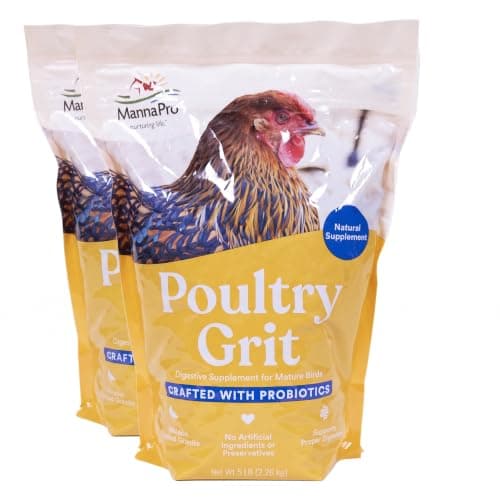
Insoluble crushed granite, which is the actual definition of grit and the reason it is not oyster shell — a bird with no access to stones cannot digest whole grain, scratch or grass.
Four nipples and a bucket you already own, which is the cheapest way to end the open-water problem for good and is rated by the maker at three chickens per nipple.
#ad We have no verified Amazon listing for this one, so no number is shown. How this is funded.
FAQ
Questions people actually ask
+How do I know if my chicken has sour crop?
Smell it. University of Maryland Extension says sour crop is most easily identified by the sour smell it emits, and it may extend into the mouth as a fine white pseudo-membrane. Check in the morning before the birds eat: a crop that is still full overnight is abnormal, and whether it is hard or squashy-and-sour tells you which condition you are dealing with.
+What is the difference between sour crop and impacted crop?
Impacted crop is a physical blockage of indigestible material - the crop feels hard like a golf ball and will not move when you massage it. Sour crop is a yeast infection with Candida albicans, identified by smell. They can occur together, because an impacted crop is itself a published cause of sour crop.
+How do you treat sour crop in chickens?
The published options are an antifungal - copper sulfate at 1:2000 dilution in drinking water, which the same source warns can be toxic if overdosed and should follow veterinary dosing - or flushing the crop with one teaspoon of epsom salts in a cup of water, applied early in the morning on an empty crop. Fixing the cause matters more: spoiled feed, unclean water, or a long antibiotic course.
+Can a chicken recover from pendulous crop?
No. The publication is explicit that no recovery is possible because the muscles and ligaments have been damaged. Some owners manage it with a crop bra, a bandage that presses the crop to help it empty, which has to be worn continually. The condition is heritable, so affected birds should not be bred.
+Can I massage my chicken's crop?
For an impacted crop the published treatment includes gently massaging the crop to help material move through, alongside isolating the bird with plenty of water and no feed at first. If the impaction persists for days and hardens, the publication says surgical intervention might be necessary and to contact a veterinarian.
+Does grass cause crop impaction in chickens?
Long or fibrous grass is one of the named materials, alongside newspaper, feathers, string and plastic. Birds with access to grit grind coarse material far better, which is why free-choice grit is the practical prevention as well as restricting access to indigestible material.
Where the numbers came from
Sources
Every figure cited on this page came from one of these documents. If one of them has changed since we read it, the number here is out of date and we would like to know.