Bumblefoot, graded the way the publication grades it
University of Maryland publishes a five-grade scale for bumblefoot, and the grade decides everything: whether it is a soak and a dressing, or a veterinary case. Most pages online skip the scale and go straight to surgery videos.
University of Maryland Extension defines it precisely: “Bumblefoot, also called pododermatitis, is a bacterial (typically Staph. aureus) infection of the foot pad”, which develops “after an injury to the footpad allows the bacteria to get inside the wound.” It publishes a five-grade scale, and the grade is the whole decision: a Grade I lesion is a soak and dry bedding, a Grade IV or V with a plug of dead tissue and lameness is a veterinary case.
The published grading scale
This is the part worth having before you need it. Nearly every popular account of bumblefoot jumps to cutting out the plug; the publication grades the condition first, and four of the five grades are not that.
University of Maryland Extension FS-1179, Leg Health in Chickens. Quoted verbatim.
Grade
What the publication describes
I
“Redness on the surface, shiny appearance, or small lesions. No infection apparent.”
II
“Lesion with infected tissue, no swelling.”
III
“Infected lesion with swelling.”
IV
“Plug of dead tissue, with infection of tissue in the foot, mild lameness.”
V
“Swelling around the plug of dead tissue, with severe lameness.”
The other published signs are what you feel rather than see: “The infected area may be warm to the touch”, and “Redness around the scabbed area may be present.” Warmth is the one people miss, and it is the earliest thing that separates an irritated pad from an infected one.
The published treatments, in the order they appear
Four treatments are named: “Foot soaks with epsom salts or chlorhexidine solutions”, “Bandaging with a dressing to facilitate healing”, “Antibiotics”, and “Surgery performed by a veterinarian.”
That list is a ladder, and it is worth reading as one. The first two are things a keeper can do with items from a first aid kit. The third requires a prescription. The fourth requires a veterinarian, and the publication says so in the treatment name itself.
Prevention, which is mostly housing
Three prevention measures are published, and none of them is a product:
“Feeding a well-balanced diet, especially in vitamin A.” A complete layer ration carries it; the layer feed page covers what the tags publish. This is another reason the treat ceiling matters — a diet diluted by scratch is a diet diluted in vitamin A too.
“Provide a clean housing environment. Keep litter dry.” Dry litter is the single most repeated instruction across every health page on this site, and it appears here for a different reason than usual: wet litter softens the footpad. The deep litter page has the moisture figures.
“Minimize surfaces that may injure birds' feet.” The infection needs a wound to start from. Splintered perches, wire floors, sharp hardware and a hard landing surface under a high perch are the usual candidates.
Why it is a staph problem, and what that changes
The organism matters for one practical reason. poultry.extension.org covers Staphylococcus in poultry as a general infection route, and staph is an ordinary inhabitant of skin and environment rather than an exotic invader. It does not arrive; it is already there, waiting for a breach.
That is why the prevention list is housing and diet rather than disinfection, and why a single bird with bumblefoot in an otherwise healthy flock is usually a bird that stood on something sharp, not the first case of an outbreak. It also means the lesion will not resolve by being kept clean alone once infection is established — which is the honest reason the published ladder has antibiotics on it.
Making the check part of the routine
Bumblefoot is slow. A Grade I lesion caught during a routine handling is a different problem from a Grade IV found because a bird went lame, and the only difference is how often anyone looks at feet.
The practical answer is to fold it into something you already do after dark, when birds are calm and catchable — the same trip you would make to check for mites at the vent. Turn the bird over, look at both feet, feel for warmth. It takes about twenty seconds a bird and it is the entire difference between the two halves of the published treatment ladder.
Heads up: some links on this page are affiliate links. If you buy through one we may earn a commission at no extra cost to you. It never changes a ranking, and we take no payment for placement. The full version.
The picks
What the published treatment actually needs
A soak, a dressing and something to clean the lesion with. Two of the three are named directly in the extension publication.
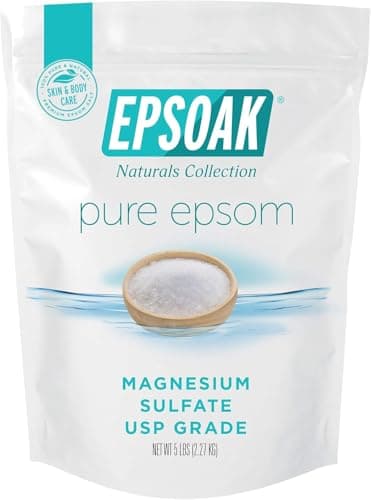
Epsoak
Epsom Salt, 5 lb
Magnesium sulfate USP
Plain magnesium sulfate is the one substance named in both extension publications this site relies on for feet and crops — a foot soak for bumblefoot, and a measured flush for a sour crop.
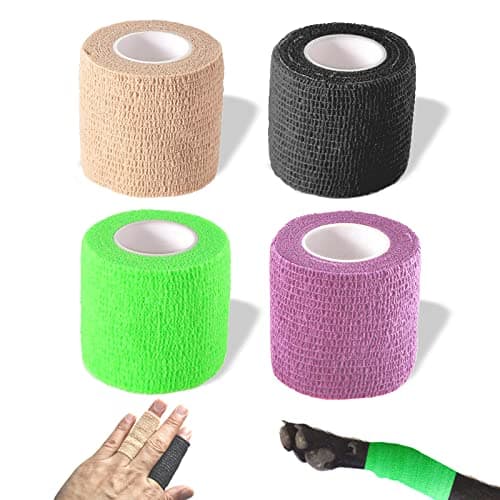
The second half of the published bumblefoot treatment is “bandaging with a dressing”, and a cohesive wrap is the only bandage that stays on a chicken's foot without adhesive pulling at skin or feathers.
Hypochlorous acid at 0.0120 percent, antibiotic-free, with no egg withdrawal period — which is what makes it the one wound spray a laying flock can actually use.
#ad We have no verified Amazon listing for this one, so no number is shown. How this is funded.
FAQ
Questions people actually ask
+What is bumblefoot in chickens?
University of Maryland Extension defines it as pododermatitis - a bacterial infection of the foot pad, typically Staph. aureus, that develops after an injury to the footpad lets bacteria into the wound. It is graded I to V, from surface redness with no apparent infection through to swelling around a plug of dead tissue with severe lameness.
+How do you treat bumblefoot at home?
Only the early grades are a home job. The published treatment list starts with foot soaks in epsom salts or chlorhexidine solutions and bandaging with a dressing to facilitate healing. It then moves to antibiotics and surgery performed by a veterinarian. If there is a plug of dead tissue and the bird is lame, that is Grade IV or V and it is not a first aid case.
+Should I cut out the bumblefoot plug myself?
The publication lists that procedure as surgery performed by a veterinarian. It is the step most online accounts jump to and the one the published ladder puts last, after soaks, dressings and antibiotics. A plug of dead tissue means the infection is into the tissue of the foot.
+What causes bumblefoot?
An injury to the footpad that lets staph bacteria in. Staph is an ordinary part of the skin and environment rather than something that arrives, so the practical causes are the things that break the skin: splintered perches, wire, sharp hardware and hard landing surfaces. Wet litter contributes by softening the pad.
+How do you prevent bumblefoot in chickens?
Three published measures: feed a well-balanced diet, especially in vitamin A; provide clean housing and keep the litter dry; and minimize surfaces that may injure birds' feet. Note that the publication does not name a perch height or shape, despite how often that advice is given in its name.
+Is bumblefoot contagious to other chickens?
It is not spread bird to bird the way a respiratory disease is - it starts from an individual injury with bacteria that are already present in the environment. But if several birds have it, look at what they are all standing on, because the shared cause is usually housing.
Where the numbers came from
Sources
Every figure cited on this page came from one of these documents. If one of them has changed since we read it, the number here is out of date and we would like to know.
6 to 10 inches of perch per bird is the published figure. How to convert a bird-count claim into inches, why flat beats round, and how high to mount it.