Skip to content
Peep & Pen

Stage 1 — weeks 0 to 6

Chick starter feed, compared on the guaranteed analysis

Every credible starter is 18 percent protein with capped calcium. The differences are in the second decimal place and in one question about your chicks.

By Scooter M.·Published September 1, 2026

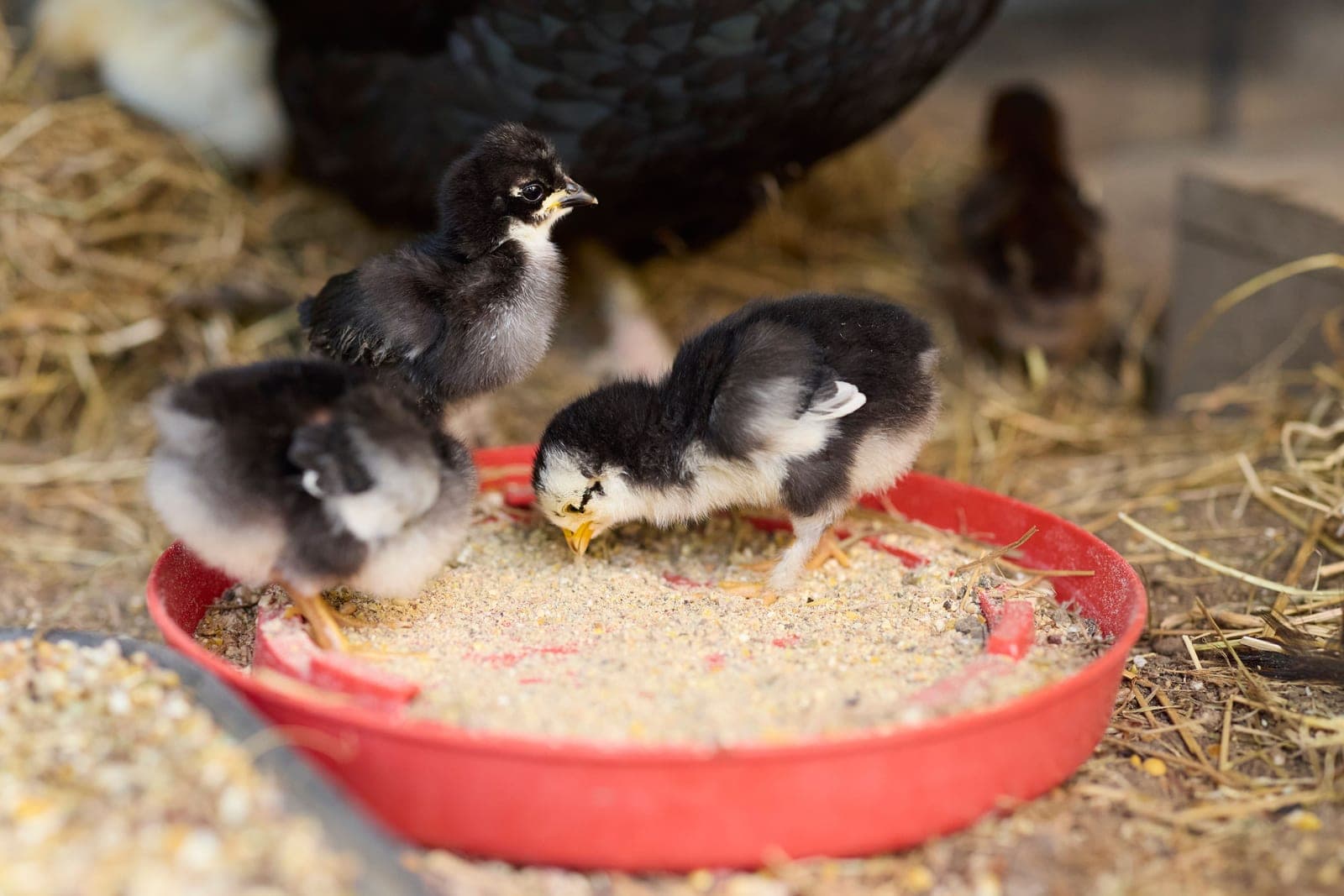
A chick pecking at crumbled feed

The short answer

Buy an 18 percent protein starter with calcium capped around 1.25 percent, and choose medicated or unmedicated based on whether the hatchery vaccinated your chicks for coccidiosis. If they did, buy unmedicated; if they did not, medicated is sensible insurance. Brand differences past that are small.

Chick feed is one of the least differentiated products in this whole category, and that is good news. The formulations are tightly constrained by what a growing bird actually needs, so every credible brand lands in the same place: 18 percent crude protein, low fat, and calcium deliberately held down because a growing bird cannot use the calcium a laying hen needs.

The guaranteed analyses, side by side

Published guaranteed analyses. Every figure is from the maker's own label.
NutrientPurina Start & Grow (med)Manna Pro (non-med)Manna Pro (med)
Crude protein, min18.00%18.00%18.00%
Lysine, min0.90%0.85%0.85%
Methionine, min0.30%0.25%0.30%
Crude fat, min3.00%2.50%2.50%
Crude fiber, max5.00%7.00%7.00%
Calcium0.75% - 1.25%0.75% - 1.25%0.75% - 1.25%
Phosphorus, min0.40%0.70%0.70%
MedicationAmprolium 0.0125% maxNoneStated, level not published

Three things worth pulling out of that table.

Crude fiber is the biggest real gap. Purina caps it at 5 percent against Manna Pro’s 7 percent. Fiber is not doing nutritional work in a chick feed, so a lower maximum means more of the bag is. It is a small edge but it is the clearest one on the table.

Purina publishes its amprolium inclusion rate and Manna Pro does not. Purina states a maximum of 0.0125 percent, or 113.50 g per ton. Manna Pro’s public analysis says the feed is medicated to aid in the prevention of coccidiosis without giving a level. Both are legitimate products; only one lets you know what you are feeding.

Lysine and methionine favor Purina slightly. These are the two limiting amino acids in poultry diets, which is why they are the ones broken out on a label at all. The differences are small, but they run consistently the same way.

The feeding direction is the useful part

Purina’s label says it plainly: feed Start & Grow 18 percent continuously as the sole ration from day one until the onset of egg production, then switch to a layer feed. That single sentence answers the two questions people ask most — how long do I feed this, and when do I change — and it is worth reading because a lot of internet advice suggests switching at a fixed age instead. Age is a proxy; the first egg is the actual signal.

Bag size is a real consideration for six chicks

Feed does not improve with storage. Purina Start & Grow is stocked mainly in 25 and 50 lb bags, which is a lot of feed for a brood of six chicks that eats it over eight weeks. Manna Pro is widely available in 5 and 10 lb bags, and for a small first brood that is a genuine advantage that has nothing to do with the analysis. Store whatever you buy sealed and dry — feed storage covers the containers.

Heads up: some links on this page are affiliate links. If you buy through one we may earn a commission at no extra cost to you. It never changes a ranking, and we take no payment for placement. The full version.

The short answer

The short list

Ranked on the published rubric. Every row jumps to that product's full write-up below; the button goes straight to Amazon.

#PickBest forKey specScorePrice
1
Score8.6

Our pick

Purina

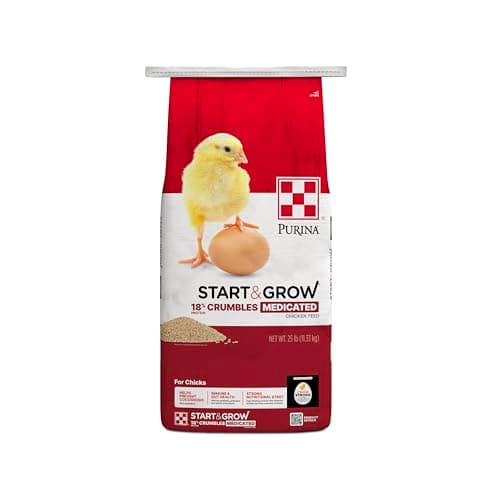
Start & Grow Medicated Chick Feed

Eighteen percent crude protein with amprolium at 0.0125 percent, and a feeding direction that tells you exactly when to stop: day one until the first egg, then switch.

Chicks from a mixed-source order18% protein8.6of 10
2
Score8.0

Manna Pro

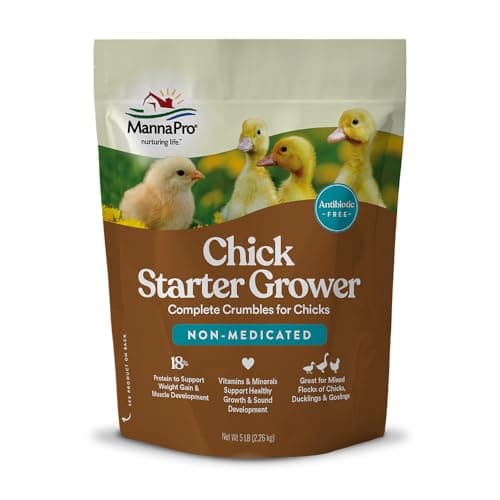
Chick Starter Grower, Non-Medicated Crumbles

The same 18 percent protein with nothing medicating it, which is the correct feed if the hatchery vaccinated your chicks for coccidiosis and the only reason most people should buy unmedicated.

Vaccinated chicks18% protein, no medication8.0of 10
3
Score7.5

Manna Pro

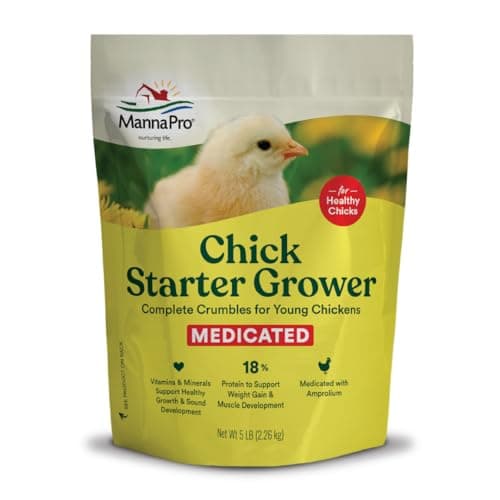
Chick Starter Grower, Medicated Crumbles

Medicated starter in bag sizes a six-chick brood can actually finish, which is the practical argument for it over a 50 lb sack that goes stale in the garage.

Small bags of medicated feed18% protein, medicated7.5of 10

#ad No live price feed on this build yet, so every button reads “check price” rather than showing a figure we cannot stand behind. Scores are our own published rubric, not customer ratings.

Score8.6no photo yet

#1 · Chicks from a mixed-source order

Purina Start & Grow Medicated Chick Feed

Eighteen percent crude protein with amprolium at 0.0125 percent, and a feeding direction that tells you exactly when to stop: day one until the first egg, then switch.

Who it is for. Anybody with unvaccinated chicks, and particularly anybody brooding on reused bedding or in a space that has held birds before.

Published specifications

Crude protein (min)
18.00%
Medication
Amprolium, max 0.0125% (113.50 g/ton), to help prevent coccidiosis
Lysine (min)
0.90%
Methionine (min)
0.30%
Crude fat (min)
3.00%
Crude fiber (max)
5.00%
Calcium
0.75% min, 1.25% max
Phosphorus (min)
0.40%
Vitamin A (min)
5,000 IU/lb
Feeding directions
Feed continuously as the sole ration from day one until onset of egg production, then switch to a layer feed

Source: Purina Animal Nutrition, Start & Grow Medicated product page and guaranteed analysis (purinamills.com), retrieved 2026-09-01

Rubric — 8.6 / 10

  • Capacity honesty9/10 · weight 26%
  • Documentation10/10 · weight 24%
  • Build and weather8/10 · weight 20%
  • Running cost7/10 · weight 15%
  • Daily use8/10 · weight 15%

What it gets right

  • Purina publishes the complete guaranteed analysis including the amprolium level, which not every brand does
  • Amprolium is a coccidiostat, not an antibiotic, and the label says so plainly
  • The feeding direction is unambiguous about when to stop, which is the question every first-time keeper asks
  • Calcium is capped at 1.25 percent — the low level growing birds need, and the reason chick feed is not layer feed

What it costs you

  • Medicated feed is the wrong choice if your chicks were vaccinated for coccidiosis at the hatchery; amprolium can interfere with the vaccine
  • 18 percent is standard rather than exceptional across this category
  • Sold mainly in 25 and 50 lb bags, which is a lot of feed for six chicks and it does not keep forever

Skip it if. Your chicks arrived coccidiosis-vaccinated. Ask the hatchery, and if they were, buy the unmedicated version of whatever you feed.

Check price on Amazon

#ad No live price feed yet, so no number is shown rather than a stale one. How this is funded.

Score8.0no photo yet

#2 · Vaccinated chicks

Manna Pro Chick Starter Grower, Non-Medicated Crumbles

The same 18 percent protein with nothing medicating it, which is the correct feed if the hatchery vaccinated your chicks for coccidiosis and the only reason most people should buy unmedicated.

Who it is for. Anybody whose hatchery confirmed a coccidiosis vaccination, and anybody who wants a small bag rather than fifty pounds.

Published specifications

Crude protein (min)
18.00%
Medication
None
Lysine (min)
0.85%
Methionine (min)
0.25%
Crude fat (min)
2.50%
Crude fiber (max)
7.00%
Calcium
0.75% min, 1.25% max
Phosphorus (min)
0.70%
Form
Crumbles

Source: Manna Pro, Chick Starter Non-Medicated Crumbles guaranteed analysis (mannapro.com), retrieved 2026-09-01

Rubric — 8.0 / 10

  • Capacity honesty8/10 · weight 26%
  • Documentation8/10 · weight 24%
  • Build and weather7/10 · weight 20%
  • Running cost8/10 · weight 15%
  • Daily use9/10 · weight 15%

What it gets right

  • Matches the medicated feeds on protein, so choosing unmedicated is not a nutritional downgrade
  • The right choice for hatchery-vaccinated chicks, where amprolium can work against the vaccine
  • Widely stocked in 5 and 10 lb bags, which suits a small first brood far better than a 50 lb sack

What it costs you

  • Crude fiber is capped at 7 percent against Purina's 5 percent, and lower fiber generally means more of the bag is doing nutritional work
  • No coccidiostat means brooder hygiene has to carry the whole load
  • Methionine at 0.25 percent is the lowest of the three starter feeds here

Skip it if. Your chicks were not vaccinated and you are brooding on ground or bedding that has held birds before. That is the situation medicated feed exists for.

Check price on Amazon

#ad No live price feed yet, so no number is shown rather than a stale one. How this is funded.

Score7.5no photo yet

#3 · Small bags of medicated feed

Manna Pro Chick Starter Grower, Medicated Crumbles

Medicated starter in bag sizes a six-chick brood can actually finish, which is the practical argument for it over a 50 lb sack that goes stale in the garage.

Who it is for. A small unvaccinated brood where a 25 lb bag would go stale before it was finished.

Published specifications

Crude protein (min)
18.00%
Medication
Medicated to aid in the prevention of coccidiosis
Lysine (min)
0.85%
Methionine (min)
0.30%
Crude fat (min)
2.50%
Crude fiber (max)
7.00%
Calcium
0.75% min, 1.25% max
Phosphorus (min)
0.70%
Salt (min)
0.25%

Source: Manna Pro, Chick Starter Medicated guaranteed analysis (mannapro.com), retrieved 2026-09-01

Rubric — 7.5 / 10

  • Capacity honesty8/10 · weight 26%
  • Documentation6/10 · weight 24%
  • Build and weather7/10 · weight 20%
  • Running cost8/10 · weight 15%
  • Daily use9/10 · weight 15%

What it gets right

  • Available in small bags, so a first brood is not committing to fifty pounds of feed
  • Same 18 percent protein and the same calcium cap as every other credible starter here
  • Crumble form, which day-old chicks handle better than pellets

What it costs you

  • Manna Pro's public guaranteed analysis does not state the amprolium inclusion rate the way Purina's does, so you cannot compare medication levels directly
  • 7 percent maximum crude fiber, higher than Purina's 5 percent
  • Wrong feed for vaccinated chicks

Skip it if. You want to know exactly how much amprolium you are feeding. Purina publishes the number; this label does not.

Check price on Amazon

#ad No live price feed yet, so no number is shown rather than a stale one. How this is funded.

FAQ

Questions people actually ask

What protein percentage should chick starter be?

18 percent crude protein is the standard for chick starter and every feed compared here meets it exactly. Calcium is deliberately capped around 1.25 percent because growing birds cannot use the higher levels a laying hen needs, which is why chick starter and layer feed are not interchangeable.

How long do chicks eat starter feed?

Purina's published feeding direction is to feed Start & Grow continuously as the sole ration from day one until the onset of egg production, then switch to a layer feed. That is typically somewhere between 18 and 22 weeks, but the first egg is the actual signal rather than a fixed age.

Is Purina Start and Grow better than Manna Pro?

Marginally, on the published analyses: Purina caps crude fiber at 5 percent against Manna Pro's 7 percent, runs slightly higher on lysine and methionine, and publishes its amprolium inclusion rate where Manna Pro does not. Manna Pro's advantage is bag size, with 5 and 10 lb options that suit a small brood.

Can chicks eat treats or scratch?

Not usefully in the first couple of weeks. Complete starter crumble is balanced and treats displace it with something that is not. Anything other than crumble also means the chicks need access to chick-sized insoluble grit so they can grind it, which chicks on starter alone do not require.

Where the numbers came from

Sources

Every figure cited on this page came from one of these documents. If one of them has changed since we read it, the number here is out of date and we would like to know.

Keep reading