If the hatchery vaccinated your chicks against coccidiosis, feed unmedicated — the amprolium in medicated feed can work against the vaccine. If they did not vaccinate, medicated feed is reasonable insurance against the most common killer of brooding chicks. Ask the hatchery; it is a question they answer routinely.
What “medicated” actually means here
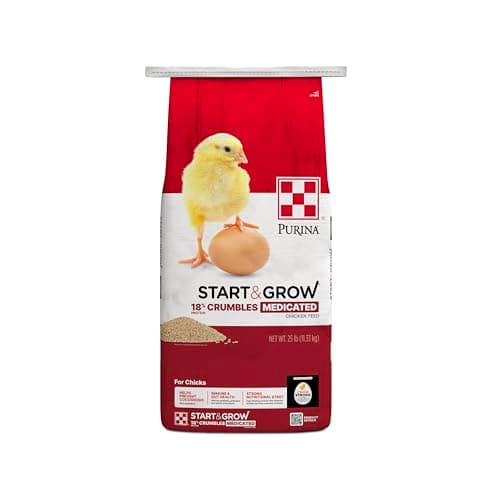
Medicated chick starter in the US almost always means one thing: amprolium, included at a low level to help prevent coccidiosis. Purina publishes its rate as a maximum of 0.0125 percent, or 113.50 grams per ton.
Two facts about amprolium that clear up most of the confusion around this word:
It is not an antibiotic. Purina’s own label says so explicitly. It is a coccidiostat, and it works by mimicking thiamine so the coccidia parasite takes it up and cannot use it. None of the concerns people have about antibiotics in feed apply.
It does not sterilize the gut. It suppresses the parasite’s reproduction enough that the chick’s immune system can develop resistance while surviving the exposure. That is the point: chicks are meant to meet coccidia and build immunity, just not all at once.
Why vaccination changes the answer
A coccidiosis vaccine works by giving the chick a controlled dose of live, weakened coccidia so it can develop immunity. Amprolium suppresses coccidia. Feed a vaccinated chick medicated starter and you are suppressing the very organism the vaccine relies on to produce immunity, which can leave the bird with neither.
This is why the answer is not a preference. If the chicks were vaccinated — and many hatcheries offer it as a checkbox at ordering, sometimes at no extra cost — the correct feed is unmedicated. If they were not, you have a genuine choice.
The decision, laid out
Which bag to buy.
Your situation
Feed
Why
Chicks vaccinated for coccidiosis
Unmedicated
Amprolium can suppress the vaccine organism and undercut immunity
Not vaccinated, brooding on fresh bedding indoors
Either; medicated is the cautious choice
Risk is lower but not zero, and the cost difference is small
Not vaccinated, reused bedding or a space that has held birds
Medicated
This is the situation the coccidiostat exists for
Not vaccinated, brooding outdoors or on ground
Medicated
Coccidia are ubiquitous in soil and exposure is high
You do not know
Ask the hatchery
It is on your order record; guessing is the only wrong answer
What neither feed does
Medicated feed is prevention, not treatment. A chick with active clinical coccidiosis — hunched, lethargic, blood in the droppings — needs a veterinary-directed treatment at a therapeutic dose, not a feed containing a preventive level. This is one of the places where the honest answer is to call a vet or your state poultry extension office, and we are not going to pretend otherwise.
Neither feed substitutes for brooder hygiene either. Coccidia thrive in warm, damp bedding, which is exactly what a brooder with a spilled waterer becomes. Dry bedding, a drinker raised off the floor and prompt cleanup do more than either bag. Brooder setup covers that.
Heads up: some links on this page are affiliate links. If you buy through one we may earn a commission at no extra cost to you. It never changes a ranking, and we take no payment for placement. The full version.
The short answer
The short list
Ranked on the published rubric. Every row jumps to that product's full write-up below; the button goes straight to Amazon.
#
Pick
Best for
Key spec
Score
Price
1
Our pick
Manna Pro
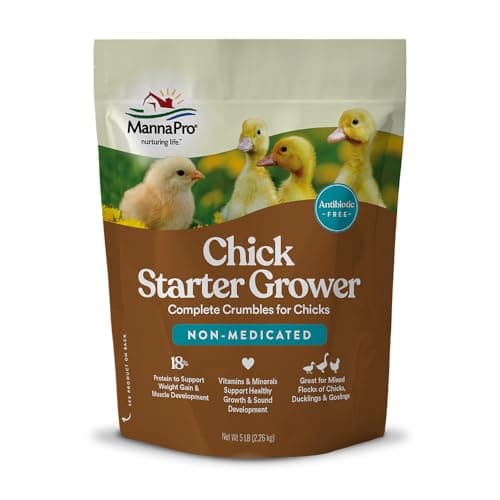
Chick Starter Grower, Non-Medicated Crumbles
The same 18 percent protein with nothing medicating it, which is the correct feed if the hatchery vaccinated your chicks for coccidiosis and the only reason most people should buy unmedicated.
Eighteen percent crude protein with amprolium at 0.0125 percent, and a feeding direction that tells you exactly when to stop: day one until the first egg, then switch.
#adPrices as of October 18, 2026. Scores are our own published rubric, not customer ratings.
#1 · Vaccinated chicks
Manna Pro Chick Starter Grower, Non-Medicated Crumbles
The same 18 percent protein with nothing medicating it, which is the correct feed if the hatchery vaccinated your chicks for coccidiosis and the only reason most people should buy unmedicated.
Who it is for. Anybody whose hatchery confirmed a coccidiosis vaccination, and anybody who wants a small bag rather than fifty pounds.
Matches the medicated feeds on protein, so choosing unmedicated is not a nutritional downgrade
The right choice for hatchery-vaccinated chicks, where amprolium can work against the vaccine
Widely stocked in 5 and 10 lb bags, which suits a small first brood far better than a 50 lb sack
What it costs you
Crude fiber is capped at 7 percent against Purina's 5 percent, and lower fiber generally means more of the bag is doing nutritional work
No coccidiostat means brooder hygiene has to carry the whole load
Methionine at 0.25 percent is the lowest of the three starter feeds here
Skip it if. Your chicks were not vaccinated and you are brooding on ground or bedding that has held birds before. That is the situation medicated feed exists for.
Eighteen percent crude protein with amprolium at 0.0125 percent, and a feeding direction that tells you exactly when to stop: day one until the first egg, then switch.
Who it is for. Anybody with unvaccinated chicks, and particularly anybody brooding on reused bedding or in a space that has held birds before.
Published specifications
Crude protein (min)
18.00%
Medication
Amprolium, max 0.0125% (113.50 g/ton), to help prevent coccidiosis
Lysine (min)
0.90%
Methionine (min)
0.30%
Crude fat (min)
3.00%
Crude fiber (max)
5.00%
Calcium
0.75% min, 1.25% max
Phosphorus (min)
0.40%
Vitamin A (min)
5,000 IU/lb
Feeding directions
Feed continuously as the sole ration from day one until onset of egg production, then switch to a layer feed
+Should I use medicated or unmedicated chick feed?
It depends on one fact: whether the hatchery vaccinated your chicks against coccidiosis. If they did, use unmedicated, because the amprolium in medicated feed can suppress the vaccine organism and undercut the immunity it was meant to build. If they did not, medicated feed is a reasonable precaution, especially on reused bedding.
+Is amprolium an antibiotic?
No. Purina's own label states that amprolium is not an antibiotic. It is a coccidiostat that works by mimicking thiamine so the coccidia parasite absorbs it and cannot use it, suppressing reproduction enough for the chick's immune system to develop resistance while surviving exposure.
+Can I feed medicated feed to vaccinated chicks?
It is the one combination to avoid. The vaccine works by giving the chick a controlled dose of live weakened coccidia so it develops immunity; amprolium suppresses coccidia. Feeding both can leave the bird without the immunity the vaccine was supposed to produce.
+Will medicated chick feed affect the eggs?
No. Chicks eating starter feed are months away from laying, and the published feeding direction is to switch to layer feed at the onset of egg production. By the time there are any eggs, the medicated feed has long been replaced.
Where the numbers came from
Sources
Every figure cited on this page came from one of these documents. If one of them has changed since we read it, the number here is out of date and we would like to know.