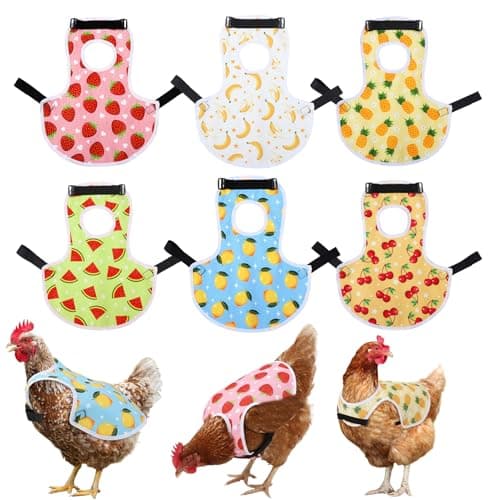
A hen with a bare back and a rooster in the flock is wearing the marks of being a favorite. A saddle protects her skin while the feathers grow back - but the reason she is bare is a ratio, and fabric does not change a ratio.
Diagnose before you dress the bird. Mississippi State Extension lists breeding activity as a distinct cause of poor feathering — “Birds that frequently mate may have an absence of feathers” — and notes that “these feathers will grow back after the breeding season is completed.” A saddle is a cover for the skin while that happens. It is the right purchase for one or two favored hens, and the wrong response to a flock where half the birds are bare.
Three causes of a bare back, and how to tell them apart
The same Mississippi State page separates birds that cannot grow feathers from birds whose feathers are being removed, and the distinction decides what you buy.
Mississippi State Extension, Causes of Poor Feathering, plus the molt pattern from its Molting of Laying Hens page.
Cause
What it looks like
What to do
Mating wear
Bare patches on the back and behind the head, on specific hens, with a rooster in the flock; skin often intact
A saddle, and a look at your rooster-to-hen ratio
Molt
Feathers lost from the head first, then neck, breast, body, wings and tail, with pin feathers coming in behind
Nothing. Feed for it and wait
Parasites
Itchy, restless birds; live insects around the vent at dusk; damage not confined to the back
Confirm, then treat by the label
The pattern is the tell. Mating wear is localized to where a rooster's feet and beak go — the back and the back of the head — and it affects the hens he prefers rather than the flock evenly. Molt follows a published order starting at the head and produces pin feathers. Mites and lice come with behavior changes and insects you can find.
What a saddle actually does
It is a physical barrier over the back, held on with elastic wing straps, and its job is narrow: keep the rooster's feet off skin that has no feathers left to protect it. That matters because bare skin is where things escalate. Mississippi State's other feathering page and University of Maryland's work on feather pecking both point the same direction — exposed skin invites pecking from the rest of the flock, and a pecked wound invites more of it.
When the saddle is the wrong answer
One or two bare hens in a flock with a rooster is normal and a saddle is a reasonable response. Several bare hens at once is a ratio problem, and buying six saddles treats the symptom while leaving the cause running. The honest options are fewer roosters, more hens, or separating a bird — and this site's beginner breeds page makes the broader point that a first flock has no need of a rooster at all. Hens lay without one. The only thing a rooster is required for is fertile eggs.
What we judged saddles on
Does the seller publish a size? This is the category's central failure. A hen is not a standard object, and “one size” across bantams and heavy breeds is not a specification.
Mesh or solid? A solid panel on a bird's back in July is a heat problem, and heat is the thing this site's hot weather page takes most seriously.
How does it attach? Elastic wing straps are the standard. They need to hold without binding, and they are what fails first.
One or several? Genuinely a different purchase depending on whether you have one favored hen or a ratio problem.
Fitting and checking one
Fit it in the evening, off the perch, when birds are calm and easy to handle.
Check under it weekly. A saddle hides the skin it protects, which means it also hides a developing wound or a parasite load. Lift it and look.
Take it off once feathers return. It is a dressing, not a garment, and Mississippi State's point is that the feathers come back after breeding season.
Do not use one on a molting bird. Pin feathers are blood-filled and tender, and a strap over them is the wrong thing entirely.
Heads up: some links on this page are affiliate links. If you buy through one we may earn a commission at no extra cost to you. It never changes a ranking, and we take no payment for placement. The full version.
The short answer
The short list
Ranked on the published rubric. Every row jumps to that product's full write-up below; the button goes straight to Amazon.
#
Pick
Best for
Key spec
Score
Price
1
Our pick
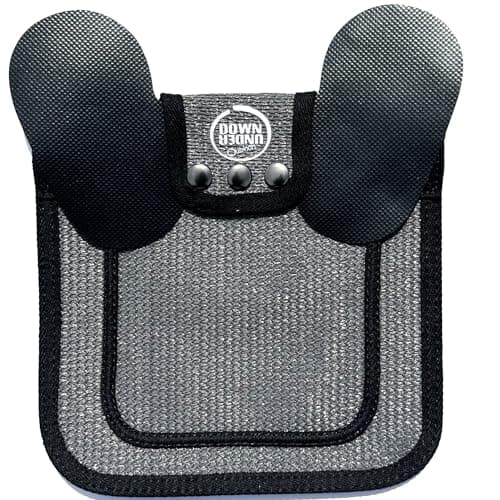
DOWN UNDER OUTDOORS
Chicken Saddle Hen Apron, Medium-Large
A single, properly sized saddle from a named brand rather than a bag of six identical one-size squares — which matters, because a saddle that does not fit is a saddle the hen wears off in a week.
Six one-size saddles with adjustable straps, which is the economical answer when the problem is flock-wide — and a flock-wide bare-back problem is telling you something a saddle cannot fix.
Hypochlorous acid at 0.0120 percent, antibiotic-free, with no egg withdrawal period — which is what makes it the one wound spray a laying flock can actually use.
#adPrices as of September 21, 2026. Scores are our own published rubric, not customer ratings.
#1 · One or two bare-backed hens
DOWN UNDER OUTDOORS Chicken Saddle Hen Apron, Medium-Large
A single, properly sized saddle from a named brand rather than a bag of six identical one-size squares — which matters, because a saddle that does not fit is a saddle the hen wears off in a week.
Who it is for. Anybody with one or two favored hens losing back feathers to mating, who wants a saddle that fits rather than the cheapest six.
Published specifications
Size
Medium-large
Material
Mesh
Fixing
Elastic wing straps
Sold as
Single saddle
Colors
Gray mesh and green offered as separate listings
Source: DOWN UNDER OUTDOORS published product listing (size, material, fixing), retrieved 2026-09-21
Rubric — 6.5 / 10
Capacity honesty7/10 · weight 26%
Documentation3/10 · weight 24%
Build and weather7/10 · weight 20%
Running cost9/10 · weight 15%
Daily use8/10 · weight 15%
What it gets right
Sold singly and in a stated size, so you can match it to the hen rather than to an average
Mesh rather than solid fabric, which matters on the back of a bird in summer
A named brand with consistent listings, in a category dominated by unbranded multipacks
The right product for the common case, which is one favored hen with a bare back rather than a whole flock
What it costs you
No published measurements at all — 'medium-large' is the entire sizing guidance, and bird size varies far more than that implies
No published material specification or UV rating, on a product that lives outdoors in sun
Costs roughly as much as a six-pack of generic saddles, so it is poor value if you genuinely need several
A saddle treats the symptom; the rooster-to-hen ratio causing it is untouched
Skip it if. Several hens are bare-backed. That is a ratio problem, and a multipack plus a look at your rooster count is the more honest response.
Six one-size saddles with adjustable straps, which is the economical answer when the problem is flock-wide — and a flock-wide bare-back problem is telling you something a saddle cannot fix.
Who it is for. Flocks where several hens are bare-backed at once, usually because there are too many roosters for the number of hens.
Published specifications
Quantity
6 saddles
Fixing
Adjustable straps
Coverage
Wing and back feather protection, as listed
Sizing
One size, adjustable
Source: Published product listing (quantity, fixing, coverage), retrieved 2026-09-21
Rubric — 5.4 / 10
Capacity honesty6/10 · weight 26%
Documentation2/10 · weight 24%
Build and weather5/10 · weight 20%
Running cost9/10 · weight 15%
Daily use7/10 · weight 15%
What it gets right
Six saddles for roughly the price of one branded single, which is the right economics for a real ratio problem
Adjustable straps go some way toward covering the range that a single stated size does not
Having spares matters more here than in most categories: saddles get lost, chewed and fouled
Lets you rotate a saddle off a healing hen without leaving her unprotected
What it costs you
One size with no published measurements, so fit on a bantam and on a heavy breed is a gamble
Unbranded manufacture with no published material or durability information of any kind
Buying six saddles is treating a flock-wide symptom; the published causes are mating pressure and parasites, and neither is solved by fabric
Quality within a multipack is typically less consistent than a single branded item
Skip it if. Only one hen is affected. Buy one that fits her instead, and look at why she in particular is the favored one.
Vetericyn Plus Antimicrobial Poultry Care Spray, 8 oz
Hypochlorous acid at 0.0120 percent, antibiotic-free, with no egg withdrawal period — which is what makes it the one wound spray a laying flock can actually use.
Who it is for. Every flock, in the first aid box, before you need it. Pecking injuries do not schedule themselves.
Source: Vetericyn Plus Antimicrobial Poultry Care product information and Drugs.com veterinary label record, retrieved 2026-09-01
Rubric — 8.2 / 10
Capacity honesty8/10 · weight 26%
Documentation8/10 · weight 24%
Build and weather8/10 · weight 20%
Running cost8/10 · weight 15%
Daily use9/10 · weight 15%
What it gets right
No egg withdrawal, which is the property that decides whether a treatment is usable on a laying flock at all
Antibiotic-free, so nothing about it contributes to resistance and nothing needs a vet's prescription
The labeled use list covers the actual injuries a backyard flock gets — pecking sores, bumblefoot, frostbite
Does not sting, so a bird will tolerate a second application
What it costs you
It is a topical wound wash and nothing more; it does nothing for anything systemic
8 oz is a small bottle for a flock with a real pecking problem
Hypochlorous acid solutions degrade with light and age, so a bottle bought two seasons ago is not what it was
Skip it if. The bird is unwell rather than injured. A wound spray is not a diagnosis, and anything systemic needs a vet or your state poultry extension office.
#ad We have no verified Amazon listing for this one, so no number is shown. How this is funded.
FAQ
Questions people actually ask
+Do chickens need saddles?
Only some do, and only sometimes. A hen with a bare back caused by mating wear benefits from one while the feathers regrow - Mississippi State Extension notes that birds which frequently mate may have an absence of feathers, and that these grow back after the breeding season. A flock with no rooster does not need saddles at all.
+Why is my hen's back bare?
Three common causes, distinguishable by pattern. Mating wear is localized to the back and behind the head on particular hens. A molt starts at the head and works down in a published order with pin feathers coming in behind. Parasites come with itchy, restless birds and insects you can find around the vent at dusk. Check which before buying anything.
+Do chicken saddles help feathers grow back?
No. They protect the bare skin while the feathers regrow on their own schedule. Mississippi State Extension publishes that mating-wear feathers return after the breeding season is completed. What a saddle prevents is further damage - rooster claws on bare skin, and pecking from the rest of the flock once skin is exposed.
+How many hens per rooster to stop bare backs?
We are not going to publish a ratio we cannot source - the figures circulating online vary widely and none of the extension material cited here gives one. What the pattern tells you is more useful: if several hens are bare at once, you have too many roosters for the number of hens, and saddles are treating the symptom.
+Can chickens wear saddles in summer?
Prefer a mesh saddle if they must. A solid fabric panel across a bird's back in hot weather works against her main cooling route, and heat stress is a far more serious risk than a bare back. Check underneath regularly in warm weather.
+Should I put a saddle on a molting hen?
No. Pin feathers are blood-filled and tender, and elastic straps over them cause exactly the damage you are trying to prevent. Feed a molting hen properly and leave her alone.
Where the numbers came from
Sources
Every figure cited on this page came from one of these documents. If one of them has changed since we read it, the number here is out of date and we would like to know.
Eight beginner breeds compared on published egg figures, standard weights and the registry's own temperament wording — including where no figure is published at all.